
California Wants to Card Kids for Retinol. Good — Here's What It Still Can't Fix.

A few weeks ago a girl who could not have been older than fourteen walked into our shop in Kimball Junction, planted herself in front of the skincare section, and asked — with the confidence of a woman returning a defective toaster — whether we carried “a good retinol.” Not a moisturizer. Not a lip balm. Retinol. For the fine lines she does not have, on the face that has been alive for one decade.
Her mom was two steps behind, half-apologetic, half-amused. And I stood there thinking the thought I’ve had more than a few times since opening this store: who sold a child the idea that her perfect skin needs fixing? The answer is everyone — the algorithm, the haul videos, the Sephora Saturday that has quietly become a rite of passage. And now the answer also includes the state of California, which is moving to make it illegal to sell anti-aging skincare to anyone who can’t produce an ID.
What the law actually does
Let’s be precise, because the headlines are doing their usual thing where “ban” gets stretched into something cartoonish. California Assemblymember Alex Lee introduced a bill that would bar retailers from selling cosmetic products marketed for anti-aging that contain vitamin A, retinol, or alpha hydroxy acids to anyone under 18 — without verifying the buyer is an adult. Same energy as buying cold medicine: you want the AHA peel, you show the ID. (Business of Fashion)
Lee has been clear that he’s not coming for acne treatment. Products meant for a genuine medical purpose stay on the shelf. (ABC10) The target is narrower and dumber than the panic suggests: it’s the $68 “youth-preserving” serum being sold to a sixth grader who is, by definition, already at peak youth. He tried this last year and it died before reaching the governor’s desk. This is the second swing, and the cultural ground underneath it has shifted enough that this time it might land.
Why the science is on California’s side
Here’s the part that doesn’t make it into the haul videos. Retinol, vitamin A derivatives, and exfoliating acids are good ingredients — for the right skin, at the right age, used with intention. On a 12-year-old’s barrier, they are a solution in search of a problem, and the side effects are not hypothetical. Pediatric specialists have been blunt that these ingredients aren’t appropriate for young, sensitive skin and can lead to blisters, burns, and lasting damage. (per Connecticut Children’s, via ABC10)
And kids aren’t using these in isolation. They’re stacking them. Researchers at Northwestern analyzed 100 TikTok skincare routines made by girls aged 7 to 18 and found the average regimen ran six products deep and contained eleven potentially irritating active ingredients. The average routine cost about $168 a month. Some topped $500. And only about a quarter included sunscreen — the one product that age group actually benefits from. (CNN, reporting on the study in Pediatrics)
Read that again. Eleven irritants, a $168 monthly habit, no SPF. We have managed to sell children the single most expensive, most barrier-disrupting, least sun-protective version of a skincare routine it is possible to assemble — and we packaged it as self-care. The Environmental Working Group flagged the same thing: these viral routines walk kids straight into ingredient sensitization and sun sensitivity, the exact opposite of the glow they’re chasing. (EWG)
I didn’t wait for the legislature
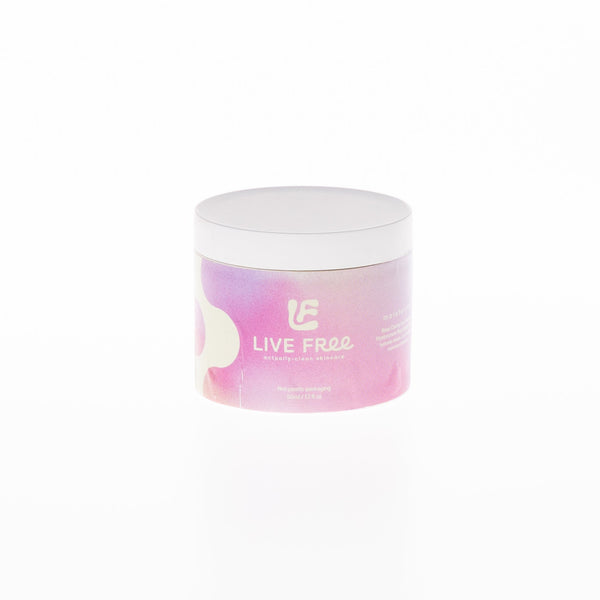
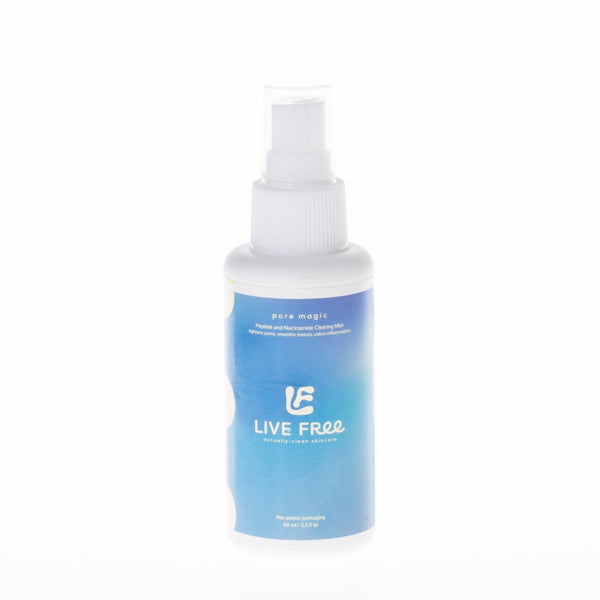
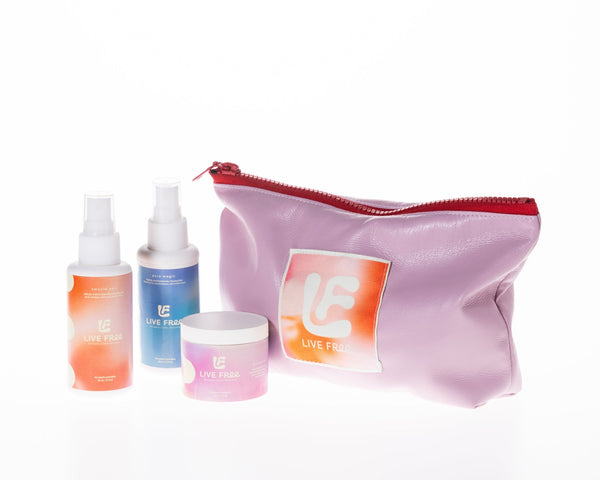
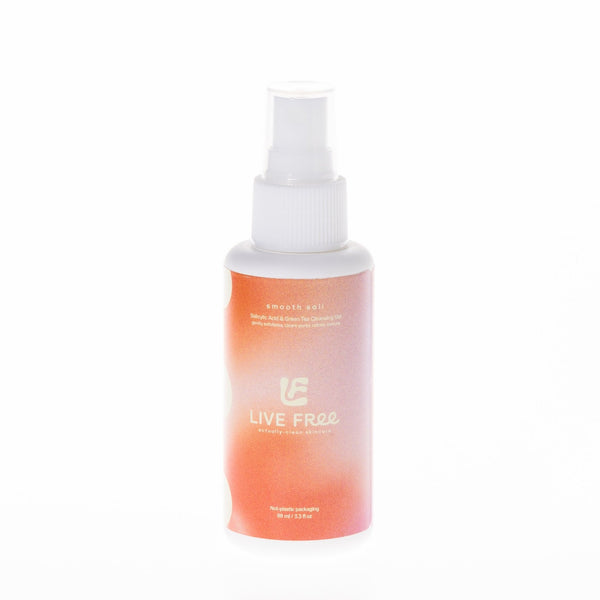
I’ll be honest about my own bias, because it’s the whole reason I have a stake in this. When we built the Live Free line, the teen approach was the part I lost sleep over — not because teen skin is hard (it isn’t, it’s gloriously simple) but because the entire category is engineered to make simple feel insufficient. The pressure, from every direction, is to give a thirteen-year-old a “routine” with steps and serums and a reason to come back and spend again next month. More steps, more SKUs, more margin.
We went the other way on purpose. The teen approach we built is deliberately, almost annoyingly minimal — gentle cleanser, a moisturizer that supports the barrier instead of stripping it, real mineral SPF, and targeted spot care for actual breakouts. Designed for skin that’s still figuring out how to be itself, formulated to help reduce the appearance of breakouts without torching everything around them. No “anti-aging” anything, because aging is not a condition a fourteen-year-old has.
And here’s the quieter decision, the one that doesn’t show up on a label: I have turned away wholesale lines for the marketplace — products I could absolutely have sold — because they were “tween” repackagings of adult actives. Glittery bottle, cartoon font, retinol inside. Last year I passed on three of them. Not because a law told me to. Because I have an eleven-year-old’s face in my memory and I couldn’t unsee it.
And now the but
I’m not going to pretend this is a clean win, because I don’t think it is one. A point-of-sale ID check is a blunt instrument aimed at a problem that mostly doesn’t happen at the point of sale. The damage isn’t being done at a register — it’s being done at the algorithm. A motivated thirteen-year-old doesn’t need to walk into a Sephora; she needs a phone, her mom’s saved card, and ninety seconds. The bill does nothing about the influencer who filmed the routine, the brand that seeded her the products, or the platform that pushed the video to two million more kids. It cards the kid at the door while leaving the front gate wide open online. (cosmeticsdesign.com)
There’s also a real implementation mess underneath it. These ingredients aren’t sold in neat “anti-aging” boxes — retinol and AHAs are scattered across hundreds of products that don’t market themselves that way. Asking every retailer to scan ingredient lists and maintain a running registry of what’s restricted is a genuine operational headache, and the brands with the most lawyers will find the most exits.
And the deepest but is the one no statute can touch. You can card a kid out of a retinol serum. You cannot card her out of the belief that her face, at ten, is a problem to be solved. That belief is the actual product being sold. The serum is just the delivery mechanism. A law can pull the bottle. It can’t pull the story the bottle told her.
What I actually think we’re watching
This bill isn’t really about retinol. It’s about an industry that spent a decade optimizing for engagement and discovered, a little too late, that “engagement” applied to children’s skincare means selling barrier damage as a hobby. California isn’t regulating an ingredient — it’s putting a speed bump in front of a cultural machine that has no brakes of its own. There’s no quarterly earnings call where “we sold less serum to children this year” reads as good news.
I run a marketplace. I make my living selling skincare. And I’m telling you, against my own short-term interest, that the most honest thing most of these kids could do for their skin is buy less of it. A cleanser, a moisturizer, sunscreen, sleep, and being thirteen. That’s the routine. It’s not monetizable enough to go viral, which is exactly why it’s right.
The law will help at the margins, and a real kid spared a real chemical burn is not nothing. But the work that actually moves the needle isn’t legislative. It’s the mom two steps behind her daughter, deciding what story she’s going to tell about ten-year-old skin. It’s the brand in the back room turning down the easy money. It’s all of us refusing to act as though “anti-aging” is a thing a child can be sold.
The girl who asked me for retinol left with a tinted lip balm and a spot treatment for the one actual blemish she’d found, deeply unbothered, already onto the next thing. Her skin is going to be completely, boringly fine. Fine doesn’t need a six-step routine. Fine doesn’t trend. But fine is the goal — and you don’t need a state legislature, or me, to give you permission to want it for your kid.
Card them at the register if it helps. But the real ID check happens at home, in the mirror, in the story we tell. That one’s on us.
Live Free,
Dana
Founder, Free Living Co & Live Free Skincare
Shop the article
Products mentioned in this story — each one clears our standard.

How clean is clean?
Read the exact process behind every product we sell.
Read more →
The marketplace for skin-healthy living — clean skincare, beauty, supplements, home care & wellness. Live free.
1476 Newpark Blvd, Ste 100
Park City, UT 84098
Open Mon–Sat 10am–5pm