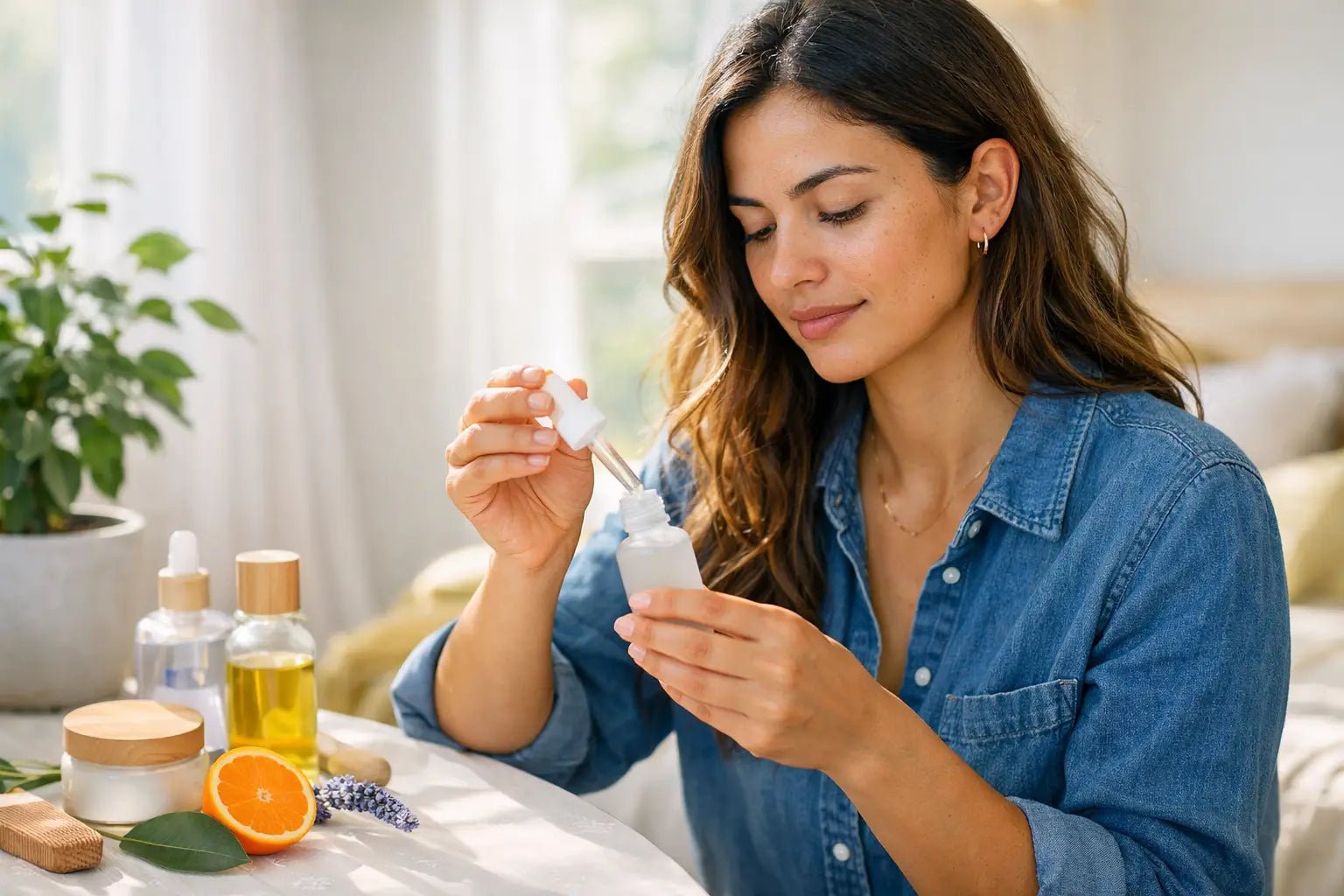
What Makes a Product Non Toxic? A Clearer Standard
A body wash labeled “clean” can still leave you with more questions than answers. What makes a product non toxic is not a beige package, a botanical illustration, or one appealing claim on the front label. It is the full picture: the ingredients, how they are used, the level of exposure, the brand’s transparency, and whether the product performs well enough to earn a place in your real routine.
For most of us, the goal is not perfection or fear. It is reducing unnecessary exposure where we can, especially in the products used every day on our skin, hair, home, and family. A thoughtful standard makes that feel much more manageable.
What makes a product non toxic?
“Non-toxic” is a useful consumer term, but it is not one tightly regulated, universal promise. In practical terms, a non-toxic product is formulated to avoid ingredients associated with meaningful health or environmental concerns, particularly when safer, effective alternatives are available. It should also be made with clear disclosure and a level of care that matches its intended use.
That last part matters. A rinse-off hand soap and a leave-on face cream do not create the same kind of exposure. Neither does a product used once a month versus a lip balm reapplied throughout the day. A discerning approach considers dosage, frequency, where the product goes on the body, and who is using it.
A truly considered product does not simply swap one controversial ingredient for a trendy substitute. It takes the formulation as a whole seriously. It also recognizes that natural is not automatically safe, synthetic is not automatically harmful, and good choices deserve more nuance than a marketing shortcut.
Start with ingredient transparency
The ingredient list is one of the clearest signs of whether a brand deserves your trust. A responsible company names what is in the product using the standardized ingredient list, rather than hiding behind vague language or making you search for basic information.
Some categories require extra attention because labels can be less specific. “Fragrance” or “parfum,” for example, may represent a blend of many undisclosed components. That does not mean every fragranced product is inherently unsafe, but it can make it harder to assess what you are using. For someone with sensitive skin, migraines, allergies, or a young child at home, that uncertainty may be reason enough to choose an option with full scent disclosure or no added fragrance.
Transparency also includes honesty about what a product can do. A face wash does not need to promise a miracle to be worthwhile. Clear expectations, sensible directions, and straightforward ingredient information are signs of a brand that respects its customer.
Look beyond a “free-from” claim
A product can be free from one ingredient you prefer to avoid and still contain several others that do not align with your standards. That is why front-label claims should be a starting point, not the final answer.
Many people building a lower-tox routine choose to avoid or limit ingredients such as parabens, phthalates, formaldehyde and formaldehyde-releasing preservatives, certain ethoxylated ingredients that may carry contamination concerns, and PFAS in categories where they may be used for water resistance or long wear. Depending on the product, they may also look closely at artificial fragrance, certain chemical UV filters, or harsh surfactants that can be irritating for their skin.
The right filter is personal. A person with eczema may prioritize gentle cleansing agents and fragrance-free formulas. A parent may focus first on the products their child uses daily. Someone trying to simplify a teen skincare routine may seek formulas that support blemish-prone skin without overly stripping it or filling the bathroom cabinet with aggressive treatments.
The point is not to memorize a giant ingredient blacklist. It is to choose brands with clear, consistent standards, then let that curation do some of the work for you.
Safety depends on formulation, not one ingredient alone
Ingredient conversations often become overly black and white. The truth is more useful: concentration, delivery system, purity, and product format all affect how an ingredient behaves.
Take essential oils. They can create a beautiful sensory experience, and many people enjoy them. Yet they can also be irritating or sensitizing for some skin types, especially in leave-on products or when formulas use them heavily. A non-toxic standard should leave room for this reality rather than treating plant-based as a blanket guarantee.
Preservatives are another good example. Water-based products need protection from mold, yeast, and bacteria. An unpreserved cream is not automatically a safer cream if it can become contaminated during normal use. The better question is whether a product uses a well-considered preservation system, is appropriately tested for stability, and is packaged in a way that helps keep it safe.
This is why “nothing but ingredients you can pronounce” is not a dependable safety test. Some long ingredient names are simply the standardized names of common, well-studied compounds. What matters more is a formula built with purpose and a brand willing to explain its choices.
Performance is part of the standard
Products that sit unused are not sustainable, practical, or particularly helpful. A non-toxic deodorant has to work through a long day. A safer all-purpose cleaner should still handle the kitchen counter. A gentle cleanser should remove the day without leaving skin tight and uncomfortable.
Performance and ingredient integrity are not competing values. In fact, they should support one another. When a product works beautifully, it becomes easy to use consistently, which is what makes a simpler routine possible.
This is especially valuable for teens and people with reactive or blemish-prone skin. Overcorrecting with harsh scrubs, strong fragrance, or too many active products can disrupt the skin barrier and make an already frustrating situation feel worse. A calm, focused routine with well-formulated essentials is often a wiser place to begin than chasing every viral product launch.
Consider the whole product life
A more thoughtful purchase reaches beyond what is inside the bottle. Packaging, refill options, manufacturing choices, and how much product is needed per use all matter, even though there are trade-offs.
Glass may be recyclable, but it is heavier to ship and easier to break. Plastic is not ideal in every context, yet a durable, recyclable bottle may be the most practical choice for a shower product or a family with small children. Concentrates and refills can reduce packaging, but only when they are easy enough to use that people actually keep buying them.
There is rarely one perfect answer. The most meaningful progress usually comes from selecting products you will use fully, repurchase thoughtfully, and keep out of the landfill whenever possible.
How to shop with more confidence
You do not need to replace every product in your home this weekend. Start where exposure is frequent and the switch feels easy: hand soap, deodorant, body lotion, laundry care, dish soap, or the skincare you use morning and night. Replace products as they run out, and give yourself time to learn what works for your household.
When comparing options, ask a few simple questions. Can I see the complete ingredient list? Does the brand explain its standards clearly? Is this appropriate for how often and where I will use it? Does the formula address my actual need without unnecessary extras? Will I realistically enjoy using it?
At Free Living Co, our approach is built around those questions. We do the filtering for ingredient safety, performance, and everyday usefulness, so healthier choices can feel less like another research project and more like clean living for real life.
A non-toxic home or routine is not created through anxious label-reading or a flawless cabinet. It grows through small, informed choices that fit your life - products you can trust, use often, and feel good bringing home.



Leave a comment
This site is protected by hCaptcha and the hCaptcha Privacy Policy and Terms of Service apply.