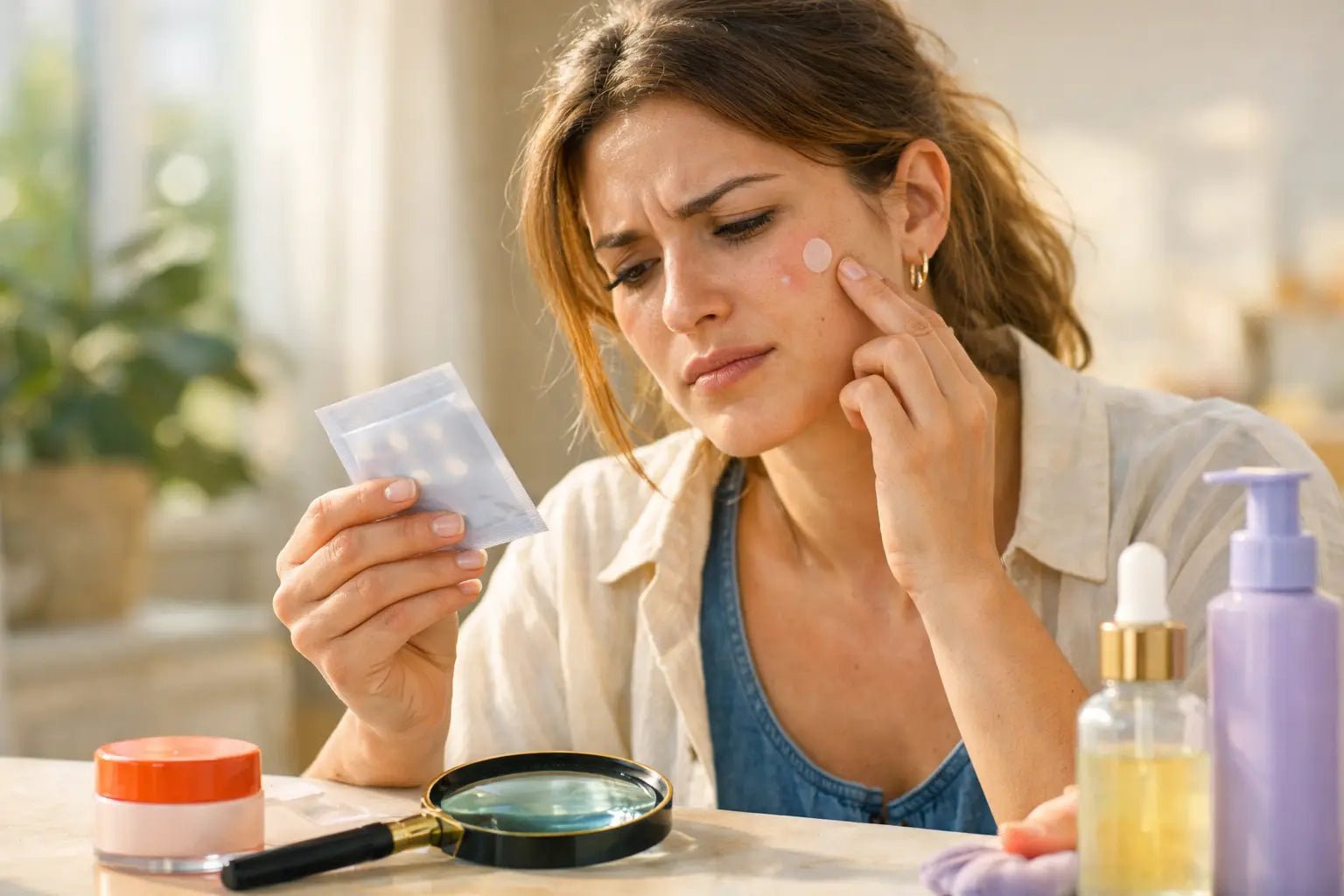
Do Pimple Patches Contain Toxins? What to Know
A pimple patch can feel like the easiest step in a breakout routine: apply it, sleep, and wake up with a spot that looks less angry. But when it sits directly on your skin for hours, it is reasonable to ask: do pimple patches contain toxins? The short answer is that a simple hydrocolloid patch is generally a low-concern choice, but formulas vary widely. Added actives, fragrance, dyes, and adhesives can change the picture, especially for sensitive or blemish-prone skin.
For clean living in real life, the goal is not to panic over every ingredient. It is to know what you are putting on your skin, choose products with a clear purpose, and skip unnecessary extras.
Do pimple patches contain toxins?
“Toxins” is a broad word, not a precise ingredient category. An ingredient may have a known hazard in a particular amount, form, or use, without posing the same risk in a finished skincare product. What matters is the specific ingredient, the amount used, how long it stays on your skin, and your own sensitivity.
Most classic pimple patches are made from hydrocolloid, a moisture-absorbing material commonly used in wound dressings. It forms a protective seal over a surface-level blemish, helps absorb fluid, and can keep you from touching or picking at the spot. In a straightforward formula, hydrocolloid is not typically the ingredient that raises concern.
The bigger question is what else is in the patch. Some formulas include acne treatments, scent, pigments, botanical oils, or stronger adhesives. None automatically makes a patch “toxic,” but some can be irritating, sensitizing, or simply unnecessary for a small, inflamed area of skin.
What is usually in a pimple patch?
A basic hydrocolloid patch may have only a few functional components: hydrocolloid material, an adhesive layer, and a thin outer film that protects the patch from water and friction. This is often the simplest route for a whitehead, a picked blemish, or a spot that has come to a head.
More targeted patches may add active ingredients such as salicylic acid, sulfur, tea tree oil, or niacinamide. Microneedle-style patches may also use tiny dissolving points to deliver ingredients into the skin. These options can be useful for the right breakout, but they deserve more careful ingredient scrutiny than a plain hydrocolloid dot.
Ingredient lists are not always as detailed as shoppers would like, particularly for the backing or adhesive system. When a brand clearly identifies its materials and avoids vague marketing claims, it makes an informed choice much easier.
Hydrocolloid is not the same as an acne medication
Hydrocolloid works best on blemishes with fluid to absorb. It does not treat the root cause of acne, clear pores throughout the face, or reliably flatten a deep cyst under the skin. Its main benefits are protection, absorption, and reducing the temptation to pick.
That distinction matters for teens and adults alike. If you keep layering patches onto deep, painful breakouts and seeing little change, the patch may not be the problem. It may just be the wrong tool for that type of blemish.
Ingredients worth a closer look
A thoughtful pimple patch does not need a long ingredient list. If your skin tends to react easily, look closely at the additions below and decide whether they serve a real purpose in your routine.
Fragrance and essential oils
A patch does not need to smell like anything to work. Added fragrance can be a source of irritation or allergic contact dermatitis for some people, particularly when a patch creates a sealed, occlusive environment. Essential oils, including tea tree oil, are often positioned as natural acne helpers, but natural does not always mean gentle. Tea tree can be sensitizing, especially in leave-on products or for compromised skin.
Artificial colors and decorative details
Brightly colored, star-shaped, or printed patches can make skincare feel more fun, and that can be a real benefit for a teen who is learning not to pick. Still, decorative colors do not improve performance. If a patch causes itching, redness, or a rash in the shape of the adhesive, choose an uncolored option and give the area time to recover.
Strong acne actives
Salicylic acid can help unclog pores, and sulfur can be useful for certain blemishes. But placing an active under an occlusive patch can make it feel more intense. That may be too much if you already use a retinoid, exfoliating acid, benzoyl peroxide, or prescription acne treatment.
Use active patches selectively rather than treating them as an add-on to every product in your routine. A small spot can become dry, flaky, and more visibly irritated when too many treatments overlap.
Adhesives and acrylates
Adhesives help a patch stay on through sleep, workouts, and busy days. Occasionally, they can trigger irritation or an allergy, especially in people who have reacted to bandages, medical tape, nail products, or lash glue. Acrylates are a broad family of ingredients that may be used in adhesives. They are not a reason to avoid every patch, but a history of adhesive reactions is a good reason to patch test or choose a brand that is transparent about materials.
How to choose a lower-concern pimple patch
Start by matching the patch to the blemish. For a surface-level whitehead, a plain hydrocolloid patch with minimal ingredients is often enough. For a deep, under-the-skin bump, focus on a gentle, consistent acne routine instead of expecting a patch to perform a miracle.
Then read beyond the front-label claims. “Clean,” “natural,” and “dermatologist tested” can be useful signals, but they are not universal standards. Look for a full ingredient list, avoid fragrance if your skin is sensitive, and be cautious with heavily decorated patches if you do not know how your skin responds to colorants or adhesives.
Pay attention to the condition of your skin, too. Do not apply a patch over a widespread rash, eczema flare, or open wound unless a healthcare professional has advised it. If you have just used a strong exfoliant or picked at a blemish, a simple, non-medicated hydrocolloid patch may be the gentler choice.
For young skin, less is usually more. A teen skincare routine does not need a shelf full of aggressive treatments. A gentle cleanser, lightweight moisturizer, daily sunscreen, and one well-chosen acne treatment can go much further than cycling through viral products. Live Free Skincare was created with that calm, uncomplicated approach to blemish-prone and sensitive skin in mind.
A simple way to use patches safely
Apply a pimple patch to clean, completely dry skin. Moisturizer, sunscreen, and facial oil can keep it from sticking, while applying a patch to damp skin can trap excess moisture. Leave it on according to the brand’s directions, then remove it slowly rather than pulling it off quickly.
If the area becomes itchy, swollen, increasingly red, or blistered, remove the patch and stop using that formula. Those signs point to irritation or a possible contact allergy, not a normal “purging” process. A persistent rash, severe acne, or painful cystic breakouts are good reasons to check in with a dermatologist.
The bottom line on pimple patch safety
The best pimple patch is not necessarily the cutest, strongest, or most complicated one. For many breakouts, a fragrance-free hydrocolloid patch with a short, transparent ingredient list is a sensible, low-fuss option. It protects the blemish while you let your skin do what it is designed to do: heal.
A few intentional choices can make the whole process feel lighter. Choose the simplest patch that fits your skin’s needs, resist the urge to pick, and give your routine enough consistency to show you what is actually working.



Leave a comment
This site is protected by hCaptcha and the hCaptcha Privacy Policy and Terms of Service apply.