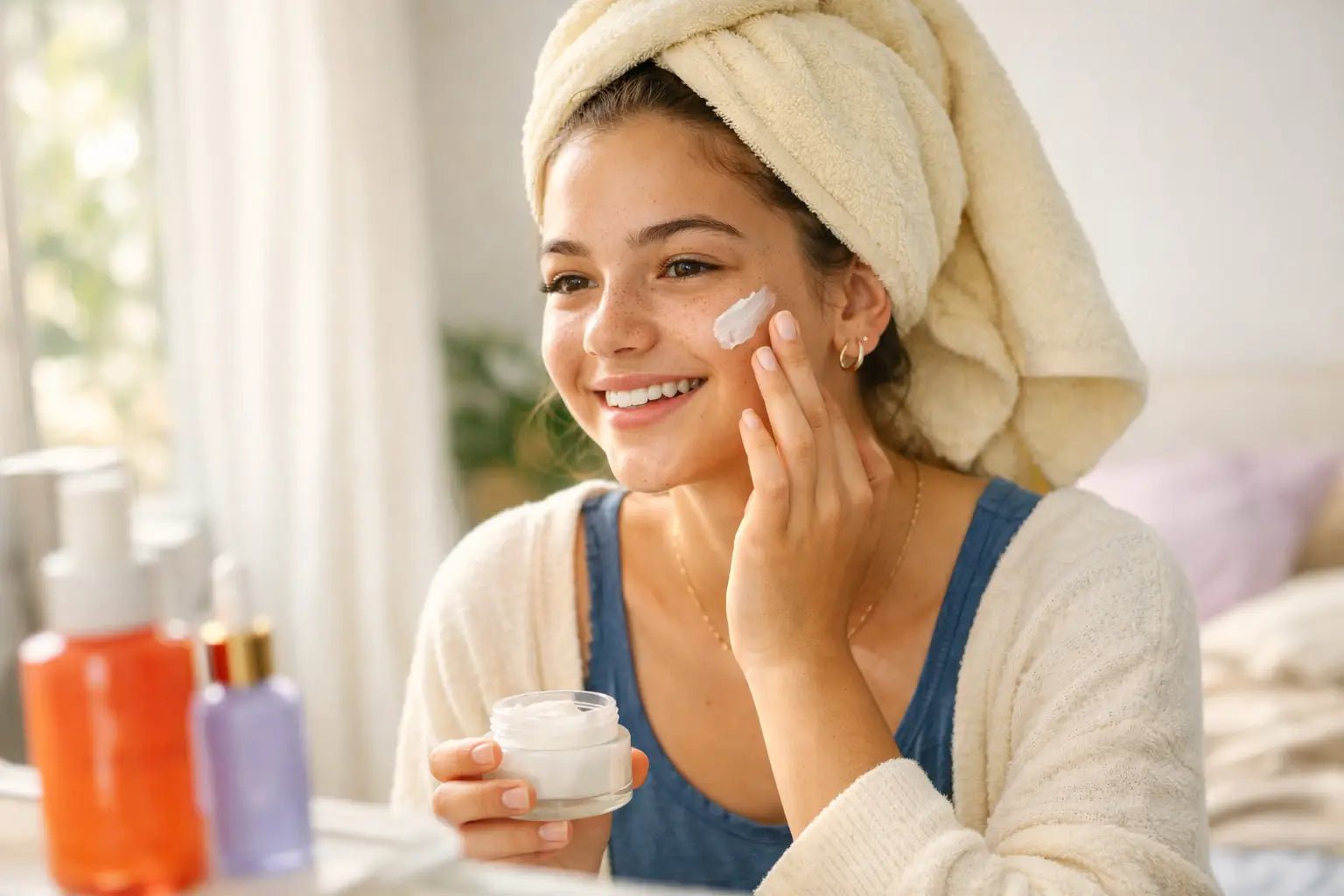
Teen Skincare Success Stories That Start Simple
A bathroom counter crowded with trendy serums rarely leads to clearer skin. More often, it leads to a teen who is frustrated, a parent who has spent money on products that sting, and a routine that changes every three days. The most encouraging teen skincare success stories tend to look quieter than social media suggests: fewer steps, more consistency, and a little patience for skin that is doing a lot of growing up.
Teen skin is not simply adult skin with a few breakouts. Hormone shifts can increase oil production, sports and sweat can add congestion, and the instinct to scrub or spot-treat every blemish can weaken the skin barrier. The goal is not perfection by Friday. It is helping a teen build habits that support comfortable, balanced skin and make them feel more confident in the process.
What Teen Skincare Success Stories Have in Common
The stories below reflect common, real-life routine shifts rather than overnight transformations. Every teen's skin, health history, and acne severity are different. Still, the same pattern comes up again and again: success begins when the routine becomes easier to follow, not harder to manage.
The teen who stopped treating every blemish like an emergency
One teen had a familiar cycle. A breakout appeared, then came a drying spot treatment, an exfoliating pad, a clay mask, and sometimes a new product suggested by a friend. Her skin became tight, red, and more reactive, which made every new blemish feel even more urgent.
The shift was not a dramatic new active ingredient. It was taking away the pressure to attack her skin. She moved to a gentle cleanse at night, a simple moisturizer morning and evening, and one targeted acne-supporting treatment used only as directed. She wore sunscreen during the day, especially because irritated or healing skin is more vulnerable to lingering discoloration.
After several weeks, her skin was not flawless. It was calmer. That mattered. Less redness made breakouts easier to tolerate, and the routine was simple enough to use even after a late practice or a long night of homework. For many teens, this is the first real win: learning that calm skin often responds better than overworked skin.
The athlete who made room for sweat and real life
A teen who plays a field sport may wash her face in the morning, then spend hours in sunscreen, sweat, helmet straps, and dust. Asking her to follow an elaborate 10-step routine is not realistic. What worked was building around the moments that already existed.
She kept a clean face towel at home, avoided letting sweaty hats and straps sit against her skin longer than necessary, and cleansed after practice when she could. At night, she used a gentle cleanser to remove sunscreen and sweat, followed by moisturizer. Her family also paid attention to hair products that could transfer onto her forehead and upper back.
This kind of success is practical, not performative. Her routine supported an active life instead of competing with it. There will always be days when she gets home exhausted and goes straight to bed. A dependable baseline gives those imperfect days less power.
The teen who needed a routine that felt like her own
Parents often begin the search for skincare because they see their teen becoming self-conscious. That care is understandable. But teens are more likely to stay consistent when they have a say in what goes on their skin, how the products feel, and where the routine lives.
One parent and teen started by choosing just three products together: a cleanser, moisturizer, and sunscreen. They agreed on when to use each product and placed them where they were easy to reach. The parent stopped commenting on every blemish, and the teen stopped feeling monitored.
Over time, the routine became an act of self-care rather than a correction. That emotional shift is easy to overlook, but it can be meaningful. Skincare should give teens useful tools, not teach them that their face is a problem to solve.
A Simple Teen Routine That Can Actually Last
A routine earns its place when a teen can repeat it on a school morning, after a game, and during a sleepover. Start with the basics and give them time. Constantly rotating products makes it hard to tell what is helping and what is irritating.
In the morning, a teen may only need a rinse or gentle cleanse, moisturizer if their skin feels dry, and broad-spectrum sunscreen. For some oily or acne-prone teens, a lightweight moisturizer can still be helpful. Skipping moisture entirely can leave skin feeling stripped, particularly when acne treatments are involved.
At night, use a gentle cleanser to remove sunscreen, makeup, sweat, and the day. Follow with moisturizer. If acne is a concern, add one treatment product thoughtfully rather than layering multiple exfoliants, acids, masks, and spot treatments. The right choice depends on the type of acne, sensitivity, and what the teen will consistently use.
Live Free Skincare was created with blemish-prone and sensitive skin in mind, with the kind of straightforward routine that helps take the guesswork out of getting started. The best product is still one that feels good on the skin and fits into a teen's real routine.
Why Fewer Products Can Deliver Better Results
Teen skincare is often marketed as entertainment: colorful packaging, endless hauls, and a new “must-have” ingredient every week. There is nothing wrong with enjoying beauty, but skin can pay the price when experimentation becomes daily disruption.
Strong fragrance, harsh scrubs, frequent peeling products, and too many active ingredients can be difficult for sensitive or already-inflamed skin. Clean beauty also deserves a thoughtful approach. “Clean” on the label is not a guarantee that a product will suit every teen, just as a conventional product is not automatically the wrong choice. What matters is a well-considered formula, a clear purpose in the routine, and a teen's individual response.
For parents who want to make safer choices without spending hours decoding labels, curation can reduce the noise. Look for products designed with gentle, purposeful formulas and avoid treating skincare as a shopping competition. One reliable cleanser is more valuable than a drawer of half-used experiments.
When a Skincare Routine Needs More Support
Some breakouts are persistent, painful, or beginning to scar. Others come with significant distress, social withdrawal, or a sudden change that does not seem typical. In those moments, skincare is supportive care, not the whole answer. A board-certified dermatologist can help identify whether acne, dermatitis, folliculitis, or another condition is involved and recommend an appropriate treatment plan.
There is no failure in needing medical guidance. In fact, seeking help early can protect both skin and confidence. A gentle routine can often continue alongside professional care, but teens should follow their clinician's advice about active treatments and product combinations.
Parents can also watch for the less visible signs of product overload: burning, persistent tightness, flaking, redness, or skin that seems to worsen every time a new treatment is added. Those are good reasons to pause, simplify, and reassess.
Helping Teens Measure Progress More Kindly
Progress is rarely a straight line. Hormones, stress, sports seasons, menstrual cycles, travel, and even a forgotten pillowcase can affect the skin from week to week. Taking occasional photos in similar light can be more useful than inspecting the mirror every morning. It gives a clearer view of changes in inflammation, texture, and healing over time.
It also helps to define success more broadly. Maybe a teen is no longer picking at blemishes. Maybe their skin no longer burns after cleansing. Maybe they know how to reapply sunscreen before a long day outside, or they can name the three products that work for them. These are meaningful signs that a routine is serving them well.
The most lasting teen skincare success stories are not about chasing a filtered version of perfect skin. They are about giving young people a calm, reliable way to care for themselves - and the confidence to let their lives be bigger than a breakout.



Leave a comment
This site is protected by hCaptcha and the hCaptcha Privacy Policy and Terms of Service apply.