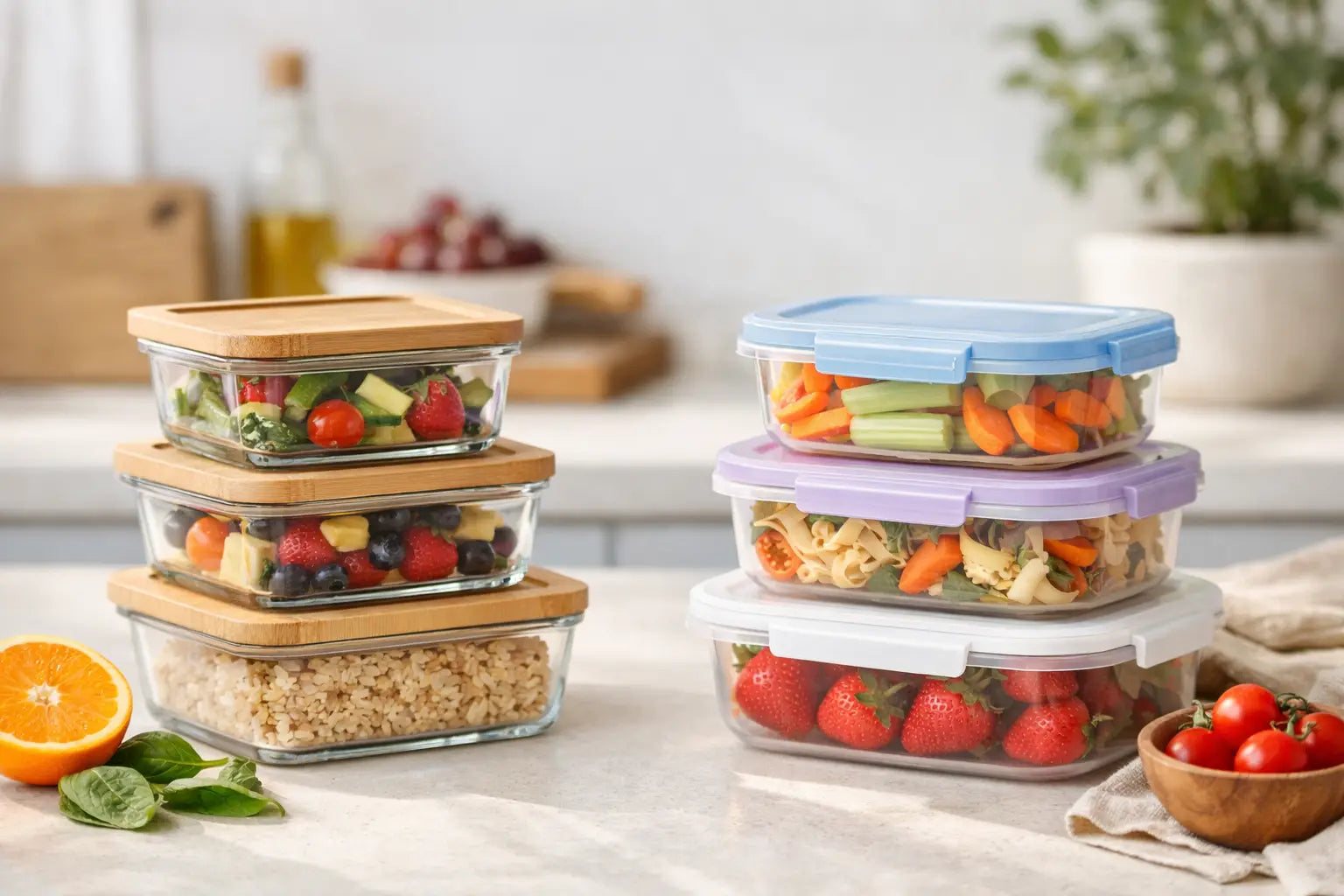
Glass Containers Versus Plastic Food Storage
A leftover container can be one of the quietest choices in your kitchen - until it is reheated, packed into a child’s lunch, or used every day for years. The conversation around glass containers versus plastic food storage is not about finding one perfect material. It is about choosing the right tool for the food, the temperature, and the rhythm of your real life.
For a lower-tox kitchen, glass is often the easy default for storing, reheating, and serving food. But plastic still has a practical role, especially when weight, cost, and breakage matter. A thoughtful kitchen does not need to be all-or-nothing. It needs a few dependable standards that make healthier choices feel simple.
Glass Containers Versus Plastic Food Storage: The Core Difference
Glass is an inert material, meaning it does not react easily with the food inside it. It does not absorb tomato sauce, curry, garlic, or leftover odors, and it is unlikely to stain over time. For meals you plan to heat, acidic foods, oily foods, and long-term leftovers, glass offers meaningful peace of mind.
Plastic food storage is lightweight, affordable, and less likely to shatter when dropped. Those benefits are real, particularly for school lunches, road trips, picnics, and homes with young children. The trade-off is that plastic can wear down with use. Heat, sunlight, harsh dishwasher cycles, and scratches may all affect the container over time.
Many food-storage plastics are regulated for food contact, but “food safe” does not mean every plastic is equally suited to every use. The bigger concern is often repeated exposure to heat and wear. When plastic is heated, especially alongside fatty or acidic foods, there is greater potential for substances from the container to migrate into food. Choosing glass for hot food and reheating is a clear, manageable way to reduce that exposure.
When Glass Is Worth the Switch
If you are slowly updating your kitchen, start where glass makes the biggest difference: the containers that hold food while it is warm or that go from refrigerator to microwave to table.
Hot leftovers and meal prep
Glass is particularly well suited for soups, roasted vegetables, pasta, grains, sauces, and prepared meals. You can portion dinner, refrigerate it, and reheat it without transferring food between containers. That removes a small daily friction point while keeping hot food away from aging plastic.
Glass also keeps food looking more appetizing. You can see what is inside at a glance, which makes it easier to use leftovers before they get forgotten in the back of the refrigerator. Clear storage is a surprisingly helpful tool for reducing food waste.
Acidic, oily, and deeply colored foods
Tomato-based sauces, citrus dressings, berries, curries, chili oil, and pesto can leave behind stains and odors in plastic. Glass handles these foods beautifully. It is easier to clean thoroughly, and it will not hold onto yesterday’s garlic vinaigrette when you want to store fruit tomorrow.
Batch cooking and freezer meals
Freezer-safe glass containers are excellent for soups, broths, casseroles, and make-ahead meals. Leave enough room at the top for food to expand as it freezes, and allow very hot food to cool somewhat before placing it in the refrigerator or freezer. Avoid dramatic temperature changes, such as moving a frozen glass container directly into a hot oven, since thermal shock can cause breakage.
Where Plastic Still Makes Sense
Clean living for real life leaves room for practicality. Replacing every container in your home at once is unnecessary, and plastic is not automatically a bad choice when used thoughtfully.
Lightweight plastic containers can be useful for dry snacks, crackers, trail mix, sandwich ingredients, and lunches that will be carried around all day. They are also easier for small children to manage independently. If a glass container would make you avoid packing lunch altogether because it is too heavy or fragile, a well-maintained plastic option may be the more supportive choice.
The simplest guideline is this: use plastic primarily for cool, dry food, and do not make it your first choice for heating. If you bring home takeout in plastic, transfer hot leftovers into glass or ceramic before reheating when possible.
How to Choose Better Plastic Food Storage
You do not need to decode every number on the bottom of a container to make better decisions. Focus on the condition of the item and how you use it.
Choose containers that are intended for food storage, and favor those labeled BPA-free. BPA-free does not mean a product is entirely free of every chemical of concern, but it can be one useful screening point. More importantly, retire containers that are cloudy, cracked, warped, heavily scratched, stained, or persistently smelly. Damage creates more surface area and makes a container harder to clean well.
Skip microwaving plastic whenever you can, even if the package says microwave-safe. That label generally means the container should withstand microwave use without melting under specified conditions. It does not necessarily mean heating plastic is the lowest-exposure option. Reheat on glass, ceramic, or a plate instead.
It also helps to keep plastic away from the dishwasher’s hottest settings when possible. Hand-washing can extend its useful life, especially for reusable lunch containers and lids. And never reuse single-use takeout tubs, yogurt cups, or water bottles as everyday storage. They were not designed for repeated wear and heat.
Do Glass Lids Solve Everything?
Most glass food-storage systems use plastic or silicone lids, and that is completely normal. The lid is often what creates a lightweight, leak-resistant seal. The goal is not perfection. It is reducing unnecessary contact between food and materials that may be less stable under heat.
When reheating food in a glass container with a plastic lid, remove the lid or set it loosely aside rather than heating it directly over the food. For the most frequent use, look for lids that fit securely, are easy to wash, and do not retain odors. A container is only a good investment if it is convenient enough to use every day.
Silicone bags and covers can also be useful additions, especially for freezer storage, snacks, and produce. Like plastic, silicone is best treated with care: follow the manufacturer’s temperature guidance, avoid using damaged items, and choose products from brands that clearly disclose material information.
The Sustainability Question Is More Nuanced Than It Looks
Glass is durable, recyclable, and can last for many years when cared for well. That longevity is one of its strongest environmental advantages. A set of glass containers that replaces a steady stream of disposable bags and stained plastic tubs can be a meaningful household shift.
Still, glass is heavier to transport and takes more energy to produce than lightweight plastic. It can also break, which means it is not automatically the most sustainable option in every situation. The best choice is often the one you will use for a long time.
Use what you already own before replacing it solely for aesthetic reasons. Then make intentional upgrades as older pieces wear out. Prioritizing a few versatile glass containers in useful sizes is usually more effective than buying an oversized matching set that takes up cabinet space.
A Low-Stress Way to Build a Better Storage Routine
Start with the containers you use most often. A few medium glass containers for leftovers, two larger options for meal prep, and several small jars or bowls for sauces and snacks can cover a surprising amount of kitchen life. Choose shapes that stack neatly in your refrigerator and lids that are easy to match.
Keep your current plastic containers for cold lunches, dry pantry items, or temporary transport if they are still in good condition. As you notice a container becoming worn, replace it with glass rather than buying another plastic version. This approach is gentler on your budget and far more realistic than a complete overnight overhaul.
For busy households, the routine matters as much as the material. Label leftovers with the date, place older food toward the front of the refrigerator, and store meals in portions you are likely to eat. A beautiful container is helpful, but the real win is food that gets enjoyed instead of wasted.
The most supportive kitchen choices are the ones that reduce mental load. Let glass take the lead for hot, acidic, oily, and everyday leftovers. Let well-cared-for plastic handle the occasions when lightness and durability matter most. Small swaps, repeated often, can make your kitchen feel calmer, cleaner, and easier to trust.




Leave a comment
This site is protected by hCaptcha and the hCaptcha Privacy Policy and Terms of Service apply.