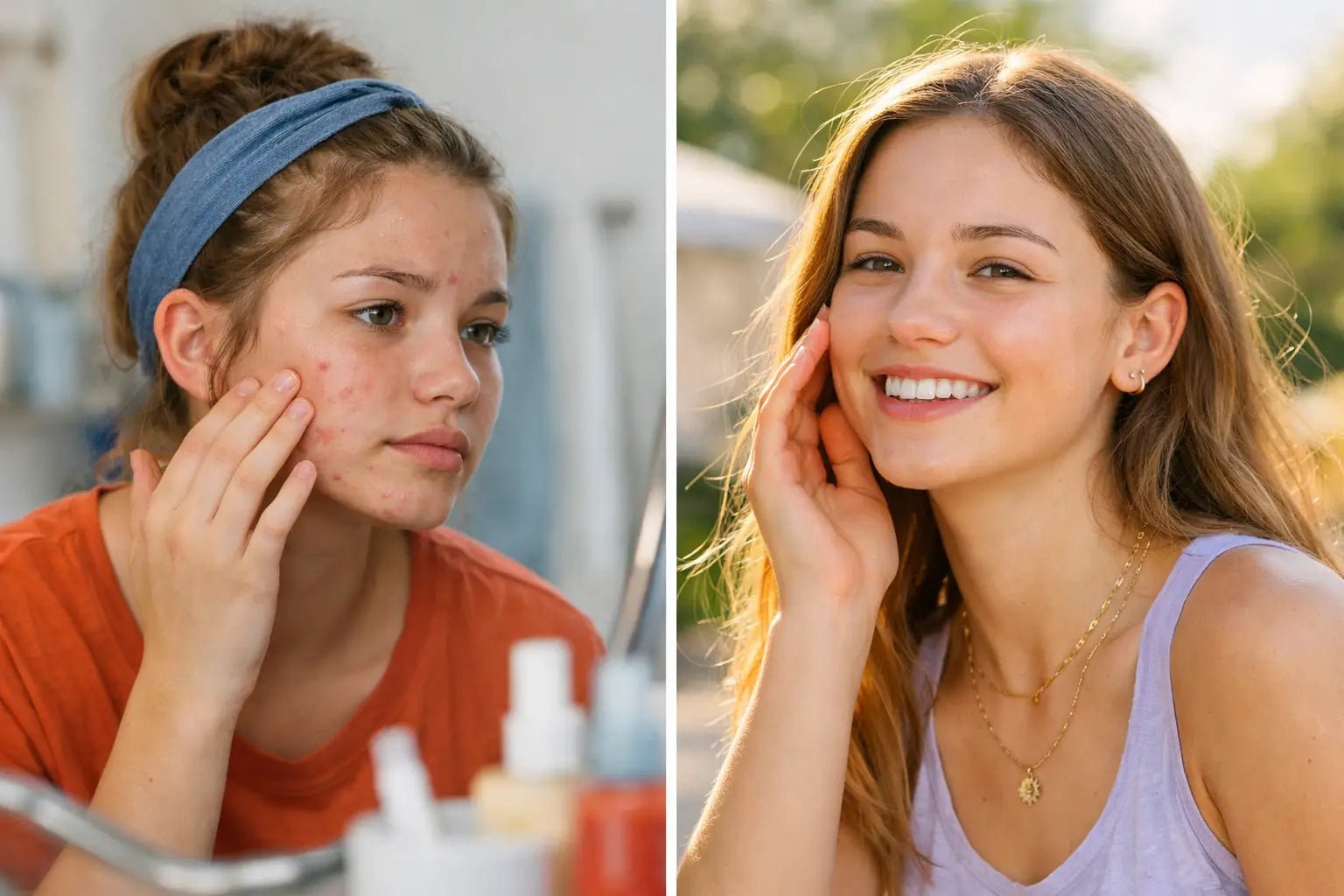
Teen Skincare Routine Before and After
The photos are usually what get all the attention. A dramatic teen skincare routine before and after can make it look like clearer skin happened in a week, with the right cleanser and one miracle serum. Most parents and teens know better. Real skin takes consistency, a little patience, and a routine that does not irritate the skin barrier in the process.
That matters even more during the teen years, when hormones, sports, stress, makeup, and changing habits can all show up on the face at once. The goal is not perfect skin. It is calmer skin, fewer flare-ups, and a routine simple enough to actually stick with.
What a teen skincare routine before and after really shows
A true before and after is rarely about adding more products. More often, it reflects the opposite. Skin improves when a routine gets edited down to the essentials, harsh formulas are removed, and the skin has time to regulate.
For teens, the biggest visible changes usually happen in three areas. First, breakouts become less inflamed. Second, redness and dry patches settle down. Third, skin texture starts to look more even because it is no longer being over-scrubbed or overwhelmed.
This is why the best routine is usually not the trendiest one. A 12-step lineup may look impressive on a shelf, but teen skin tends to do better with a gentle cleanser, a lightweight moisturizer, daily sunscreen, and one targeted treatment if needed. That is enough for many teens, especially if their skin is sensitive or newly acne-prone.
Start with the skin concern, not the trend
A teenager with a few clogged pores around the nose does not need the same routine as someone dealing with inflamed acne across the cheeks and jawline. Before choosing products, it helps to notice what is actually happening.
If skin feels oily by midday, looks shiny, and breaks out with whiteheads or blackheads, the routine may need a balancing cleanser and a pore-friendly treatment. If skin stings easily, gets flaky, or reacts to almost everything, the barrier likely needs support before acne actives are introduced. If breakouts worsen around sports practice, hats, or sweaty afternoons, cleansing habits and fabric friction may be part of the picture too.
The trade-off is simple. Stronger products can move acne faster, but they can also trigger dryness and irritation that make skin look worse for a while. Gentler routines may take longer, but they are often easier to tolerate and maintain. For teens, consistency usually wins.
A simple morning routine that supports clearer skin
Morning skincare should feel easy enough for a rushed school day. If it takes too long, it will get skipped.
Cleanse lightly
In the morning, many teens do well with a gentle cleanse to remove overnight oil and sweat. If skin is very dry or sensitive, a rinse with lukewarm water may be enough some days. The key is to avoid squeaky-clean tightness, which is usually a sign the cleanser is too stripping.
Moisturize, even if skin is oily
This is one of the most common mistakes in teen skincare. Oily skin still needs moisture. When skin gets dehydrated, it can become more reactive and sometimes even produce more oil to compensate. A lightweight, non-comedogenic moisturizer helps keep the barrier steady without feeling heavy.
Finish with sunscreen
Daily sunscreen matters for every skin tone, and not just for beach days. It helps protect healing skin, reduces the risk of post-breakout marks getting darker, and supports long-term skin health. For teens who resist sunscreen because it feels greasy, texture makes all the difference. A lightweight mineral or hybrid formula often feels more wearable.
The evening routine is where the reset happens
Nighttime is when makeup, sunscreen, sweat, and the day itself need to come off. This is also the better time for treatment products, since there is less risk of sun sensitivity.
Wash away the day gently
If a teen wears makeup or water-resistant sunscreen, a first cleanse may help, but it does not need to be complicated. The goal is simply to remove buildup without scrubbing. Cleansing for about 30 seconds with fingertips is usually enough.
Use one treatment, not three
This is where many routines go off course. It is tempting to layer salicylic acid, benzoyl peroxide, retinol, and exfoliating pads in one night because each one promises clearer skin. But stacked actives can leave teen skin red, flaky, and angry.
For clogged pores and mild acne, salicylic acid can be a smart place to start because it helps clear oil and debris inside the pore. For more inflamed breakouts, benzoyl peroxide may work better, though it can be drying and may bleach towels. If skin is sensitive, it is often best to use a treatment only a few nights a week at first and build slowly.
Seal in moisture
A simple moisturizer after treatment helps reduce irritation and keeps skin more comfortable. This step is not optional when actives are involved. Calm skin is more resilient skin.
What to expect from before and after results
A realistic teen skincare routine before and after does not usually show overnight transformation. In the first two weeks, the main change may be less tightness, less redness, or fewer new angry pimples. By four to six weeks, many teens start to notice smoother texture and more predictable skin. More significant acne improvement often takes eight to twelve weeks, especially if breakouts are hormone-related.
It also depends on what caused the issue in the first place. If the main problem was using harsh products, results can come fairly quickly once the routine is simplified. If acne is being driven by hormones, sports gear, hair products, or genetics, progress may be slower and less linear.
That does not mean the routine is failing. Skin often improves in waves. A better sign than one perfect week is a general downward trend in irritation and breakout severity over time.
Common mistakes that slow progress
The biggest one is changing products too often. If a teen tries a new cleanser on Monday, an acid toner on Thursday, and a spot treatment the next week, it becomes almost impossible to tell what is helping and what is causing irritation.
Another frequent issue is over-exfoliation. Scrubs, cleansing brushes, peel pads, and strong acids can make skin look polished for a day, then trigger inflammation that lingers. Teen skin usually responds better to restraint.
Picking is another major factor. Even a solid routine cannot fully compete with frequent squeezing or scratching. Picking increases inflammation, prolongs healing, and makes marks more likely to stick around.
Finally, there is the ingredient trap. Parents shopping for cleaner options are right to be thoughtful, but cleaner does not always mean gentler, and natural fragrance or essential oils can still be irritating for breakout-prone skin. What matters most is a formula that is effective, well-tolerated, and simple enough for daily use.
When a teen needs more than a basic routine
Sometimes a well-built routine helps, but not enough. If acne is painful, cystic, widespread, or leaving scars, it is worth talking with a dermatologist. The same is true if breakouts are affecting a teen's confidence in a bigger way, or if products consistently burn and sting no matter how carefully they are chosen.
Skincare can do a lot, but it is not a replacement for medical support when acne becomes severe. The most helpful approach is often a combination of a calm home routine and professional guidance.
Building a routine teens will actually use
The best products in the world do not help if they sit unopened in a cabinet. For most families, success comes from choosing a routine that feels manageable. Keep it visible, keep it short, and avoid making skincare feel like a punishment for having acne.
This is one reason curated skincare matters. Teens do not need dozens of options or confusing ingredient claims. They need a clear path: cleanse, moisturize, protect, and treat only when needed. That kind of editing is especially valuable when you are shopping for blemish-prone or sensitive skin and want formulas that feel clean, effective, and easy to trust. Brands like Live Free Skincare are built around that balance, which can make the process feel less overwhelming for both teens and parents.
Clearer skin is rarely about doing more. It is about doing less, better, and long enough to let the skin respond. A teen routine that feels calm, consistent, and realistic may not create a flashy overnight before and after, but it is far more likely to create lasting change.



Leave a comment
This site is protected by hCaptcha and the hCaptcha Privacy Policy and Terms of Service apply.