What Order to Apply Skincare In, and How Much
Cleanse, tone, treat, moisturize, and sunscreen last in the morning. Within that, thinnest to thickest. The reason the order matters at all is that a thick, oily layer sits on top of what comes after it, so putting cream on before a watery product wastes the watery product.
You do not need to wait between steps. No dermatology authority publishes a wait time, and the twenty-minute rule going around online is not from one. There is exactly one wait with a source behind it, and it is sunscreen before you go outside.
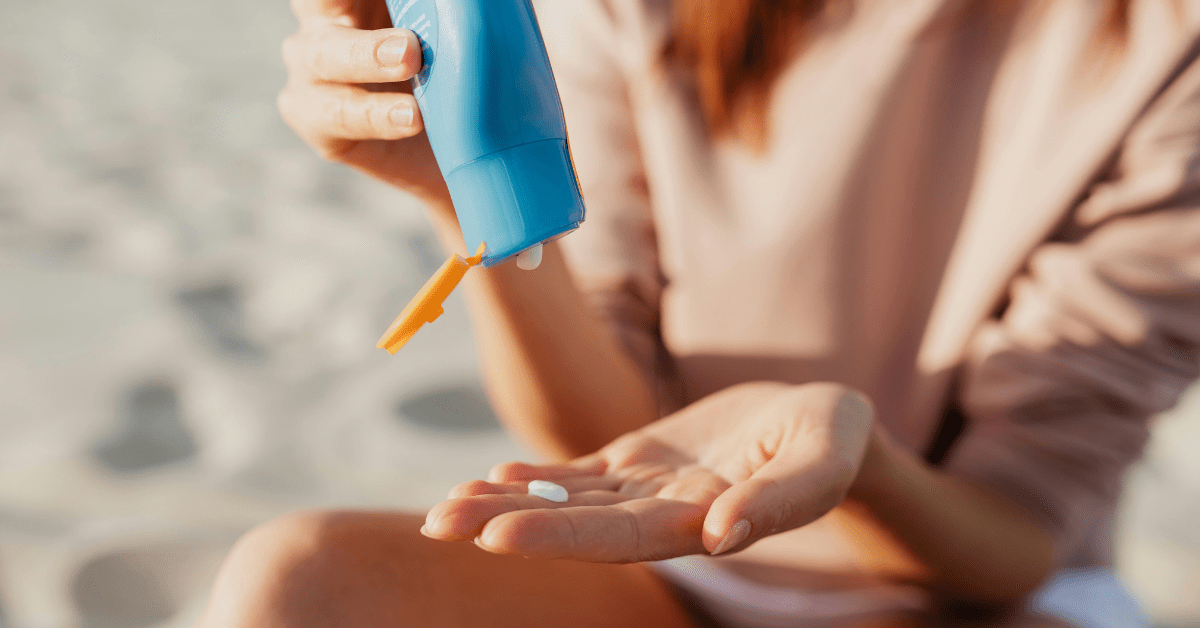
Amounts are where most people are genuinely wrong, and it is almost always sunscreen. A teaspoon for the face, and most people use a fraction of that.
There is no clinical guideline anywhere that tells you what order to put your skincare on in.
The internet states the order with the confidence of a physics law, and the AAD, DermNet and the dermatology journals do not publish one at all. The nearest thing to an authoritative statement is a dermatologist quoted by Cleveland Clinic saying a routine "should be ordered from lightest to heaviest (or thinnest to thickest)," with no study attached.
That does not make the order useless. It makes it a convention with a sensible mechanism behind it rather than an evidence-based rule, and knowing the difference tells you which parts to take seriously and which parts to ignore. Most of the rules you have been given are the second kind.
The order, and why it is that order
- Cleanse. Everything else lands on whatever you leave behind, so this is first by definition. Once at night is the non-negotiable one. Morning is optional and depends on how oily you wake up.
- Tone, if you use one. Here because it is the thinnest thing in the routine and because a hydrating toner is designed to go onto skin that is still damp.
- Treat. Anything active: a retinoid, a serum, an acid. Nearest to clean skin, because whatever you put on before it is a layer it now has to get through.
- Moisturize. Heavier than what came before, and part of its job is to hold the earlier layers in.
- Sunscreen, morning only. Always last of the skincare. It is a film that has to sit on the surface to work, and rubbing a moisturizer through it afterward disturbs the film.
The mechanism under "thinnest to thickest" is worth stating plainly, because once you have it you can work out any product nobody told you where to put. An emollient or occlusive layer is largely oil, and oil is a barrier. Anything water-based applied on top of it has a harder path in. Anything applied underneath it does not. So water-based first, oil-based after, and the categories sort themselves.
Should you believe that? The physical logic is sound and it is what formulators design around. What I have not found is a controlled trial measuring how much difference the order actually makes to a finished routine on a real face. My honest read: the order is worth getting right because it costs nothing, and it is not worth losing sleep over.
Sunscreen is the exception, and it is not a matter of convention. It is regulated as a drug and tested as a film at a specific thickness. Disturb the film and you are no longer using the product that was tested. That is why it goes last, every time, with no negotiation.
The wait-time question, answered honestly
Somebody told you to wait twenty minutes after a retinoid. Possibly thirty. Here is what the sources actually say: no dermatology authority recommends a specific wait between skincare steps. Not the AAD, not DermNet, not the journals.
Ask the two questions the rule cannot answer. What is happening during those twenty minutes? And how would anyone know when it finished? There is no proposed mechanism with a clock attached, no measurement, and no study. It is a number that got repeated until it sounded official.
What is true is narrower and more useful:
- Let a layer stop being wet before you add the next one. Not for absorption reasons, for practical ones. Sliding a cream through a still-liquid layer mostly just moves it around.
- If something stings, that is not a timer problem. It is a tolerance problem, and the answer is less often or a buffering layer of moisturizer underneath, not a longer pause.
- There is one sourced wait, and it is sunscreen. The AAD says to "apply sunscreen before going outdoors" because "it takes approximately 15 minutes for your skin to absorb the sunscreen and protect you." That one has a real number from a real authority. Put it on before you get dressed.
If waiting has been the thing standing between a teenager and actually doing their routine, drop it. Compliance beats choreography every time, and a routine that takes forty minutes is a routine that gets skipped, which is the real reason most products fail.
Damp or dry
This one has a source on one side and nothing on the other, which is a useful pattern to notice.
Moisturizer goes on damp skin. The AAD is explicit: "Be sure to apply your moisturizer when your skin is still damp after taking a shower or bath." Note what AAD does not say: it gives no time window. The instruction is damp, not "within sixty seconds." Pat with a towel until skin is no longer dripping, then apply.
Actives on damp skin is a different claim, and it is unsourced. The advice going around is that damp skin absorbs more, which is presented as either a benefit or a warning depending on who is talking. I could not find a single dermatology authority or peer-reviewed source addressing it either way. So the honest instruction is: if a product's own directions say damp, follow them; otherwise apply a retinoid or an acid to skin that is dry, which is what the products were tested on and what their instructions generally say.
How much
Here is the part where I have to be straight with you: for cleanser and moisturizer, there is no authoritative amount. No AAD figure, no DermNet figure. The pea-sized and nickel-sized guidance you have read is convention. Use enough to cover, which you can feel, and no more than that, which you can also feel.
There is a real measurement system in dermatology, the fingertip unit, but it was developed for dosing topical steroids rather than for cosmetics, and borrowing it for moisturizer is not a thing the literature supports.
Sunscreen is the exception, and it is the one that matters. The AAD gives numbers:
The only amounts with a source
| Where | How much |
|---|---|
| Face | "At least 1 teaspoon (about the amount needed to cover the length of your index and middle fingers)" |
| Whole body | "About 1 ounce of sunscreen, roughly the amount to fill a shot glass" |
| Timing | Fifteen minutes before going out, then every two hours |
The two-finger version you have seen on TikTok comes from that AAD line. It is a way of visualizing a teaspoon, not a separate rule with its own research behind it.
Squeeze it onto two fingers once, before you trust your eye. Almost everyone is applying a fraction of that, and under-application does more damage to your protection than the SPF number on the bottle ever will. That whole argument, including what the research says about how little people actually use, is in the sunscreen Foundation.
Morning and evening are different jobs
Morning is protection. Clean if you need to, hydrate, sunscreen. That is a defensible morning for almost anyone. Actives in the morning are usually a mistake for teenagers, partly because most of them increase sensitivity to sunlight and partly because morning is the routine most likely to get rushed.
Evening is repair. Clean properly, because the day is on your face. Then whatever active you are using, then moisturizer. No sunscreen.
If a step has to go, drop the evening extras, never the morning sunscreen. It is the only step in the routine with a payoff that compounds for decades.
Where products we make sit
Three of the four steps, and the fourth is linked rather than made.
- Cleanse: smooth sali, a salicylic acid cleanser that helps skin look clearer and feel smoother and helps keep pores looking clear. Salicylic acid is an active, which is part of why we put it in the step that gets rinsed off.
- Tone: pore magic, onto damp skin. It is a hydrating niacinamide toner rather than an astringent, and that distinction is the whole reason the skip-toner advice is confusing. It is optional under about thirteen.
- Moisturize: moisturose, fragrance-free, morning and night.
- Protect: sunscreen, which comes from the Free Living Co. marketplace rather than the Live Free line. Everything in the Sun & SPF collection is zinc oxide and titanium dioxide only, non-nano and fragrance-free, with the inactive ingredients read as carefully as the actives.
Three is what we make today rather than a statement about what skin needs. Serums, masks and eye products are coming, and when they arrive they get slotted into this order like anything else: thinner before thicker, actives near clean skin, sunscreen last.
Where a new product goes when nobody tells you
Two questions, and you will be right most of the time.
Is it water or is it oil? Water-based things go earlier. If it pours, it is early. If it has to be scooped, it is late.
Does it need contact with skin, or does it need to sit on top? A retinoid needs contact, so it goes near clean skin. Sunscreen needs to sit on top, so it goes last. Everything else is somewhere in between and the exact position is not going to decide anything.
And before any of it goes on your face, it should have spent a week and a half somewhere less important, which is the patch test Foundation. One new thing at a time, in an order you can actually keep up, is most of what makes a routine work.
Dana