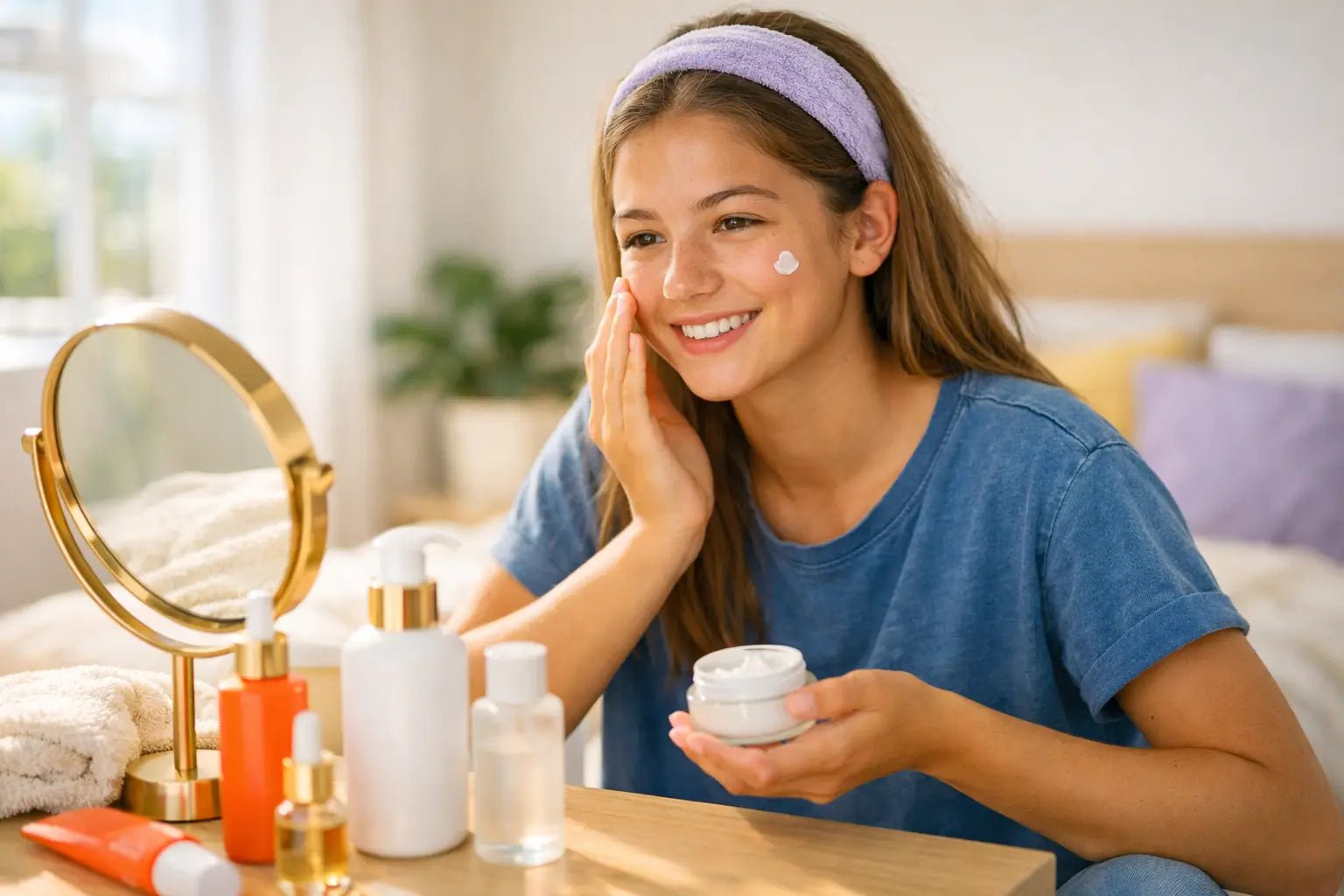
What Skincare Should Teens Use? A Simple Routine
A teen’s bathroom counter does not need to look like a skincare store to support healthy skin. In fact, when parents ask, “what skincare should teens use,” the most helpful answer is usually less than they expect: a gentle cleanser, a moisturizer that supports the skin barrier, sunscreen, and one treatment when breakouts call for it.
Teen skin is changing quickly. Oil production can increase, pores may clog more easily, and hormonal breakouts can show up even in kids who have never had sensitive skin before. The goal is not flawless, filtered skin. It is a consistent routine that feels manageable, uses thoughtfully chosen ingredients, and does not create a new problem through over-cleansing or over-treating.
What skincare should teens use every day?
A basic daily routine creates the foundation. It should be easy enough to follow before school, after practice, or on a tired Sunday night. Consistency matters far more than using a cabinet full of products.
Start with a gentle cleanser
Teens with oily or acne-prone skin often assume they need a face wash that leaves skin squeaky clean. That tight, stripped feeling is not a sign that cleanser is working well. It can be a sign that the skin barrier has been disrupted, which may lead to more dryness, irritation, and sometimes even more visible oil.
Choose a gentle cleanser that removes sunscreen, sweat, and everyday buildup without harsh scrubbing particles or a strong fragrance. A gel or light foaming cleanser can feel especially comfortable for oily skin, while creamier formulas may suit dry or sensitive skin. Washing twice a day is generally enough. After a very sweaty practice, a rinse or gentle cleanse can be helpful, but repeated washing throughout the day is rarely necessary.
Use a simple moisturizer
Moisturizer is not optional for oily or breakout-prone skin. It helps support the skin barrier, which is the outer layer that keeps moisture in and irritants out. When skin is dry or irritated from acne treatments, it can look redder, feel more uncomfortable, and be harder to care for consistently.
Look for a lightweight, fragrance-free moisturizer that feels comfortable rather than heavy. Ingredients such as glycerin, hyaluronic acid, ceramides, and squalane can help hydrate skin without making the routine feel complicated. A teen who says moisturizer causes breakouts may simply need a lighter texture or may be applying too much. A pea-sized amount is often plenty for the face.
Wear sunscreen every morning
Daily sunscreen is one of the most valuable habits a teen can build. It helps protect skin from UV damage, reduces the chance that dark marks from pimples will linger, and supports long-term skin health. This matters even on cloudy days and in winter, especially at higher elevations where sun exposure can be intense.
Choose a broad-spectrum SPF 30 or higher that a teen will actually wear. For acne-prone skin, a lightweight lotion, fluid, or mineral formula designed for the face may be more comfortable than a thick beach sunscreen. The best sunscreen is the one that fits into real life - under makeup, before school, on ski days, and during outdoor sports.
Add acne treatment carefully, not all at once
When breakouts start, it is tempting to add a scrub, mask, toner, spot treatment, and serum in the same week. This is where many routines become irritating and confusing. If skin gets dry, stings, or breaks out more, it becomes nearly impossible to know what is helping.
Instead, choose one proven acne-supporting active and introduce it slowly. Salicylic acid can be useful for clogged pores, blackheads, and small bumps because it works inside the pore lining. Benzoyl peroxide can help with inflamed pimples by targeting acne-causing bacteria. Adapalene, a topical retinoid available without a prescription, can be effective for persistent acne but often requires a slower start and careful moisturizing.
There is no single best ingredient for every teen. A few clogged pores around the nose and forehead may respond well to salicylic acid. Red, tender pimples may benefit more from benzoyl peroxide. More widespread or stubborn acne may warrant a conversation with a dermatologist, particularly if it is painful, causing scars, or affecting confidence.
Start with treatment two or three nights a week, then increase only if skin is tolerating it well. Use a small amount, not a thick layer. Skip other strong exfoliants while getting started, and keep sunscreen in the morning routine. Acne care is a long game: meaningful improvement often takes six to eight weeks of steady use.
A simple morning and night routine for teens
The routine below is enough for many teens. It can be adjusted based on skin type and the type of acne they are experiencing.
Morning
Cleanse if skin feels oily or if there was a treatment used the night before. Teens with dry or sensitive skin may prefer a quick rinse with lukewarm water instead. Follow with moisturizer, then broad-spectrum SPF 30 or higher.
Night
Cleanse away sunscreen, makeup, sweat, and the day. Apply a targeted acne treatment on the nights it is scheduled, followed by moisturizer. If treatment is drying, moisturizer can go on before and after the active product, depending on the product directions and skin sensitivity.
That is the routine. A face mist can be pleasant, and a lip balm is always useful, but neither is required for clearer skin. Keeping the core steps straightforward leaves less room for wasted money and irritated skin.
What teens can skip for now
Skincare trends move fast, especially on social media. Teen skin does not need every product that promises glass skin, poreless skin, or a dramatic overnight transformation. Many popular formulas are simply unnecessary at this stage.
Teens can usually skip strong exfoliating pads, frequent face scrubs, high-strength acid peels, and multiple active serums layered together. Essential oil-heavy products and strong fragrance can also be difficult for sensitive or reactive skin. A product can look beautiful on a shelf and still be a poor fit for a young, changing complexion.
Anti-aging products are another common source of confusion. A teen does not need a complicated anti-aging routine. Daily sunscreen and gentle, barrier-supportive care are more useful than chasing preventive treatments. Retinoids can have a place in acne care, but that is different from using several aggressive products for lines that are not there.
The clean skincare conversation, without the pressure
For many families, choosing teen skincare is also about reducing unnecessary exposure to ingredients they would rather avoid. That does not mean every product needs to be perfect, expensive, or labeled with a vague marketing claim. It means choosing formulas with purpose, avoiding known irritants when possible, and prioritizing products that perform well enough to become a habit.
Fragrance is one practical place to start, particularly for sensitive skin or teens who are already using acne medication. Fragrance-free products can reduce one potential source of irritation. It is also wise to be cautious with harsh alcohol-heavy formulas, abrasive physical scrubs, and products that promise a tingling sensation as proof of effectiveness.
Thoughtful curation can make this much easier. Live Free Skincare was created with blemish-prone and sensitive skin in mind, offering teens and parents a more streamlined path when they want effective essentials without a complicated ingredient hunt.
When a dermatologist should be part of the plan
Over-the-counter skincare can be helpful, but it is not the answer to every acne concern. Make an appointment with a dermatologist if acne is painful, cystic, leaving scars, spreading beyond the face, or not improving after a few months of consistent care. A dermatologist can also help identify whether a rash, persistent redness, or itching is actually acne or another skin condition that needs different treatment.
Emotional well-being matters here, too. Adults sometimes dismiss teen acne as a normal phase, but normal does not mean easy. If a teen is avoiding photos, activities, school, or social situations because of their skin, they deserve support and professional care.
The most lasting routine is one that teaches a teen to pay attention to their skin rather than fight it. Keep the products few, the expectations realistic, and the conversation kind. Clearer skin may come with time and treatment, but confidence grows when self-care feels like a steady act of support rather than another standard to meet.



Leave a comment
This site is protected by hCaptcha and the hCaptcha Privacy Policy and Terms of Service apply.