
Bemotrizinol: What the First New Sunscreen Filter in 25 Years Means for Clean Beauty
A clean beauty founder and former medical device rep on the first new sunscreen filter the FDA has approved in 25 years.
The FDA has added bemotrizinol to the over-the-counter sunscreen monograph, the first new UV filter permitted in the United States in more than two decades. Half the internet called it a win. The other half called it a capture. Both of those takes were written faster than anyone could have read the file.
I run a clean-living marketplace with more than 2,000 products on the shelves, and I spent 17 years in medical device sales before that. So let me give you the version that takes longer than a headline.
What actually happened
In June, the FDA formally added bemotrizinol (you will also see it called BEMT, or by its trade name Tinosorb S) to the over-the-counter sunscreen monograph at concentrations up to 6 percent. It is the first new sunscreen active the agency has permitted in the United States in more than two decades. Companies can start putting it into products on August 9, 2026. DSM-Firmenich holds exclusive marketing rights for the first 18 months, which means the first wave of products carrying it will not be cheap.
If you have traveled and bought sunscreen in Europe or Japan and thought, huh, this feels so much nicer than what I can get at home, you have probably already used it. Bemotrizinol has been in use overseas for roughly 25 years. Americans have been standing on the outside of that particular window the entire time.
The technical case for it is real. It is highly photostable, meaning it does not degrade in the sun the way avobenzone (currently our only non-mineral filter with meaningful UVA coverage) does. It is poorly absorbed through skin compared to the older chemical filters that set off every alarm bell in this community back in 2019. And it does not leave the white cast that keeps so many people from wearing mineral sunscreen at all.
The number that should bother you more than the molecule
Here is the part that got buried under the approval news. EWG's peer-reviewed research found that American sunscreens deliver, on average, about 24 percent of the UVA protection their SPF number implies.
Twenty-four percent. Not because anyone is lying on the label, but because SPF measures UVB, and the UVA half of the equation has never been well covered by the small toolkit of filters the FDA has allowed. We have been walking around in a country where the sunscreen aisle is technically compliant and functionally incomplete, and almost nobody knew.
That is not a clean beauty problem. That is a regulatory backlog problem. And it is exactly the kind of thing I spent 17 years watching from the inside.
What medical device sales taught me about the word 'approved'
Before I opened Free Living Co., I sold and led teams selling medical devices. Seventeen years of it. You learn a few things in a job like that, and the most useful one is this: regulatory approval is not a marketing badge. It is a data set with a date on it.
"FDA-cleared" does not mean "safe forever." It means a body of evidence was reviewed against a standard at a moment in time. Sometimes that standard is rigorous. Sometimes it is 40 years old. Sometimes the product is excellent and the paperwork simply took a decade because nobody had the money or the incentive to push it through. That is closer to what happened here. Bemotrizinol was not blocked because it was dangerous. It was stuck because the American approval pathway for sunscreen actives has been functionally frozen since the late 1990s, and no company wanted to fund the trip through it.
The flip side is the part my own industry does not like to hear. "Natural" is not a data set either. It is a vibe with a supply chain. Poison ivy is natural. Lead is natural. The clean beauty movement has spent a decade using "chemical" as a synonym for "harmful," and it worked, commercially and culturally, because it gave people a fast heuristic in an aisle designed to confuse them. I understand exactly why we did it. I have used the shortcut myself.
But shortcuts have expiration dates. And I think this one just hit its own.
The uncomfortable position this puts clean beauty in
If your entire framework is "mineral good, chemical bad," then a new chemical filter with a strong safety file, better UVA coverage than anything you can currently buy at Target, and no white cast is a threat to your worldview rather than a piece of information.
I have watched people in my own industry respond to the bemotrizinol news in exactly that way, which is to say instantly and defensively. Within days there were posts calling it a Big Sunscreen power grab. There were people who have never read a toxicology summary explaining to their followers that the FDA had been captured. I am not going to pretend I have never enjoyed a good institutional call-out (I have named names before and I will do it again), but there is a difference between skepticism and reflex.
Skepticism reads the file. Reflex just needs a villain.
The version of clean beauty I want to be part of is not a team. It is a method. You look at what is in the bottle, you look at who tested it and how, you look at what the exposure actually is in real life, and then you make a call and stay open to changing it. That method is harder to sell on a shelf talker. It is also the only version that survives contact with new evidence.
So what is Free Living Co. actually going to do
I get to make this decision for 2,000-plus products across 150-plus brands, so let me be specific rather than philosophical.
We are not going to stock a bemotrizinol sunscreen on August 10 to be first. Being first is a marketing goal, not a vetting standard.
We are going to read the formulations as they come. A good filter can sit in a bad formula. The rest of the ingredient deck still has to clear our bar, and I fully expect the first products out of the gate to pair a modern UV filter with a preservative system or a fragrance load I would not put on my own kid.
We are going to keep recommending a mineral sunscreen as the default for teens, for sensitive skin, and for anyone who reacts to everything. Not because chemical filters are evil, but because zinc oxide is a known quantity, it works on a physical mechanism that does not depend on photostability, and "boring and predictable" is an underrated feature in a product you put on a 14-year-old's face every morning.
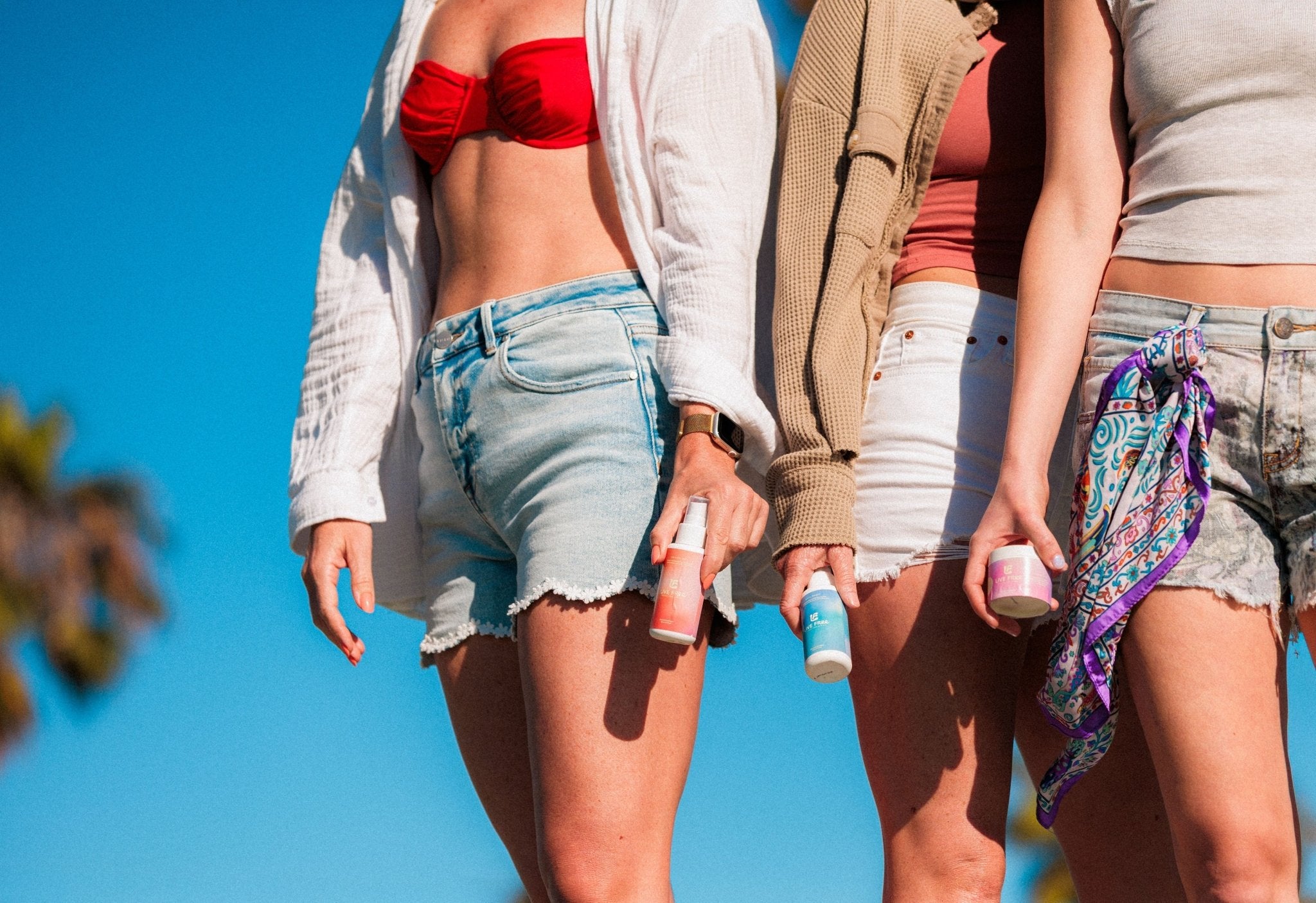
And I want to say this plainly, because I have been asked twice this month: Live Free Skincare does not make a sunscreen. Our line is three products, smooth sali, pore magic, and moisturose, sold on their own or as the Routine Set and the Starter Set. Sun protection is the step we recommend and do not manufacture. If someone tells you a brand's SPF is the fourth step of a routine that brand sells, ask them who made it and why.
The story nobody is covering
While the industry argues about a molecule, here is what is actually happening to the customers I care most about.
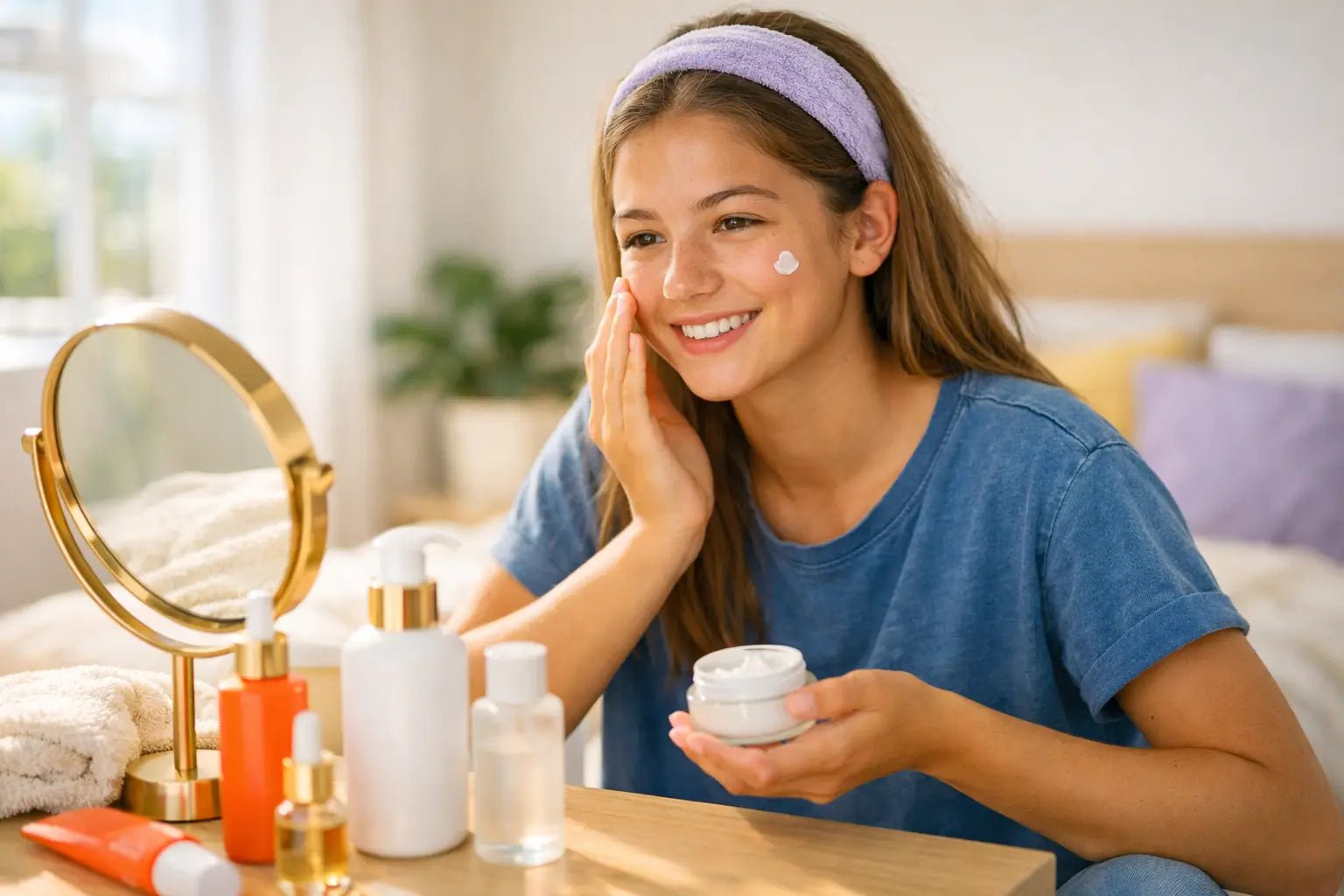
The research on tween and teen skincare content is grim in a way that has nothing to do with sunscreen filters. The most-viewed teen skincare routines on social media feature an average of 11 potentially irritating active ingredients. Girls between 7 and 18 are applying an average of six products a day, and some are layering more than a dozen. And only about a quarter of those routines include any sun protection at all.
Read that combination again. Teenagers are stacking acids and retinoids, which increase sun sensitivity, and then walking out the door with nothing on their faces.
That is the emergency. Not whether the fourth-best UVA filter in Europe finally cleared an American desk. The emergency is that we built an entire aesthetic culture that made an 11-step routine feel like self-care and made sunscreen feel like a chore your mom nags you about.
I built our line as three steps on purpose, and I recommend a mineral sunscreen as the fourth on purpose, and I will die on this small unglamorous hill: the routine that gets done is the one that is short enough to do.
What I would tell you if you walked into the shop
A new filter reaching the American market is, on balance, good news, and it does not obligate you to buy anything.
The sunscreen you already own and actually wear beats the theoretically superior one you leave in a drawer.
If your daughter is using an exfoliating cleanser and skipping SPF, the filter debate is not your problem. The sequence is.
And here is the thing I say to everyone who walks in holding a headline: nobody is coming to sort this out for you. Not the FDA, which took 25 years to approve an ingredient half the planet was already using. Not the brands, who will put "reef safe" on anything that holds still. Not me, honestly, because I run a store and I have a point of view and you should factor that in.
You are the only person qualified enough to inform yourself. That is not a burden. It is the whole job, and you are better at it than you think.
Sources
FDA, "FDA Expands Sunscreen Options for the First Time in 20 Years," press announcement, June 2026.
Environmental Working Group, "In major win for U.S. consumers, FDA approves first new sunscreen ingredient in 25 years," June 2026, including EWG's peer-reviewed finding on UVA protection in U.S. sunscreens.
Pediatrics study coverage on tween and teen skincare routines (CNN, June 2025), on the average of 11 active ingredients in top-viewed routines and the share of routines including sun protection.


Leave a comment
This site is protected by hCaptcha and the hCaptcha Privacy Policy and Terms of Service apply.