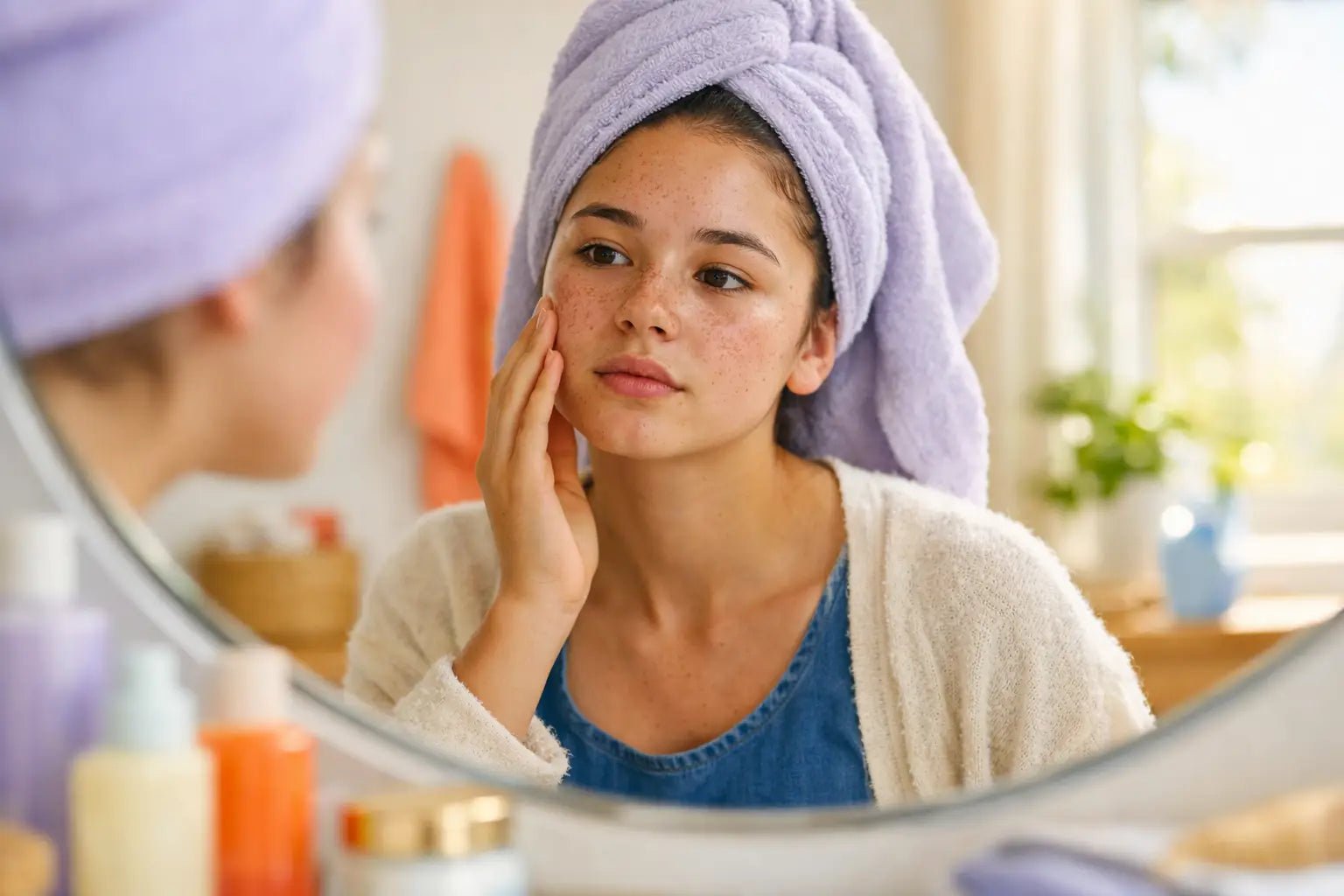
How to Prevent Teen Overexfoliation Safely
A teenager with breakouts may be tempted to scrub, peel, spot-treat, and mask until every bump disappears. But when skin starts stinging after cleansing or burning under moisturizer, more treatment is rarely the answer. Learning how to prevent teen overexfoliation can protect the skin barrier, make a simple routine feel more effective, and help teens build habits that serve them well beyond high school.
For parents, the challenge is understandable. Acne advice is everywhere, and many products promise fast results. The most supportive approach is not a crowded medicine cabinet. It is a calm, consistent routine with enough active care to address breakouts and enough gentleness to let skin recover.
What teen overexfoliation looks like
Exfoliation removes dead skin cells from the skin’s surface. In the right amount, it can help smooth texture and keep pores from feeling congested. Too much, too often, or too many exfoliating products layered together can disrupt the skin barrier - the protective outer layer that helps skin hold onto moisture and keep irritants out.
Overexfoliation does not always look like obvious peeling. It can show up as tightness, redness, flaking around the nose or mouth, a shiny-but-dehydrated appearance, new sensitivity to products that used to feel fine, or breakouts that seem to worsen despite more treatment. Skin may sting when water, cleanser, sweat, or moisturizer touches it.
This can be confusing because irritation and acne can exist at the same time. A teen may see new bumps and assume they need a stronger acid or a harsher scrub. Often, those bumps are a signal to simplify. Inflamed, dehydrated skin can produce more oil and look more congested, creating a frustrating cycle of treating harder and irritating skin further.
Why teens are especially likely to overdo it
Teen skin is often oilier because of hormonal shifts, and visible breakouts can carry real emotional weight. Add social media routines, trend-driven product hauls, and friends sharing a new "miracle" toner, and it is easy for a basic concern to become a six-step active regimen.
The issue is not that ingredients such as salicylic acid, glycolic acid, lactic acid, retinoids, or benzoyl peroxide are automatically wrong for teen skin. Many can be useful when chosen thoughtfully. The problem is overlap. An acne cleanser, exfoliating toner, resurfacing serum, treatment pads, and a retinoid may all be working toward the same goal while placing cumulative stress on the skin.
Physical exfoliants deserve attention, too. Rough scrubs, cleansing brushes used aggressively, and picking at flakes can create friction on already inflamed skin. A product can be marketed as gentle or natural and still be too much when used too frequently.
How to prevent teen overexfoliation with a simple routine
Start by choosing one active treatment category, not several. For a teen managing mild clogged pores or occasional blemishes, a salicylic acid product may be a reasonable place to begin. For more persistent acne, a dermatologist may recommend a retinoid, benzoyl peroxide, or another treatment plan. The best choice depends on the type of acne, skin sensitivity, and how consistently the teen can use the routine.
Once an active is selected, build the rest of the routine around support. In the morning, cleanse gently if needed, moisturize, and apply broad-spectrum SPF 30 or higher. At night, use a mild cleanser, apply the chosen treatment only as directed, then follow with moisturizer. For many teens, that is enough.
A few practical guardrails make a meaningful difference:
- Introduce one new active product at a time and give it two to three weeks before adding anything else.
- Begin exfoliating acids one or two nights a week unless a clinician gives different directions. More frequent use can come later, if skin is comfortable.
- Avoid using an exfoliating acid and a retinoid on the same night when starting out.
- Use a simple, fragrance-free moisturizer every day, including on oily skin.
- Treat sunscreen as part of acne care, not an optional extra. Exfoliated skin can be more vulnerable to sun sensitivity and lingering dark marks.
Read the whole routine, not just the label on one product
Parents do not need to become ingredient detectives to spot the most common problem: duplicate actives. Look for words such as exfoliating, resurfacing, peeling, clarifying, renewing, or pore refining. Then check whether the ingredient list includes AHAs like glycolic or lactic acid, BHAs like salicylic acid, retinoids, or benzoyl peroxide.
This does not mean every one of these ingredients must be avoided. It means the routine needs a clear purpose. If a teen is already using a salicylic acid cleanser several times a week, an acid toner and exfoliating mask may be unnecessary. If they are prescribed a retinoid, the rest of the routine should usually become much simpler.
Gentle does not have to mean ineffective. A well-formulated cleanser, barrier-supporting moisturizer, and targeted active used at an appropriate frequency can be far more effective than chasing the tingle that some products create. Tingling is not proof that a product is working.
What to do when skin is already irritated
When signs of overexfoliation appear, pause exfoliating acids, scrubs, retinoids, and strong spot treatments for several days or until skin feels comfortable again. Wash with lukewarm water and a mild cleanser, then use a straightforward moisturizer morning and night. If skin is dry or chafed, a bland protective ointment can be helpful on small, affected areas, though very acne-prone skin may prefer a lighter texture overall.
Do not try to "fix" a damaged barrier with another active product. Let comfort be the guide. Once redness, stinging, and flaking have settled, reintroduce only one treatment slowly. If irritation returns, the product may need to be used less often, applied over moisturizer, or replaced with a gentler option.
A dermatologist is a wise next step for painful cysts, widespread acne, scarring, rash-like irritation, swelling, or breakouts that are affecting a teen’s confidence. Professional support can reduce the urge to experiment with increasingly harsh products and can make treatment feel less personal and more manageable.
Make skincare a shared skill, not a battle
The goal is not to police every product in a teen’s bathroom. It is to give them enough context to make smart choices. Talk about skin care as self-care and health, not as a requirement to achieve perfect skin. Acne is common, and clear skin is not a measure of hygiene, discipline, or worth.
Consider setting up a small, easy-to-follow routine together. Keep the products where they will be used, and write the order on a note if that helps. Free Living Co’s Live Free Skincare approach is built around this same idea: blemish-prone skin benefits from thoughtful, sensitive-skin-minded care rather than a harsh reset.
It also helps to set expectations. Most acne routines need several weeks to show a meaningful change. A product that is gentle enough to use consistently has a better chance of helping than one that delivers a dramatic first week followed by irritation.
Teen skin does not need to be punished into behaving. Give it fewer competing signals, steady support, and time. That quieter approach can make room for healthier skin and a healthier relationship with the mirror.




Leave a comment
This site is protected by hCaptcha and the hCaptcha Privacy Policy and Terms of Service apply.