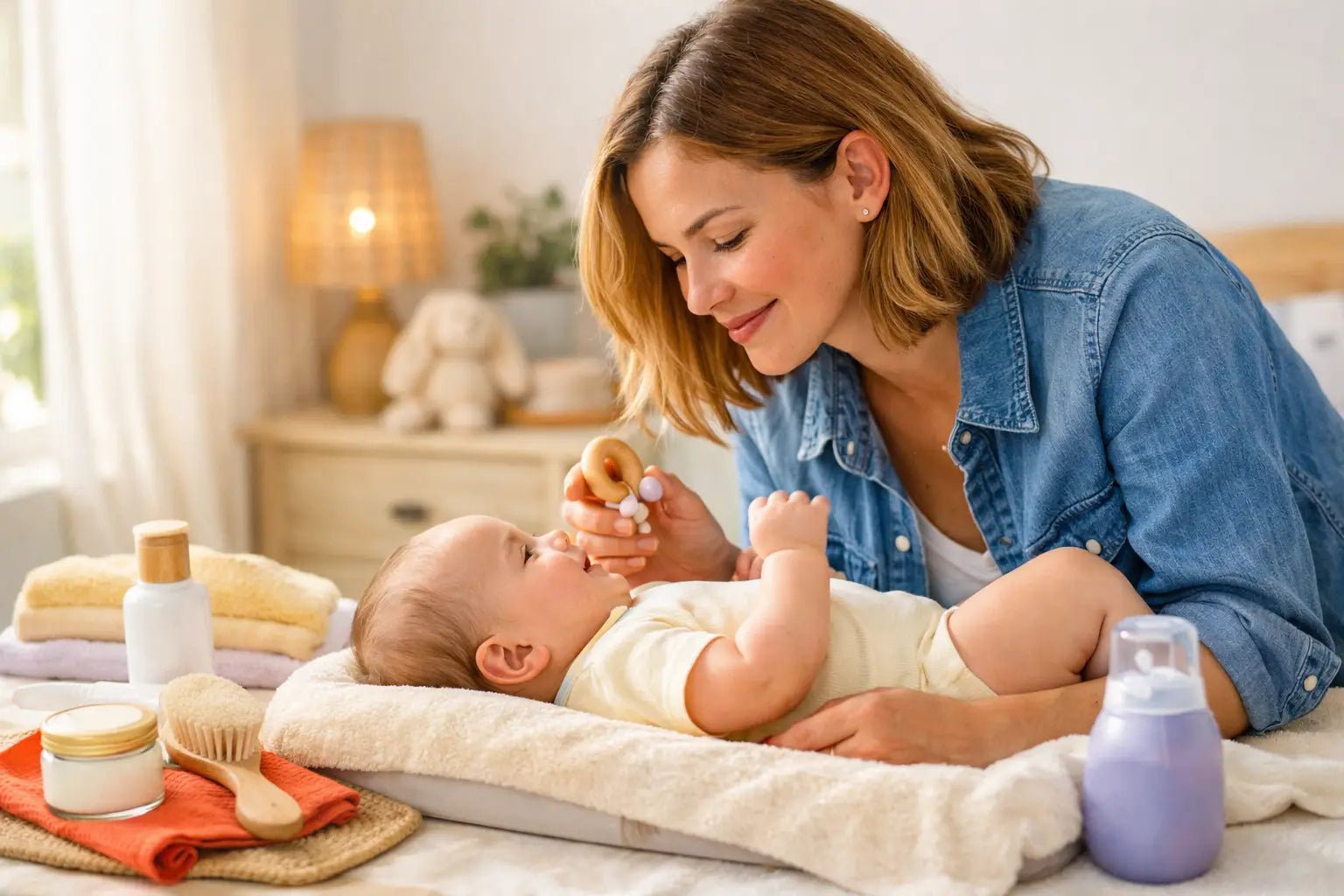
A Guide to Safer Baby Products, Kept Simple
A baby can go through several outfit changes, a handful of diapers, and more bottles than you can count before lunch. That is exactly why a guide to safer baby products should feel useful, not like another impossible standard to meet. The goal is not a perfectly curated nursery or a zero-exposure home. It is making a few thoughtful choices around the products that touch your baby’s skin, food, sleep space, and air most often.
New parents are offered endless products, each with its own promise, label, and reassuring shade of pastel. The reality is simpler: you do not need everything, and you do not need to replace everything at once. Start with the categories that have frequent, close contact with your baby. Choose fewer products with clear materials and ingredient lists. Let practical routines lead the way.
A guide to safer baby products starts with priorities
Babies are still developing, and their skin is thinner and more prone to irritation than adult skin. That does not mean every conventional product is dangerous or that one imperfect purchase will cause harm. It does mean that reducing unnecessary exposures is a sensible, manageable part of caring for a little one.
If you are deciding where to focus first, think about duration and frequency. A mattress is used for many hours each day. Bottles and teethers come into contact with food and mouths. Diaper creams, washes, and lotions sit directly on sensitive skin. Those categories generally deserve more attention than a decorative item that is rarely handled.
This approach also protects your budget. A safer home is built through everyday choices, not a rushed, expensive overhaul. Use what is working, replace items as they run out or wear out, and reserve your research energy for the products that matter most.
Build a calmer sleep space
A baby’s sleep area is one of the highest-impact places to simplify. Begin with the mattress and sleep surface, then keep the rest of the crib intentionally bare according to safe-sleep guidance from your child’s health care provider.
When shopping for a crib mattress, look for transparent information about the materials, the waterproofing method, and any third-party testing or certifications. Certifications can be helpful signals, but they are not interchangeable and do not tell the entire story. Ask what they actually cover: finished-product emissions, organic fiber content, or a particular material standard.
A mattress made with clearly disclosed materials and a simple, well-fitting protector is often easier to evaluate than one filled with vague claims. Be cautious of broad marketing terms such as natural, eco-friendly, or green when a brand does not explain what the product is made of.
For sheets and sleepwear, soft, washable fabrics and a straightforward care routine go a long way. Organic cotton may be a meaningful preference for some families, especially when choosing items that spend hours against the skin. It is not the only good option. The best choice is one that fits safely, washes well, and does not require heavily fragranced treatments to feel clean.
Avoid adding room fragrance to a nursery simply because it is marketed as relaxing. Babies do not need scented air to sleep well. Fresh air, regular cleaning, and addressing the actual source of odors are usually the more useful path.
Keep cleaning simple around the crib
A mild, fragrance-free laundry routine is often enough for sheets, sleep sacks, and pajamas. Skip fabric softeners and scent boosters, which can leave behind fragrance and are rarely necessary. For hard surfaces, choose a product with clear directions and use only what the job calls for. More cleaner does not mean a cleaner nursery.
Choose baby care with fewer extras
Baby skin care does not need to resemble a 10-step adult routine. Most babies need a gentle cleanser for baths, a simple moisturizer if skin is dry, and targeted products for specific concerns such as diaper rash. A shorter routine makes it easier to identify what is helping and what may be causing irritation.
Look for products that disclose all ingredients and avoid relying on a single front-label claim. Fragrance can be listed as a catch-all term for a blend of ingredients, so fragrance-free is often the clearest choice for babies with sensitive or eczema-prone skin. Unscented is not always the same thing, since an unscented product may still contain fragrance ingredients used to mask an odor.
For diaper care, consider how often a product will be applied and whether it contains ingredients you recognize. A protective barrier product can be wonderfully simple. If your baby has persistent redness, broken skin, or a rash that is not improving, call the pediatrician rather than continuing to layer on new products.
Sunscreen deserves its own bit of context. For young babies, shade, lightweight protective clothing, and timing outdoor activities around intense sun are typically the first line of defense. Ask your pediatrician for advice that fits your baby’s age, skin, and circumstances before introducing sunscreen.
Make feeding products easy to evaluate
Feeding brings a steady rotation of bottles, nipples, breast pump parts, bowls, cups, utensils, teethers, and storage containers. Instead of trying to make every item match, prioritize materials with a clear intended use and care instructions you can realistically follow.
Glass and stainless steel are durable choices for many food-contact products, while silicone can be useful for items like teethers, bibs, and soft utensils. Plastic is not automatically a reason to panic, but it is worth being more thoughtful about how it is used. Heat and wear can change the equation, so avoid microwaving or putting very hot food into plastic containers unless the manufacturer specifically says it is designed for that purpose.
A BPA-free label is a narrow claim, not a complete material profile. Look beyond it. Is the manufacturer clear about what the product is made from? Is it intended for hot liquids or food storage? Can it be inspected and replaced when it becomes scratched, cloudy, cracked, or difficult to clean?
For teethers, choose a product that is easy to wash and does not have loose parts or hidden areas where moisture can linger. Safety recalls and age guidance matter here just as much as material choices. A well-made teether that is not appropriate for your child’s developmental stage is not the right fit.
Be selective about toys and nursery extras
The baby industry is very good at convincing exhausted parents that every phase requires a new device. A calmer approach is to choose fewer, versatile items and pay attention to construction, durability, and how a product will be used.
For toys, simple wooden, fabric, silicone, and clearly labeled plastic options can all have a place. Check for loose parts, peeling finishes, damaged seams, and age recommendations. Washable toys are especially practical during the mouthing stage. If a toy has a strong chemical or perfume-like odor right out of the package, let it air out in a well-ventilated area and consider whether it belongs in your baby’s regular rotation.
Secondhand can be a wonderful choice for clothing, books, and some furniture, but it requires a quick safety check. Confirm that a crib, bassinet, high chair, or other large item meets current safety guidance and has not been recalled. When in doubt, pass. Savings are never worth compromising on a secure sleep or feeding setup.
Read labels without letting them run your life
The safest-looking package is not always the most transparent one. Turn products around. For personal care, read the ingredient list. For home and gear, read the materials, care instructions, warnings, and manufacturer details. Brands that make it easy to find this information are usually easier to trust.
A few terms can help you sort through claims, but none should replace common sense. Third-party certifications may provide useful verification. Material disclosure shows that a company is willing to be specific. Fragrance-free can be especially helpful for skin care and laundry products. Still, a product must work for your family’s real life. A bottle that leaks, a lotion that irritates, or a cleaner you dislike using will not earn a place in your routine just because the label is impressive.
When you feel overwhelmed, choose one category for your next purchase. Replace the scented laundry product with a fragrance-free option. Choose a clearly made teether. Simplify bath time. Those small decisions add up, and they leave room for the parts of parenthood that cannot be found on an ingredient label: holding your baby close, getting outside, and trusting that thoughtful is more than enough.


Leave a comment
This site is protected by hCaptcha and the hCaptcha Privacy Policy and Terms of Service apply.