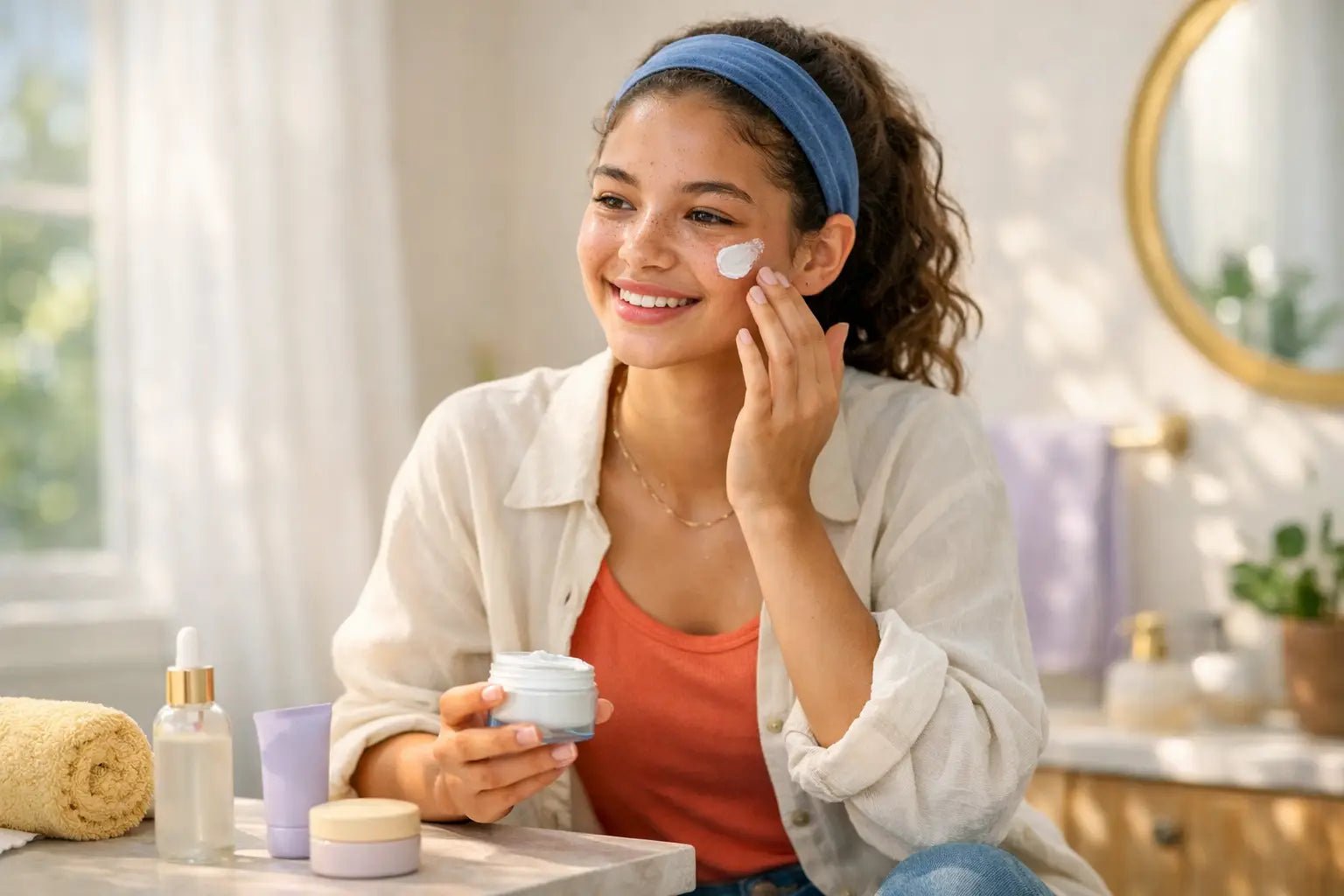
How to Build a Teen Skincare Routine
The fastest way to make skincare harder for a teen is to hand them a 10-step routine and hope for the best. If you want to know how to build teen skincare routine habits that actually stick, the answer is usually less, not more. Teen skin is changing quickly, often oily in some places and sensitive in others, which means a calm, consistent routine usually works better than a shelf full of trendy products.
For most teens, skincare does not need to be complicated or expensive. It needs to be gentle, repeatable, and matched to what their skin is doing right now. A good routine helps support the skin barrier, keeps breakouts from getting worse, and teaches healthy habits early without turning skincare into a stress point.
How to build teen skincare routine basics
Start with the three things that matter most: cleansing, moisturizing, and daily sunscreen. That may sound almost too simple, especially if your teen is seeing elaborate routines online, but these are the steps that create real consistency.
A gentle cleanser removes sweat, excess oil, sunscreen, and the everyday buildup that can contribute to clogged pores. The key word is gentle. Teen skin may be breakout-prone, but that does not mean it needs to be scrubbed into submission. Cleansers that leave skin tight or squeaky often push things in the wrong direction by stripping the barrier and triggering more irritation.
Moisturizer is the step many teens skip, especially if they already feel oily. That is understandable, but oily skin still needs hydration. A lightweight, non-greasy moisturizer can help balance the skin and reduce the urge to overproduce oil. When the barrier is supported, skin tends to act less reactive.
Sunscreen is the non-negotiable morning step. It matters for everyone, not just teens with fair skin or those spending all day outdoors. If a teen is dealing with post-breakout marks, redness, or using active ingredients for acne, sunscreen becomes even more important. Daily use helps protect skin while preventing dark spots from lingering longer.
Morning and night should look different
In the morning, the goal is protection. A teen usually needs a gentle cleanse, though some do fine with just a splash of water if their skin is dry or sensitive. Then a moisturizer, then sunscreen. If the moisturizer and sunscreen are combined in one well-formulated product, that can work too, as long as there is enough sun protection and the teen will actually use it.
At night, the focus shifts to resetting the skin. This is when cleansing matters most, especially after sports, sweating, makeup, or sunscreen. After cleansing, apply moisturizer. If the teen is using an acne treatment, it generally fits between those two steps or after moisturizer, depending on how strong it is and how sensitive their skin tends to be.
The best routine is one they can repeat without help every day. If it takes too long, burns, pills under sunscreen, or feels confusing, compliance drops fast.
When acne is part of the picture
This is where how to build teen skincare routine plans often gets overcomplicated. Breakouts are common in the teen years, but not every breakout needs a full acne arsenal. It depends on the type, severity, and frequency.
If a teen has occasional clogged pores or a few pimples around the forehead, nose, or chin, keep the basic routine in place first. Sometimes that alone improves things. If they need more support, introduce one active ingredient at a time. Salicylic acid can be helpful for clogged pores and oilier skin because it works inside the pore. Benzoyl peroxide can be effective for inflammatory acne, especially red, angry breakouts, but it can also be drying and may bleach towels or pillowcases.
Adapalene is another option for persistent acne, but it is best introduced carefully. It can be very helpful, yet many teens use too much too quickly and end up with irritated, peeling skin. That usually leads them to quit before they see results. With acne care, slow and steady tends to work better than aggressive.
If breakouts are painful, cystic, widespread, or starting to scar, it is worth getting professional guidance. A simple routine still matters, but stronger support may be needed.
Sensitive skin changes the strategy
Some teen skin is acne-prone and sensitive at the same time. That can make product shopping feel frustrating because formulas marketed for blemishes are often loaded with strong acids, fragrance, or drying ingredients.
In this case, the routine should stay especially streamlined. Choose a mild cleanser, a straightforward moisturizer, and a mineral or other gentle sunscreen that does not sting. Add actives only when needed, and one at a time. If the skin suddenly becomes red, flaky, itchy, or warm after starting a new product, that is a sign to pause and reassess.
Parents often assume breakouts mean they need stronger formulas. In reality, irritated skin can look and feel worse, even if the original goal was clearer skin. Supporting the barrier first is not a detour. It is often the smarter path.
What teens do not need
A teen routine usually does not need exfoliating pads, multiple serums, harsh scrubs, peels, clay masks three times a week, or anti-aging products. It also does not need every trend that shows up on social media.
This matters because teen skin is highly influenceable. If a product promises instant results or comes in eye-catching packaging, it is easy to assume more is better. But layering too many actives can create irritation that looks like acne, worsens sensitivity, and makes it harder to tell what is helping.
There is also no prize for starting anti-aging early. Sunscreen, a gentle cleanser, and a good moisturizer do more for long-term skin health than a complicated lineup ever will.
How to choose products without getting overwhelmed
Ingredient labels can feel like a second language, especially when every brand claims to be clean, gentle, or dermatologist recommended. A good filter is to ask a few basic questions.
First, is the product made for the skin concern your teen actually has, or just for a trend? Second, does the formula look simple enough to reduce the chance of irritation? Third, will your teen realistically use it every day?
Texture matters more than people think. If a sunscreen feels sticky, it will get skipped. If a cleanser smells too strong or a treatment stings, the routine falls apart. Practicality is part of good skincare.
For families trying to make more intentional choices, a curated approach can remove a lot of the guesswork. That is part of why many parents gravitate toward simpler, vetted options like Live Free Skincare for blemish-prone and sensitive skin. The goal is not to chase perfection. It is to make healthy habits easier to keep.
Common mistakes parents and teens make
One of the biggest mistakes is changing everything at once. When a teen is frustrated with their skin, it is tempting to overhaul the whole shelf in one trip. But if five new products go into rotation at once, you cannot tell what is helping or hurting.
Another common issue is inconsistency. Using an acne treatment for three nights, stopping for a week, then starting again rarely leads to meaningful improvement. Skin needs time. Most products take several weeks to show whether they are working.
Over-cleansing is also common, especially for active teens who wash after school, after sports, and again before bed. In some cases, that is reasonable. In others, it starts to dry out the skin and make things worse. More washing is not always cleaner skin.
Then there is pimple picking, which almost always prolongs healing and raises the risk of marks or scarring. This one is easier said than done, but it is worth naming clearly.
A simple routine by skin type
For oily or breakout-prone skin, start with a gentle cleanser morning and night, a lightweight moisturizer, and sunscreen every morning. Add a salicylic acid or benzoyl peroxide product only if needed.
For dry or sensitive skin, use a creamy or very mild cleanser once or twice daily, followed by moisturizer and sunscreen in the morning. Keep treatments minimal and introduce them slowly.
For combination skin, use the same core routine and avoid trying to treat every zone with a different product. Most teens do better with one balanced routine than a complicated mix-and-match system.
The goal is confidence, not perfection
Teen skin can change with hormones, sports seasons, stress, sleep, and even weather. A routine that works in winter may need small tweaks by summer. That does not mean it failed. It means skin is dynamic.
The most helpful thing you can give a teen is not a complicated set of rules. It is a routine they understand, products they trust, and the sense that skincare can be supportive rather than stressful. Clearer skin often starts there, with a few steady habits and the freedom to keep things simple.



Leave a comment
This site is protected by hCaptcha and the hCaptcha Privacy Policy and Terms of Service apply.