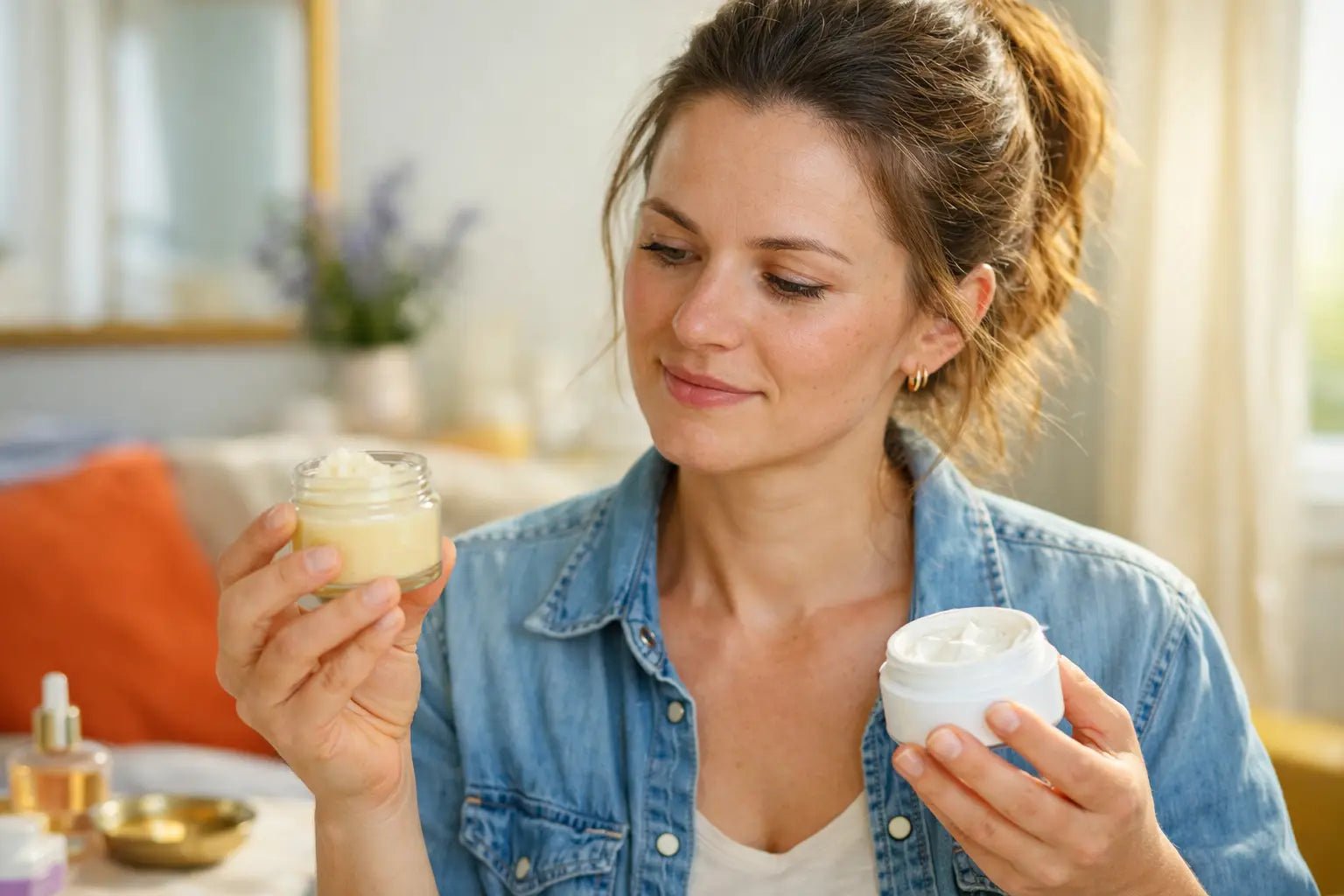
Beef Tallow Versus Face Cream for Your Skin
A jar of beef tallow can look beautifully simple next to a long face cream ingredient list. That simplicity is part of the appeal. But beef tallow versus face cream is not really a contest between “natural” and “complicated.” It is a question of what your skin needs, what you can tolerate, and whether a product fits your actual routine.
For some people, tallow is a comforting, effective seal for very dry skin. For others, especially those prone to clogged pores or breakouts, a thoughtfully formulated face cream offers more flexibility with less guesswork. The best choice is the one that supports your skin barrier without making your skin feel congested, irritated, or dependent on constant trial and error.
What beef tallow does for skin
Beef tallow is rendered beef fat. In skincare, it is typically whipped or blended into a balm with oils, waxes, or botanical ingredients. It is rich in fatty acids, which give it an emollient, cushiony feel and help soften dry, rough skin.
Its main strength is occlusion. In plain terms, tallow forms a protective layer that slows water loss from the skin. That can feel especially helpful on dry patches, chapped cheeks, hands, elbows, and skin that feels stressed by cold, wind, or low humidity. In a dry mountain climate, many people appreciate that substantial, protective finish during winter.
Tallow is also an anhydrous product, meaning it does not contain water. Without water, it usually does not need the same preservation system as a traditional cream. For shoppers who want a shorter ingredient list, that can be reassuring.
Still, a short list is not automatically the right list for every face. Tallow may be rich and comforting, but it does not add water to dehydrated skin. It helps hold onto moisture already present. If your skin feels tight beneath the surface, a hydrating step such as a simple serum or damp-skin application may matter just as much as the balm you place on top.
What face cream can do that tallow cannot
A well-made face cream is usually an emulsion: a blend of water, humectants, emollients, and occlusives. Each part serves a different purpose. Humectants, such as glycerin or hyaluronic acid, help draw water into the outer layer of skin. Emollients smooth and soften. Occlusives help reduce moisture loss.
That layered design is useful because dry skin and dehydrated skin are not always the same. Your skin may lack oil, water, or both. A cream can address more than one of those needs at once, while a tallow balm is primarily an oil-based protective layer.
Cream formulas can also be built around specific concerns. A sensitive-skin cream may prioritize barrier-supporting ingredients and avoid fragrance. A lightweight gel-cream may give oily skin hydration without a heavy finish. A blemish-focused moisturizer may be designed to sit comfortably alongside active treatments that can leave skin dry or reactive.
This does not mean every face cream is better. Some formulas are overly fragranced, feel heavy, or contain ingredients that do not agree with your skin. It does mean that formulation matters. Ingredient safety, performance, texture, and how a product behaves on real skin all deserve consideration.
Beef tallow versus face cream for acne-prone skin
If you are prone to acne, the answer is usually more cautious. Tallow is not guaranteed to cause breakouts, and no single ingredient behaves identically for every person. But its rich, dense texture can be too much for some acne-prone faces, particularly if you already produce more oil or are dealing with active congestion.
This is where social media can make skincare feel more certain than it is. A glowing tallow success story may be completely genuine, but it is not a prescription for your skin. Acne is influenced by many factors, including hormones, genetics, inflammation, product buildup, and how your skin responds to your overall routine.
For teens and adults managing breakouts, a light, fragrance-free moisturizer is often the easier place to start. Skin that is treated too harshly can become dry, irritated, and more difficult to manage. The goal is not to strip away every trace of oil. It is to support a calm barrier while using a routine you can stay consistent with.
Live Free Skincare was created with blemish-prone and sensitive skin in mind, because a clean routine should not require choosing between gentle ingredients and a formula that feels good to use. If you are testing tallow, keep the rest of your routine steady so you can clearly see how your skin responds.
Who may like tallow best
Tallow can be a reasonable option if your skin is consistently dry, not prone to congestion, and you enjoy a rich balm texture. It may be especially nice as an evening seal over hydrating products, on isolated dry areas, or as a body moisturizer.
It can also make sense for someone with a very minimal routine who has already tested it successfully. If it leaves your skin soft by morning, does not cause bumps or itching, and feels comfortable under your lifestyle conditions, there is no need to abandon it simply because it is not a conventional cream.
The trade-off is versatility. Tallow may not layer well under sunscreen or makeup, and it can feel heavy in warm, humid weather. Its scent and texture vary by maker, too. If you use it on your face, choose a product from a brand that is transparent about sourcing and formulation, and avoid assuming that “grass-fed” tells you everything about how it will perform on skin.
Who may prefer a face cream
Face cream is often the more adaptable choice for combination, oily, dehydrated, sensitive, or acne-prone skin. It is also a practical choice if you wear sunscreen daily, use makeup, or want a moisturizer that works comfortably morning and night.
Look for a formula that matches your skin rather than chasing a trendy texture. Sensitive skin often does well with simple, fragrance-free formulas. Oily or breakout-prone skin may prefer lighter lotions or gel-creams. Dry skin may want a cream with both humectants and nourishing lipids, followed by a small amount of balm only where needed.
If you are shopping for a teen, keep it uncomplicated. A gentle cleanser, a suitable moisturizer, daily sunscreen, and targeted treatment when needed can be enough. Adding too many products at once can make irritation and breakouts harder to trace.
How to test either option without upsetting your skin
When you try a new moisturizer, use it consistently but slowly. Patch test first by applying a small amount along the jawline or behind the ear for several days. If your skin tolerates it, introduce it to the face two or three nights a week before making it a daily product.
Watch for more than obvious redness. Tiny uniform bumps, new clogged pores, persistent itchiness, excess shine, or a film that never seems to absorb can all be signs that a product is not the best fit. Give your skin enough time to respond, but do not force yourself to finish a product that is clearly causing trouble.
Also consider the rest of your routine. A rich moisturizer may feel completely different over a hydrating serum than it does on dry skin. A face cream that works in January may feel too heavy in July. Skincare is allowed to change with the season, your stress level, and the treatments you are using.
The better question to ask
Rather than asking whether tallow or face cream is universally better, ask what your skin is asking for right now. If it is flaky and uncomfortable, you may need more barrier support and a little more occlusion. If it is oily but tight, hydration may be the missing piece. If it is breaking out, the kindest choice is often a simple routine with fewer variables.
Beautiful skincare does not have to be complicated, but it should be considered. Choose what helps your skin feel calm, comfortable, and cared for - then let consistency do the rest.



Leave a comment
This site is protected by hCaptcha and the hCaptcha Privacy Policy and Terms of Service apply.