How to Replace Plastic Food Wraps at Home
A halved avocado, a bowl of leftover pasta, your child's cut apple for tomorrow's lunch - these are the small moments when plastic wrap tends to appear. If you want to replace plastic food wraps, the goal is not to build a picture-perfect low-waste kitchen overnight. It is to keep the foods you actually make fresh with a few reliable, thoughtfully chosen tools.
The most useful swaps are simple, easy to clean, and matched to the job at hand. A stretch lid may be perfect for last night's soup, while a glass container makes more sense for chopped vegetables. Once you stop expecting one product to do everything, the transition feels far less complicated.
Why replace plastic food wraps?
Disposable plastic wrap is convenient because it is thin, flexible, and ready in seconds. It also creates a steady stream of single-use waste, and it is difficult to recycle in most curbside programs. Even when a box seems to last a while, it is often used in small pieces that cannot be reused or recovered.
For many households, the bigger benefit of switching is a calmer, more functional kitchen routine. Reusable options can make it easier to see what you have, pack lunches without wrestling with a roll of cling film, and store food in containers that move neatly from fridge to table.
Ingredient-conscious shoppers may also prefer to limit unnecessary food contact with disposable plastics, particularly around warm food. No kitchen material is completely maintenance-free, and "BPA-free" is not a complete measure of a product's quality. Choosing well-made, food-safe materials and using each item as intended is a more practical standard.
There is a trade-off: reusable products require washing, drying, and a little storage space. But the right handful of pieces can replace hundreds of quick, forgettable uses of wrap over time.
How to replace plastic food wraps by task
Start with the situations that happen most often in your home. This prevents the common mistake of buying a drawer full of alternatives that look beautiful but do not suit your routine.
For leftovers, choose containers first
A lidded glass container is often the simplest replacement for wrapping a plate or bowl of leftovers. It creates a dependable seal, lets you see the food inside, and can usually handle refrigerator storage, reheating, and serving depending on the manufacturer's instructions. Square and rectangular containers use refrigerator space especially well.
For foods you plan to take to work, school, practice, or a weekend outing, a container is more secure than any wrap. Think berries, pasta, roasted vegetables, sliced cheese, and snack-size portions. Keep a range of sizes, but resist buying too many specialty shapes. A small, medium, and larger container solve most daily needs.
If you have leftovers in a serving bowl, a plate placed over the top can work for a short stay in the refrigerator. It is not leakproof, but it is a no-purchase solution for food that will be eaten the next day.
For bowls and open dishes, use stretch lids
Reusable silicone stretch lids are designed to grip the rim of a bowl, can, jar, or cut piece of produce. They are particularly helpful for covering yogurt, dips, sauces, and prepped ingredients. Look for lids that fit the bowls and containers you already own, rather than assuming a universal set will fit everything equally well.
Silicone is useful because it is flexible and durable, but it does have limits. It can retain odors if not cleaned thoroughly, and low-quality versions may tear or lose their stretch. Wash lids promptly after oily foods, let them dry completely, and follow the maker's directions for dishwasher and microwave use. For very liquid foods, test the seal over the sink before tossing the container into a bag.
For produce and snacks, try reusable bags
Reusable food-storage bags can take the place of plastic sandwich bags for grapes, crackers, freezer-ready fruit, and lunchbox snacks. Fabric bags are lovely for dry goods, while food-grade silicone or other washable, food-safe bags are better for moist foods.
A wide opening matters more than it may seem. Bags that stand open are much easier to fill, clean, and dry. If a bag is difficult to turn inside out or has seams that trap crumbs, it may become the item you avoid using. Choose a few that fit your real needs instead of treating reusable bags as a one-for-one replacement for every disposable bag in the house.
For bread, cheese, and cut produce, consider wax wraps
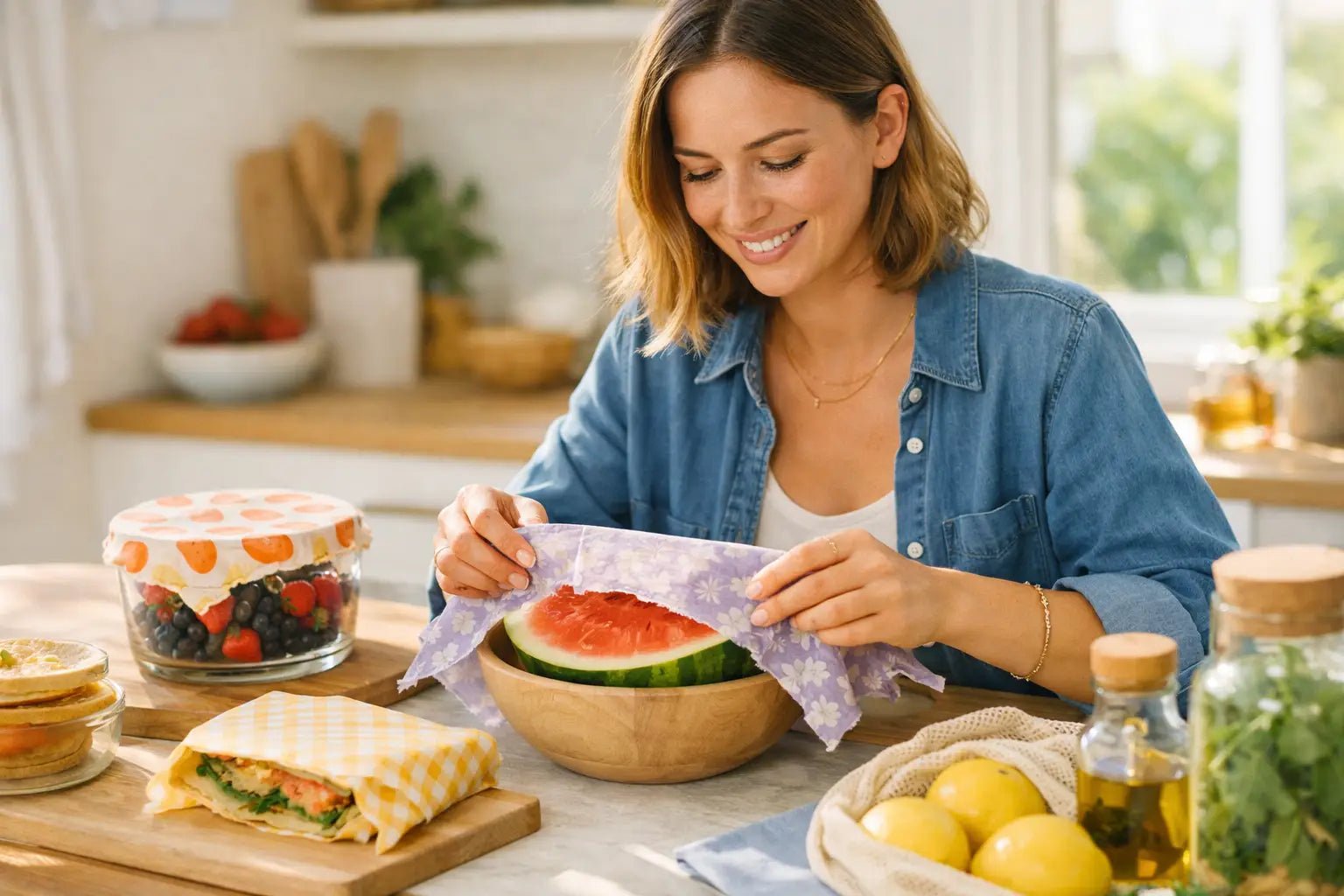
Beeswax wraps are a flexible option for covering a cut lemon, wrapping a block of cheese, or keeping a loaf of bread fresh for a few days. The warmth of your hands helps the wrap mold around the food or dish. Plant-wax versions offer a similar feel for households that prefer a vegan option.
These wraps are not the answer for every food. They are not ideal for very wet dishes, hot foods, or raw meat and fish. They should be washed in cool water with mild soap, then air-dried, because heat can damage their coating. Used thoughtfully, they are a pleasant, low-fuss replacement for the small pieces of plastic wrap that disappear around the kitchen.
Build a system that works on busy nights
The best way to replace plastic food wraps is to make the reusable choice the easiest one to reach. Store containers with their lids nearby, keep stretch lids in a shallow drawer, and reserve one spot for clean, dry reusable bags. A little organization is not about perfection. It is what makes the better option practical when dinner is over and everyone is ready to move on.
It also helps to create a simple food-storage rhythm. Cool cooked food before sealing and refrigerating it, label items you may forget, and place older leftovers toward the front. Airtight storage can preserve quality, but it cannot make food last indefinitely. Use your senses and follow standard food-safety guidance for storage time and temperature.
For family lunches, let kids participate where it makes sense. A leak-resistant container for berries or a reusable snack bag for pretzels is easier for many children to manage than cling film. Small, repeatable choices build habits without turning lunch packing into another project.
A realistic starter set
You do not need a full kitchen reset. Begin with a set of glass storage containers you will use several times a week, a few stretch lids for bowls and produce, and two or three reusable bags for snacks or freezer storage. Add wax wraps only if you regularly wrap cheese, bread, or cut produce.
Before buying, take stock of what is already in your cabinets. Mason jars, jars from pantry staples, plates that fit your bowls, and sturdy containers from takeout can all serve a purpose for dry storage or short-term leftovers. Reusing what you have is often the most sustainable first step.
When you do purchase new pieces, prioritize materials, construction, and care instructions over a trendy color or oversized set. A smaller collection that is easy to wash and genuinely useful will serve your home better than an impressive assortment that stays untouched.
Keep your replacements in good condition
A few care habits help reusable options last. Avoid storing food in any container with lingering moisture, fully dry bags before folding them away, and replace lids or wraps once they crack, tear, lose their seal, or become difficult to clean. For silicone, a paste of baking soda and water can help with stubborn odors after washing.
It is also okay to keep a limited role for disposables when the situation truly calls for them, such as covering a large dish for travel or packing messy food for a long day away from home. Clean living for real life leaves room for practicality. The point is progress you can sustain, not a kitchen that creates new stress.
A few dependable swaps can turn food storage into one less decision at the end of the day. Start with the meal or snack you pack most often, choose the tool that makes that task easier, and let the rest of your routine evolve from there.




Leave a comment
This site is protected by hCaptcha and the hCaptcha Privacy Policy and Terms of Service apply.