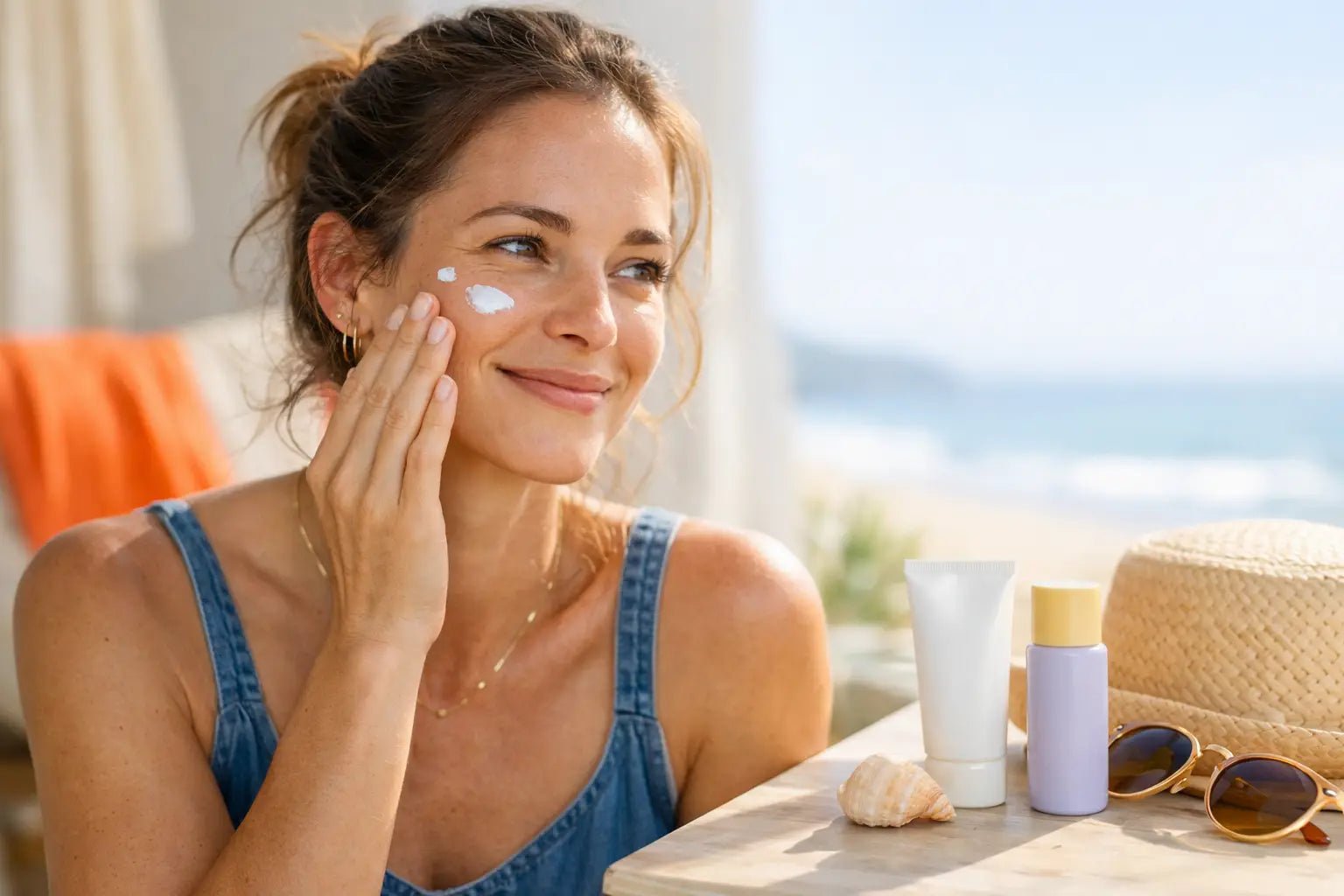
A Mineral Sunscreen Review for Real Life
A good mineral sunscreen review should answer more than whether a formula is “clean.” The sunscreen has to protect your skin, feel good enough to use every morning, and fit the way you actually live - from school drop-off and desk days to trail walks, pool afternoons, and makeup days. If it pills, stings, leaves a cast you dislike, or feels impossible to reapply, even an excellent formula can end up forgotten in a drawer.
At Free Living Co, we believe safer choices should make daily life feel simpler, not more complicated. That is why we look at mineral sunscreen through two lenses: the quality of the formula and the experience of wearing it. The right one is the sunscreen you will apply generously, reapply when needed, and feel comfortable sharing with the people in your home.
What makes sunscreen mineral?
Mineral sunscreens use zinc oxide, titanium dioxide, or both as their active UV filters. These minerals sit primarily on the skin’s surface and help protect it from ultraviolet radiation. Zinc oxide is especially valued because it offers broad-spectrum coverage, meaning protection from both UVB rays, which cause sunburn, and UVA rays, which contribute to visible signs of skin aging and can damage skin over time.
Titanium dioxide also provides useful UV protection, though it is often paired with zinc oxide to create more complete broad-spectrum coverage. You may see these ingredients listed under “active ingredients” on the Drug Facts panel, with the percentage of each one clearly stated.
Mineral does not automatically mean every other ingredient in a formula meets the same standard. A sunscreen can have zinc oxide as its active ingredient while still containing fragrance, certain preservatives, or texture enhancers you may prefer to avoid. That is why reading beyond the front label matters.
How we approach a mineral sunscreen review
We start with the non-negotiables: broad-spectrum protection and SPF 30 or higher for everyday use. SPF 30 filters about 97% of UVB rays when applied correctly, while higher SPFs offer a modest additional margin. No sunscreen provides total protection, and a higher number does not replace shade, hats, sunglasses, or sensible timing during long stretches outdoors.
From there, we consider whether the formula supports real-world consistency. A sunscreen can look beautiful on the shelf, but daily SPF is personal. Skin tone, skin type, climate, activity level, and the rest of your routine all influence whether it works for you.
When evaluating a mineral formula, these are the details worth checking:
- Active filters and broad-spectrum labeling. Zinc oxide, titanium dioxide, or a combination should be clearly listed, along with broad-spectrum protection and an SPF of at least 30.
- Water resistance. For swimming, sweating, skiing, hiking, or active kids, choose a water-resistant formula and follow its stated reapplication timing, usually 40 or 80 minutes.
- Texture and finish. Some people want a dewy finish; others need a soft-matte formula that stays comfortable under makeup. Neither is universally better.
- White cast and tint. Untinted mineral sunscreen can leave a visible cast, particularly on deeper skin tones. Sheer or tinted options can improve wearability, but the shade and coverage should work for your complexion.
- Supporting ingredients. We favor thoughtfully formulated options that avoid unnecessary fragrance and prioritize skin-friendly textures, especially for sensitive or blemish-prone skin.
The mineral sunscreen trade-offs worth knowing
The most common reason people stop using mineral sunscreen is cosmetic, not protective: white cast, heaviness, pilling, or dryness. Mineral filters are naturally opaque, which makes creating a transparent finish more challenging. Modern formulas have improved dramatically, but a perfectly invisible result is not guaranteed for every skin tone or preference.
Tinted mineral sunscreen can be a smart answer, particularly if you want a more polished, even-looking finish. Some tints use iron oxides, pigments that can also help address visible light exposure. Still, tint is not automatically better. A shade that is too warm, too deep, or too sheer can be more frustrating than a well-formulated untinted lotion. Test the formula along your jawline when possible, not just on the back of your hand.
Dry or mature skin may prefer a creamier mineral SPF with moisturizing ingredients. Oily or acne-prone skin may be happier with a lightweight fluid, gel-cream, or soft-matte lotion. If you are sensitive to fragrance, essential oils, or certain botanical extracts, a simpler formula is often the more comfortable choice. “Natural” is not synonymous with irritation-free.
Pilling deserves its own mention. It often happens when sunscreen is layered over too many products, when skincare has not had time to settle, or when two formulas do not play well together. Try applying a lighter hand with your serum and moisturizer, let each layer sit for a minute, then press sunscreen on rather than rubbing aggressively. If you wear makeup, give your sunscreen a few minutes to form an even layer first.
How much mineral sunscreen do you actually need?
Most people apply far less sunscreen than the product was tested with. For the face and neck, the two-finger method is a useful starting point: dispense two full lengths of product along your index and middle fingers, then apply evenly. Depending on face size and formula, you may prefer to use one layer, let it settle, and add a second thin layer for more reliable coverage.
Do not forget the places that quietly collect sun exposure: ears, hairline, eyelids if the formula is suitable and comfortable there, lips with a dedicated SPF product, neck, chest, and the backs of hands. For the body, use a generous amount. A small dab spread thinly across shoulders and legs is not enough.
Reapplication is just as practical as initial application. Reapply at least every two hours during sun exposure, and after swimming, sweating, or towel drying. A powder or SPF mist may feel convenient over makeup, but it is difficult to apply enough of either for the same dependable coverage as a lotion or cream. They can be helpful touch-up tools, but a proper layer of sunscreen remains the foundation.
A better approach for sensitive and teen skin
Sensitive skin often benefits from a routine with fewer variables. If your skin is reactive, choose a fragrance-free mineral sunscreen and introduce it like any new product: patch test first, then wear it for a few ordinary days before bringing it on a beach vacation or long hike. Eye stinging can happen with any sunscreen, so if a formula migrates or bothers your eyes, try a stick around the orbital area and a lotion on the rest of the face.
For teens, sunscreen should not become another complicated step in a 10-product routine. A simple broad-spectrum mineral SPF that feels comfortable after moisturizer is enough to build a lasting habit. Teens managing breakouts may want to avoid overly rich formulas, but stripping skin or treating every ingredient as a problem can create more frustration. Consistency matters more than chasing a flawless finish.
Parents shopping for the family can also separate needs instead of expecting one bottle to do everything. A gentle everyday face SPF, a durable water-resistant body sunscreen, and a portable stick for ears, noses, and quick touch-ups can make sun care easier without overcrowding the bathroom cabinet.
Choosing the one you will keep using
The best mineral sunscreen is not defined by a single trendy ingredient or the prettiest packaging. It is broad-spectrum, appropriately protective, pleasant on your skin, and compatible with your routine. It may take a little trial and error to find your match, especially if you wear makeup, have a deeper skin tone, live in a dry climate, or need a formula that can keep up with active days.
Start with the conditions you face most often. If your days are mostly errands, work, and school runs, prioritize an elegant daily face formula you genuinely enjoy applying. If you spend weekends outside, add water resistance and easy reapplication to the top of the list. The calmest routine is rarely the one with the most products. It is the one that makes thoughtful protection feel like an ordinary part of caring for yourself.


Leave a comment
This site is protected by hCaptcha and the hCaptcha Privacy Policy and Terms of Service apply.