Article: How to Choose Safer Sunscreen Without the Stress
How to Choose Safer Sunscreen Without the Stress
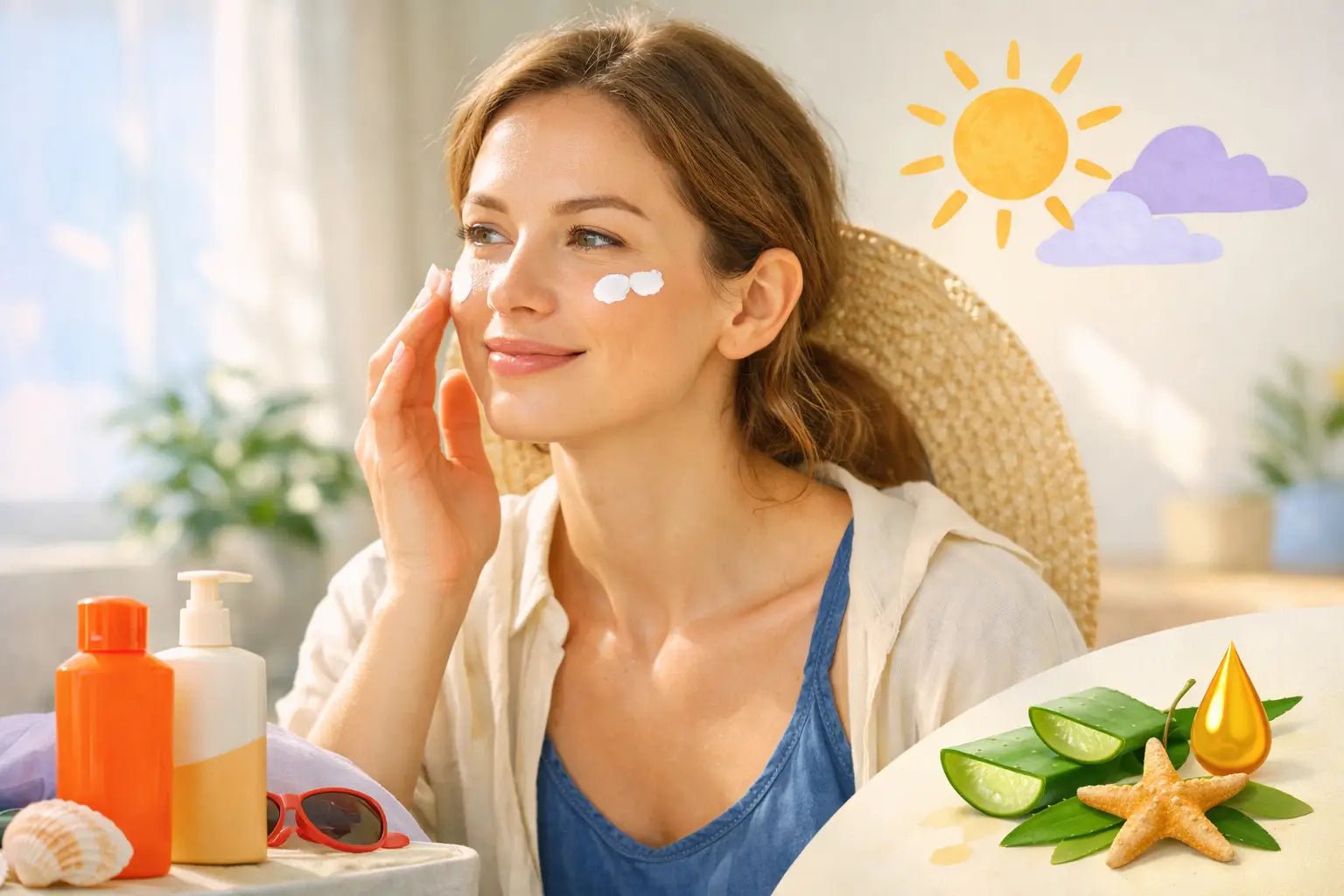
The sunscreen that gets tossed into a beach bag, applied in the school pickup line, and worn on an ordinary Tuesday is the one that matters most. Learning how to choose safer sunscreen should not require a chemistry degree or an hour in a store aisle. A few clear standards can help you find protection that feels good on skin, fits your routine, and gives you more peace of mind.
A safer choice is not necessarily the product with the loudest clean claim or the longest list of buzzwords. It is a formula with reliable UV protection, ingredients that align with your comfort level, and a texture you and your family will actually apply generously and often.
Start With the Protection That Matters
Before comparing ingredient lists, look for three essentials: broad-spectrum protection, SPF 30 or higher, and water resistance when your day calls for it.
Broad-spectrum means the sunscreen protects against both UVA and UVB rays. UVB rays are more closely associated with sunburn, while UVA rays contribute to visible skin aging and can worsen the appearance of dark marks. Both matter, especially if you are working on post-breakout marks, melasma, or uneven tone.
For everyday use, SPF 30 is a thoughtful baseline. If you spend long stretches outdoors, are at higher altitude, sit near reflective water or snow, or know you tend to apply too little, SPF 50 can offer a useful cushion. Higher SPF does not make reapplication optional, though. No sunscreen lasts from a morning walk to late-afternoon errands without another application.
Water-resistant formulas are tested to maintain their stated level of protection for either 40 or 80 minutes of swimming or sweating. They are not waterproof. Reapply after swimming, towel drying, heavy sweating, or at least every two hours outdoors.
How to Choose Safer Sunscreen by Filter Type
The biggest decision on many sunscreen labels is the UV filter. Mineral sunscreens use zinc oxide, titanium dioxide, or both. Chemical, sometimes called organic, sunscreens use filters such as avobenzone, octocrylene, octisalate, or homosalate to absorb UV energy.
Many clean-living households prefer mineral sunscreen, particularly for babies, children, sensitive skin, and daily facial use. Zinc oxide offers broad UVA and UVB coverage, and titanium dioxide is especially effective against UVB rays and some UVA rays. These filters sit primarily on the skin's surface and are often well tolerated by easily reactive complexions.
That said, the best sunscreen is not automatically one category for every person. Some mineral formulas can feel thicker, leave a white cast, or become difficult to blend on deeper skin tones. A tinted mineral sunscreen can help, especially for the face, while also making it easier to see where you have applied it. The right formula should make consistent use feel realistic, not like a daily negotiation.
If you choose a chemical sunscreen because you prefer its weightless finish or it is the one you reliably wear, sun protection is still a meaningful act of care. Ingredient preferences are personal. What matters is making an informed choice rather than assuming a label claim tells the whole story.
Read Beyond “Clean,” “Natural,” and “Reef-Friendly”
Marketing language can be helpful shorthand, but it is not a substitute for looking at the active ingredients and the full ingredient list. “Natural” does not automatically mean gentle, and “reef-friendly” is not a standardized safety certification. A product may use that phrase while still leaving important questions unanswered.
For families trying to reduce unnecessary exposure, start with a simple approach: favor transparent formulas, avoid added fragrance when skin is sensitive, and choose brands that clearly communicate their ingredient standards. Added fragrance can be a common source of irritation, particularly around the eyes or on skin already dealing with eczema, acne treatments, or dryness.
You may also prefer to avoid aerosol sprays. Spray sunscreen can be convenient for wiggly kids and quick body touch-ups, but it is hard to know how much product reaches the skin, and inhalation is a concern when it is sprayed near the face. Lotions, sticks, and creams offer more control. If you do use a spray, apply it outdoors, away from the face, and rub it in thoroughly.
Powder sunscreen is useful for a mid-day scalp part or a makeup touch-up, but it should not be your only source of protection. It is difficult to apply enough powder to achieve the SPF on the label. Think of it as an extra layer, not your foundation.
Choose the Format You Will Reapply
A sunscreen can be beautifully formulated and still fail if it stays in the cabinet. Match the format to the moment.
For the face, a lightweight lotion or tinted mineral formula may work best under makeup and encourage daily use. For the body, a lotion that spreads easily is often the most dependable choice. Sticks are practical for ears, noses, cheeks, shoulders, and small faces that do not welcome a full lotion application. They are also excellent to keep in a purse, car bag, or backpack, though you will need several passes to apply enough.
Texture matters more than it may seem. If a formula stings your eyes, pills under makeup, clings to dry patches, or leaves your teen feeling visibly chalky, it is unlikely to become a habit. A safer routine is one built around products your household is comfortable using generously.
For Kids, Teens, and Sensitive Skin, Keep It Simple
Children and teens do not need complicated sunscreen routines. For younger kids, a fragrance-free mineral lotion or stick is often an easy place to start. Apply before heading outside, covering commonly missed spots like the tops of feet, backs of hands, ears, neck, and the hairline.
For teens, sunscreen can be a quiet but powerful part of caring for blemish-prone skin. Sun exposure can make post-breakout marks look darker and last longer. The goal is not a heavy, pore-clogging layer that makes them want to skip it. Look for a face formula labeled non-comedogenic if breakouts are a concern, and prioritize one with a finish they genuinely like.
Sensitive skin can react to more than UV filters. Essential oils, fragrance, certain preservatives, and even a new cleanser or acne treatment can all contribute to irritation. When trying a new sunscreen, test it on a small area of skin for a few days first. If your child has a history of severe skin reactions or specific allergies, your dermatologist can offer more personalized guidance.
Application Is Part of Choosing Well
Even a carefully vetted sunscreen cannot do its job if it is applied sparingly. For the face and neck, use approximately two finger lengths of product. For the body, most adults need about one ounce, or enough to fill a standard shot glass, for one full application.
Apply sunscreen 15 minutes before going outdoors when possible, then build other sun-smart habits around it. Hats, sunglasses, shade, and lightweight protective clothing reduce the pressure on sunscreen alone. This is especially useful during long pool days, mountain hikes, and hours spent near reflective snow.
Keep one sunscreen where life happens: by the door, in the diaper bag, in the center console, or next to your morning skincare. At Free Living Co, we believe clean living for real life should lower the mental load, not add another complicated rule to your day.
The most thoughtful sunscreen choice is the one that balances your standards with everyday consistency. Find a formula you trust, make reapplication easier than remembering it, and let that small daily ritual protect the skin you are living in now.


Leave a comment
This site is protected by hCaptcha and the hCaptcha Privacy Policy and Terms of Service apply.