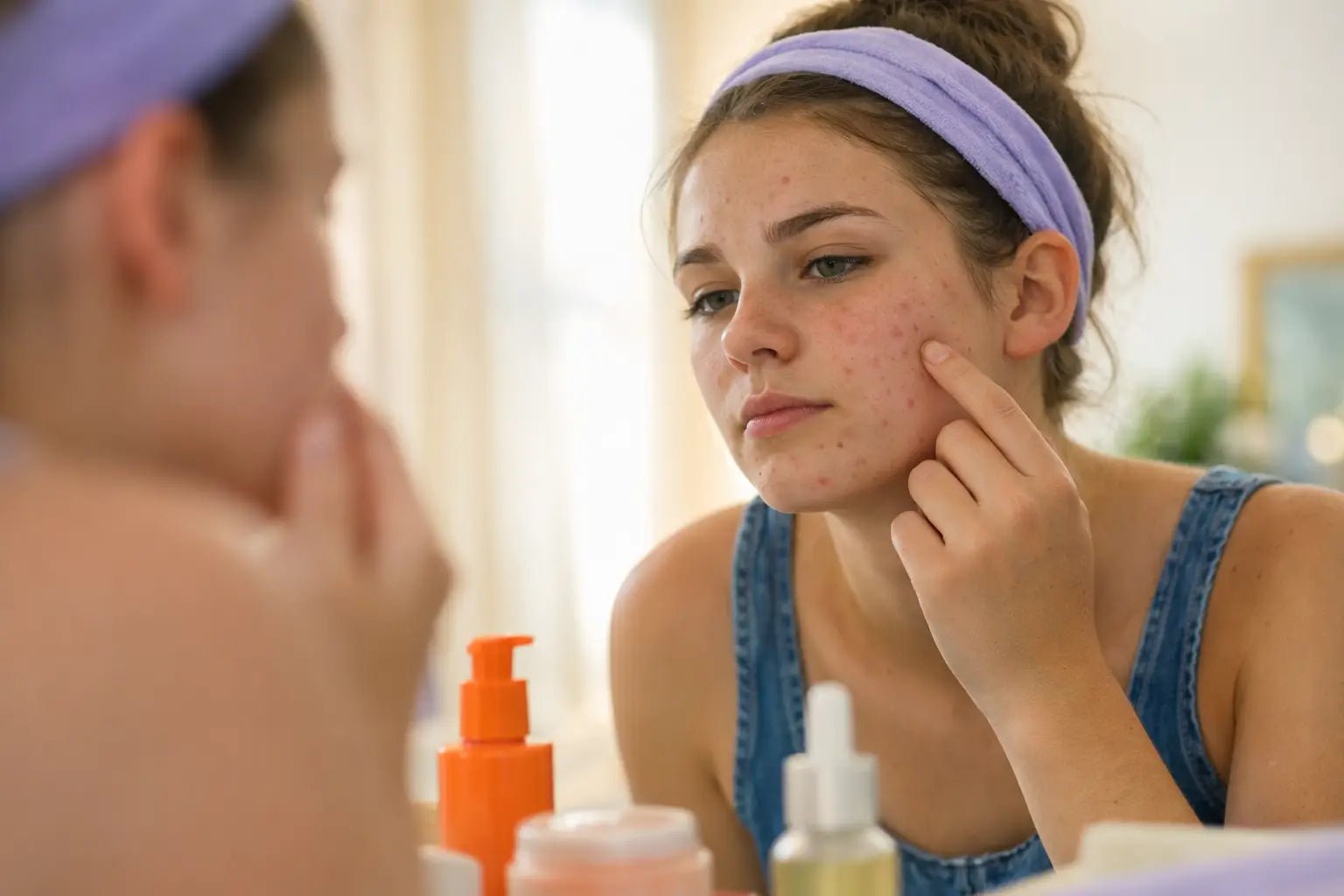
Can Skincare Worsen Teen Breakouts? Yes, Sometimes
A teen starts a new skincare routine hoping for clearer skin, then wakes up a week later with more bumps than before. It is frustrating, and it can make every product feel suspect. Can skincare worsen teen breakouts? Yes, sometimes - not because skincare is inherently bad, but because teenage skin is already navigating shifting hormones, oil production, sweat, stress, and friction from everyday life.
The answer is rarely as simple as one “bad” ingredient. A routine can contribute to breakouts when it is too heavy, too harsh, too complicated, or simply not a good match for that teen’s skin. The encouraging part: most routines do not need more products. They need a little more intention.
How skincare can worsen teen breakouts
Acne begins inside the pore, where oil, dead skin cells, and inflammation can create a clogged follicle. Skincare cannot change every part of that process, especially when hormones are driving the conversation. But the wrong formulas or habits can add congestion and irritation to skin that is already vulnerable.
A rich balm or oil that feels lovely on dry adult skin may be too occlusive for a teen with an oily T-zone and frequent clogged pores. Heavy hair products can also transfer onto the forehead, temples, and upper back. Makeup, sunscreen, and moisturizer are not automatic enemies, but leaving them on overnight or layering more than skin can comfortably handle can create problems.
Then there is the opposite issue: trying to dry acne away. Strong scrubs, cleansing brushes, frequent masks, alcohol-heavy astringents, and multiple active treatments can strip the skin barrier. Skin may feel squeaky-clean for an hour, then sting, flake, turn red, or seem even oilier. Irritated skin does not heal acne well, and inflammation can make blemishes look and feel worse.
The most common routine mistakes
The pattern we see most often is not a lack of effort. It is too much effort, too quickly. Teens are exposed to constant skincare advice online, where a 10-step routine can look normal and a product is often judged after only a few days.
Starting several new products at once
When a cleanser, toner, serum, spot treatment, exfoliant, and mask all arrive in the same week, it becomes impossible to tell what is helping or hurting. More importantly, the combined irritation can be enough to trigger redness and small, uniform bumps.
Introduce one new product at a time and give it roughly two to three weeks before adding another, unless there is clear burning, swelling, hives, or a rash. A small patch test can be useful for highly reactive skin, though it will not predict every acne response.
Over-cleansing and over-exfoliating
Washing more than twice a day is usually unnecessary, except after a sweaty practice or workout. A gentle cleanse after exercise is reasonable, but scrubbing hard is not. Friction does not clear pores faster.
Exfoliating acids and acne treatments can be effective, yet they require restraint. Using a salicylic acid cleanser, an exfoliating toner, a scrub, and a benzoyl peroxide treatment in the same routine is a common route to an angry barrier. Start with one acne-focused active product, use it as directed, and let the skin adjust.
Skipping moisturizer because skin is oily
Oil and hydration are different things. Skin can be shiny and still be dehydrated or irritated. A light, fragrance-free moisturizer can support the barrier and make a targeted acne treatment easier to tolerate.
Look for a texture the teen will actually use: a simple lotion or gel-cream often feels more comfortable than a dense cream. The goal is not to make skin feel coated. It is to keep it calm enough to function well.
Treating every bump like the same kind of acne
Blackheads, inflamed pimples, tiny forehead bumps, and a sore breakout around the jaw can have different triggers. A teen who develops bumps only along the hairline may need to look at bangs, styling products, hats, helmet padding, and hair conditioner residue before buying another face serum.
Likewise, breakouts on the cheeks can be worsened by phone screens, pillowcases, makeup brushes, hands on the face, or sports equipment. These details are not about being perfectly clean. They are about reducing avoidable contact and friction.
Choosing products for the label, not the formula
“Natural,” “clean,” and “dermatologist tested” can be helpful starting points, but none is a guarantee that a product will suit acne-prone skin. Plant oils, essential oils, fragrance, rich waxes, and active ingredients all depend on the full formula, the amount used, and the individual wearing it.
For sensitive, blemish-prone teens, simpler is usually kinder. A thoughtfully curated formula with a short, purposeful routine often outperforms a crowded shelf of trendy products.
A calmer teen skincare routine
For many teens, a reliable routine starts with just three daily essentials: a gentle cleanser, a lightweight moisturizer, and a broad-spectrum sunscreen they are willing to wear. At night, add one acne treatment if it is needed and tolerated.
A practical rhythm can look like this: cleanse gently in the morning if skin is oily, or rinse with water if it is dry or sensitive; moisturize; then apply sunscreen. At night, cleanse away sunscreen, makeup, sweat, and the day. Apply one treatment product on clean, dry skin, then moisturize.
The right treatment depends on the breakout pattern. Salicylic acid can be useful for clogged pores and blackheads. Benzoyl peroxide is often helpful for inflamed acne, though it can be drying and may bleach fabrics. Adapalene, a retinoid available over the counter, can help prevent clogged pores but should be introduced gradually and used with consistent sun protection. If a teen is using prescription acne medication, follow the clinician’s plan rather than layering on additional strong actives.
This is also where parents can make the biggest difference: not by policing every blemish, but by helping create a routine that feels easy enough to repeat. Keep products where they will be used. Choose a few essentials instead of a bathroom-counter experiment. Give the routine time.
Is it a breakout, irritation, or purging?
Not every flare after a new product means the same thing. Irritation often shows up as burning, tightness, itching, redness, flaking, or a rash-like field of tiny bumps. Stop the newest product and return to a gentle cleanser, moisturizer, and sunscreen until skin settles. Seek medical advice promptly for swelling, hives, or severe discomfort.
“Purging” is a term used when a product that increases cell turnover, such as a retinoid or exfoliating acid, brings pre-existing clogs to the surface faster. It typically appears in areas where the person already breaks out and should begin improving within several weeks. A moisturizer, facial oil, or random new serum does not need to cause purging to be responsible for more acne. If breakouts are spreading to unusual areas or steadily worsening, the product may simply not be a fit.
When it is time for professional support
Over-the-counter skincare has limits, and asking for help is not overreacting. A dermatologist or qualified healthcare professional can be especially valuable when acne is painful, cystic, leaving dark marks or scars, affecting confidence, or not improving after eight to twelve weeks of a consistent, gentle routine.
For families in Park City, an in-store conversation can also be a low-pressure way to sort through product overwhelm and build a simple starting point. Nationally, the same principle applies: choose fewer, well-considered products rather than chasing every new launch. Live Free Skincare was created with that sensitive, blemish-prone reality in mind - supportive care should not feel like another source of stress.
Clearer skin is rarely the result of punishing it into submission. Give a teen’s skin consistency, patience, and room to settle, and let their routine become one quiet, dependable part of real life.



Leave a comment
This site is protected by hCaptcha and the hCaptcha Privacy Policy and Terms of Service apply.