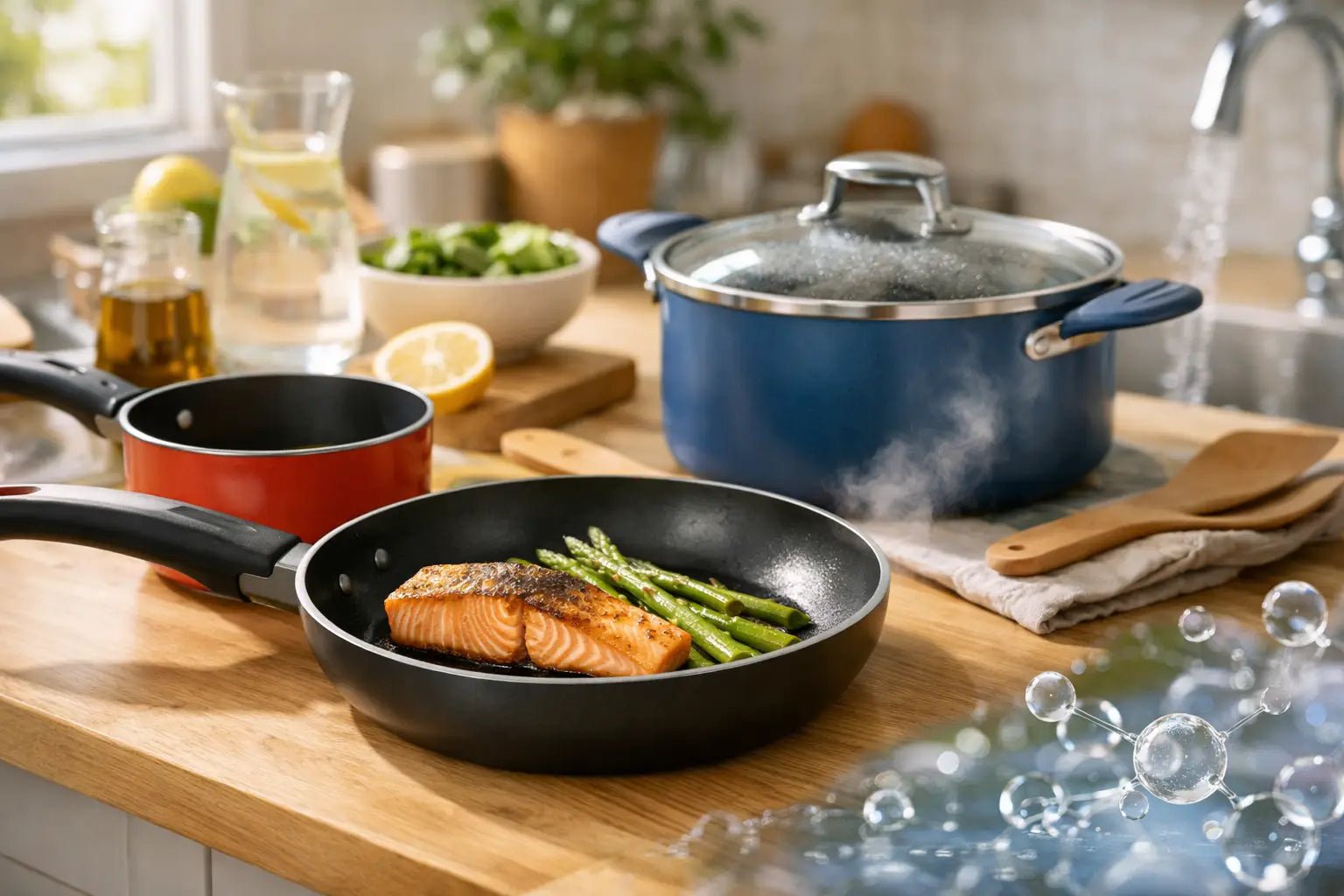
Why PFAS Matter in Cookware for Your Home
That scratched nonstick pan in the back of the cabinet may seem like a small detail. But cookware is one of the few things that meets heat, food, and your family’s daily routine all at once. Understanding why PFAS matter in cookware can help you make a more informed choice without turning dinner into another research project.
PFAS are not a reason to panic or toss every pan overnight. They are, however, a worthwhile category to understand when you are creating a lower-tox home. The goal is not perfection. It is choosing materials that fit the way you actually cook, hold up over time, and support more peace of mind at the stove.
What Are PFAS, Exactly?
PFAS stands for per- and polyfluoroalkyl substances, a large family of human-made chemicals used to repel water, grease, and stains. They have appeared in everything from food packaging and outdoor gear to upholstery and cosmetics. In cookware, PFAS are most often connected to traditional nonstick coatings.
You may also hear PFAS called “forever chemicals.” The name refers to their chemical persistence: many PFAS break down very slowly in the environment. Some have also been linked in research to health concerns, including effects on cholesterol, immune response, thyroid function, reproduction, and certain cancers. The science is complex, and risks vary by the specific compound and level of exposure. Still, their persistence and widespread presence are enough reason for many households to reduce avoidable exposure where they can.
Cookware is not necessarily the biggest source of PFAS exposure for every person. Drinking water, food packaging, dust, and other everyday sources can also contribute. Yet pans are a practical place to make a change because they are used frequently, heated repeatedly, and relatively easy to replace thoughtfully over time.
Why PFAS Matter in Cookware, Not Just on Labels
Traditional nonstick cookware is often coated with PTFE, a fluoropolymer that belongs to the broader PFAS family. PTFE is valued for a familiar reason: eggs release easily, cleanup takes seconds, and less oil is needed. Those are real benefits, especially on busy mornings.
The concern is not that every intact nonstick pan creates the same risk in normal use. Cookware safety depends on the material, how the pan is manufactured, its condition, and how it is heated. A quality nonstick pan used at moderate temperatures and replaced when damaged is different from an old, deeply scratched pan that is routinely preheated empty over high heat.
Still, the larger issue is that PFAS-free living is about cumulative exposure and informed choice. If a pan’s convenience relies on a persistent chemical coating, some people would prefer a material with a simpler composition. That preference becomes even more understandable when labels make the decision harder than it needs to be.
“PFOA-Free” Does Not Mean PFAS-Free
One of the most confusing phrases in the cookware aisle is “PFOA-free.” PFOA is one specific PFAS that has been phased out of many products in the United States. Removing it was meaningful progress, but a PFOA-free claim does not automatically mean a pan is free from all PFAS.
A product can be PFOA-free and still use PTFE or another fluorinated nonstick coating. This is why broad claims such as “non-toxic,” “healthy,” or even “made without PFOA” deserve a closer look. A brand should be able to clearly state what its coating is made from and whether it is PFAS-free.
The most useful question is simple: Is this cookware made without intentionally added PFAS? Clear answers are a good sign. Vague marketing language is a reason to keep looking.
Heat and Wear Change the Conversation
Nonstick cookware is particularly sensitive to heat. Empty pans can climb in temperature quickly, especially on high heat. At excessive temperatures, conventional nonstick coatings can degrade and release fumes that may cause short-term flu-like symptoms sometimes called polymer fume fever. This is especially concerning for pet birds, which are highly sensitive to airborne fumes.
Scratches and peeling are another practical signal. While a small surface mark does not automatically create an emergency, damaged coatings no longer perform as intended. Once food starts sticking, flakes appear, or the surface looks worn, replacement is usually the sensible move.
This is where a material-first approach can feel liberating. Stainless steel, cast iron, carbon steel, and certain ceramic-coated pans each have their own learning curve, but they do not require you to manage a fluorinated coating with the same level of care. You can choose the right tool for the meal rather than expecting one pan to do everything.
Choosing Cookware With Fewer Question Marks
There is no single “best” nontoxic cookware material for every kitchen. The right choice depends on what you cook, your budget, your comfort with maintenance, and whether you want a pan that can go from stovetop to oven.
Stainless steel is a dependable everyday workhorse. It is durable, versatile, and excellent for sautéing vegetables, searing proteins, simmering sauces, and building flavor. It can stick if the pan is not properly preheated or if food is moved too soon, but a little technique goes a long way. Use enough cooking fat, let the pan heat gradually, and give food time to release.
Cast iron holds heat beautifully and can develop a naturally slick seasoned surface over time. It is especially good for cornbread, skillet meals, searing, and oven cooking. It does require drying and occasional seasoning to prevent rust, and its weight is not for everyone. Enameled cast iron offers similar heat retention with easier maintenance, though it is a significant investment.
Carbon steel offers some of cast iron’s benefits in a lighter, more responsive pan. It also needs seasoning, but many home cooks love it for eggs, stir-fries, and high-heat cooking once the surface is established.
Ceramic-coated cookware is often marketed as a PFAS-free nonstick alternative. It can be a useful option for delicate foods and low-to-medium-heat cooking, provided the manufacturer clearly confirms the coating is free of PFAS, PTFE, and PFOA. The trade-off is longevity: ceramic coatings may lose their easy-release performance sooner than traditional nonstick surfaces. Gentle utensils, moderate heat, and handwashing can help extend their life.
For most homes, a small mix works better than chasing one perfect set: a stainless steel skillet for daily cooking, a cast iron or carbon steel pan for high heat, and a verified PFAS-free ceramic pan for the occasional delicate egg or pancake. That approach keeps cooking practical while reducing dependence on conventional nonstick.
What to Look for Before You Buy
Cookware marketing is full of reassuring language, but the details matter more than the front-of-box claim. Look for specific material disclosures, including the pan body, interior coating, and exterior finish. If a company says its pan is “nonstick” but will not identify the coating chemistry, that is not the level of transparency most thoughtful shoppers are looking for.
It also helps to consider durability. A less expensive pan that needs replacing every year can create more waste and more decision fatigue than a well-made piece you will use for a decade. Stainless steel and cast iron often cost more upfront than a basic nonstick skillet, but their long lifespan can make them a calmer, more economical choice over time.
Be realistic about your cooking habits, too. If you make scrambled eggs every morning and hate managing a sticky pan, a verified PFAS-free ceramic skillet may be a worthwhile convenience. If you mostly roast, sauté, and make one-pan dinners, stainless steel may cover far more ground than you expect. Cleaner choices work best when they are choices you will genuinely use.
A Thoughtful Way to Make the Swap
You do not need to replace an entire kitchen in one afternoon. Start with the cookware you use most often, especially anything that is scratched, peeling, or overheated regularly. A frequently used skillet is usually a more meaningful place to begin than a specialty pan that comes out twice a year.
As you replace pieces, choose materials with clear disclosure and care for them in a way that extends their life. Use wood, silicone, or stainless steel utensils as appropriate for the pan. Avoid blasting delicate coated cookware over high heat. Learn the simple preheating habits that make stainless steel and seasoned pans easier to use. These small adjustments can make a safer kitchen feel less like a sacrifice and more like a better rhythm.
Your cookware does not have to be flawless to support a healthier home. It just needs to be chosen with intention, used with care, and replaced when the time is right. One well-considered pan can be a quiet, useful step toward clean living for real life.




Leave a comment
This site is protected by hCaptcha and the hCaptcha Privacy Policy and Terms of Service apply.