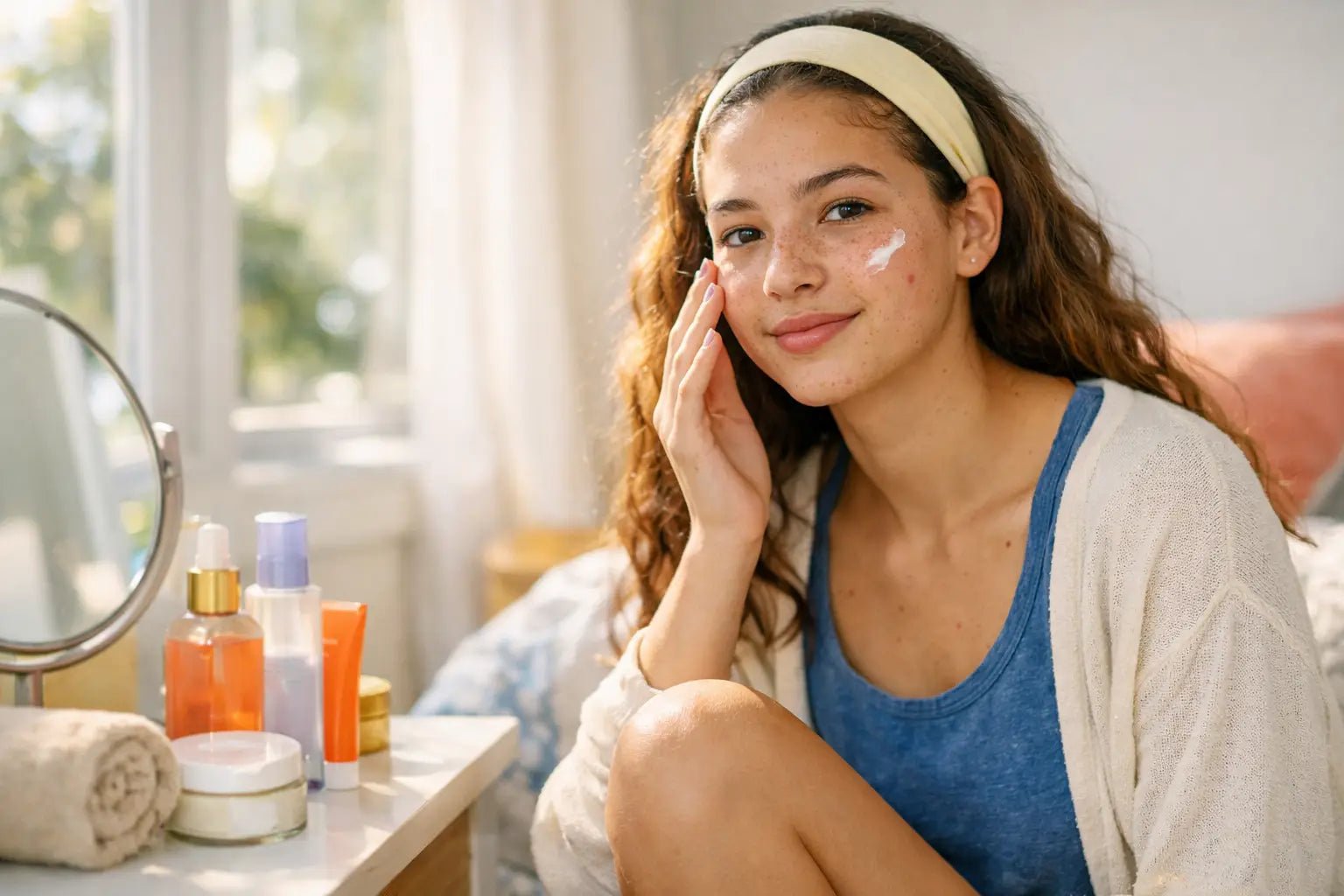
Teen Acne Skincare That Actually Helps
A bathroom counter full of spot treatments, scrubs, and trending serums can make teen acne worse, not better. The truth about teen acne skincare is surprisingly unglamorous: calmer skin usually comes from fewer steps, gentler formulas, and the patience to stay consistent long enough to see what is actually working.
For parents, that can be a relief. For teens, it can feel a little annoying because the answer is rarely a dramatic overnight fix. But acne-prone skin tends to respond best when the routine stops swinging between stripping everything away and layering on too much.
Why teen acne skincare needs a different approach
Teen skin is often oilier, more reactive, and more hormonally driven than adult skin. That means breakouts on the forehead, nose, chin, cheeks, chest, or back may keep showing up even when someone is washing their face regularly. Acne is not a sign of being dirty, and over-cleansing usually adds irritation without solving the root issue.
This is where a lot of routines go off track. A teen gets a few breakouts, starts washing more often, adds a harsh scrub, dabs on a strong spot treatment three times a day, and ends up with skin that is inflamed, flaky, and still breaking out. When the barrier is disrupted, skin can feel tight and look shiny at the same time. That combination is common in acne-prone teens.
A better approach is to treat acne while protecting the skin barrier. That means using ingredients that help unclog pores and calm inflammation, without assuming stronger is always better.
The foundation of a simple teen acne skincare routine
Most teens do not need a 10-step routine. In many cases, three to four products are enough.
Start with a gentle cleanser
A good cleanser should remove sweat, sunscreen, excess oil, and the day’s buildup without leaving skin squeaky or stripped. That “super clean” feeling is often a sign that the cleanser is too harsh. For acne-prone skin, look for a gentle gel or cream cleanser that rinses clean and does not leave fragrance-heavy residue behind.
If a teen plays sports, washes after practice, or showers more than once a day, this matters even more. Repeated cleansing with aggressive formulas can push skin into a cycle of irritation.
Add one acne-focused treatment
This is where keeping things simple really pays off. Instead of using several actives at once, start with one category and give it time.
Salicylic acid is often a smart first step for teens with clogged pores, blackheads, and small bumps. It helps clear inside the pore, which makes it useful for congestion on the forehead and nose.
Benzoyl peroxide can be effective for more inflamed breakouts, especially red pimples and pustules. It tends to work well, but it can also be drying and may bleach towels or pillowcases. For some teens, a lower strength used consistently is a better choice than jumping to the strongest option.
If skin is very sensitive, acne patches or a milder blemish treatment may be easier to tolerate than layering multiple leave-on products.
Do not skip moisturizer
This is one of the biggest myths in acne care - that moisturizer makes breakouts worse. The right moisturizer helps support the barrier, reduce irritation from treatments, and make a routine easier to stick with. Dehydrated skin can become more reactive, and when skin feels raw, teens are less likely to keep using products consistently.
Look for a lightweight, non-comedogenic moisturizer with a simple ingredient list. Gel-cream textures are often a good fit, but dry or treatment-sensitized skin may need something a little more cushioning.
Use sunscreen every morning
If a teen is using exfoliating acids or acne treatments, sunscreen matters. Many breakout-focused products can leave skin more vulnerable to irritation and post-acne marks that linger longer after a pimple heals. A lightweight mineral or hybrid sunscreen that feels comfortable enough for daily use is usually the best option, because the best sunscreen is still the one they will actually wear.
What to avoid in teen acne skincare
A few habits make acne harder to manage, even when the products look promising on paper.
Physical scrubs are a common one. They can feel satisfying in the moment, but rough exfoliation often aggravates inflamed skin and spreads irritation across already stressed areas.
Fragrance-heavy products can also be tricky, especially for teens with sensitive skin. Fragrance does not automatically cause problems for everyone, but when a routine is already focused on clearing acne, there is usually no real benefit to adding potential irritants.
Then there is the temptation to try everything at once. New cleanser, new serum, new mask, new spot treatment. When skin gets worse, no one knows what caused it. A slower rollout gives skin a fair chance and makes the routine much easier to troubleshoot.
How long it takes to see results
This is the part people rarely want to hear. Most acne products need time. A routine may need six to eight weeks of consistency before it becomes clear whether it is helping. That does not mean a teen should push through obvious burning or worsening irritation, but it does mean some early impatience is normal.
Skin also has phases. Stress, sports seasons, hormonal shifts, weather, and sleep can all affect breakouts. A routine that helps in winter may need to be adjusted in summer, or vice versa. It is less about finding a perfect static routine and more about building one that is stable, gentle, and easy to tweak.
When breakouts are more than a basic routine can handle
Some acne needs more support than over-the-counter skincare can provide. If a teen has painful cystic breakouts, widespread inflammation, acne that is leaving scars, or persistent breakouts that are not improving after a few months of consistent care, it may be time to talk with a dermatologist.
That step does not mean the skincare routine failed. It simply means the acne may be more hormonally or medically driven. In those cases, topical prescriptions or other treatments can make a meaningful difference.
At home, the goal is still the same: keep the routine supportive, not aggressive. Prescription care and barrier-friendly skincare often work best together.
A realistic routine for teen acne skincare
For most teens, morning can be simple: cleanse if needed, moisturize, then apply sunscreen. Some very oily teens prefer a morning cleanse, while others do better just rinsing with water and using a lightweight moisturizer and sunscreen. It depends on how their skin feels and what they used the night before.
At night, cleanse thoroughly, apply the acne treatment, and follow with moisturizer. If the treatment is irritating, try using it every other night at first. It is usually better to build tolerance slowly than to overdo it and quit altogether.
That kind of routine may sound almost too basic, but that is often the point. Skin tends to like consistency more than intensity.
Helping teens stick with the routine
The best routine is the one a teen will actually use. That means texture, scent, packaging, and number of steps matter more than people sometimes think. If a product pills, stings, smells too strong, or feels sticky before school, it probably will not last long in the routine.
This is one reason curated skincare can be so helpful. Parents and teens do not need dozens of choices. They need a small number of products that are thoughtfully selected for ingredient safety, effectiveness, and ease of use. Free Living Co’s Live Free Skincare line was created with exactly that kind of real-life simplicity in mind, especially for blemish-prone and sensitive skin.
It also helps to separate acne from self-worth. Breakouts can affect confidence quickly, especially in the teen years, but skin is not a report card. The goal is not perfect skin by next week. The goal is healthier, more comfortable skin over time, with a routine that feels manageable enough to keep.
The role of lifestyle in acne
Skincare matters, but it is not the whole picture. Sweat left sitting on the skin after sports, tight helmets or hats, dirty pillowcases, and frequent face touching can all contribute to congestion. Picking at breakouts is another major factor, especially when it turns temporary blemishes into longer-lasting marks.
Diet conversations around acne can get oversimplified fast. Some teens notice certain foods seem to make breakouts worse, while others do not. It depends. Unless there is a clear pattern, it is usually more helpful to focus on a balanced routine, stress support, and sleep than to obsess over every snack.
If makeup is part of the routine, removal matters. Acne-prone skin can absolutely wear makeup, but sleeping in it tends to catch up eventually. Gentle cleansing at night is one of the least glamorous and most effective habits in the whole routine.
Clearer skin often starts when the routine gets quieter. Fewer products, better ingredients, less panic, more consistency - that is the kind of teen acne skincare that gives skin room to settle down.



Leave a comment
This site is protected by hCaptcha and the hCaptcha Privacy Policy and Terms of Service apply.