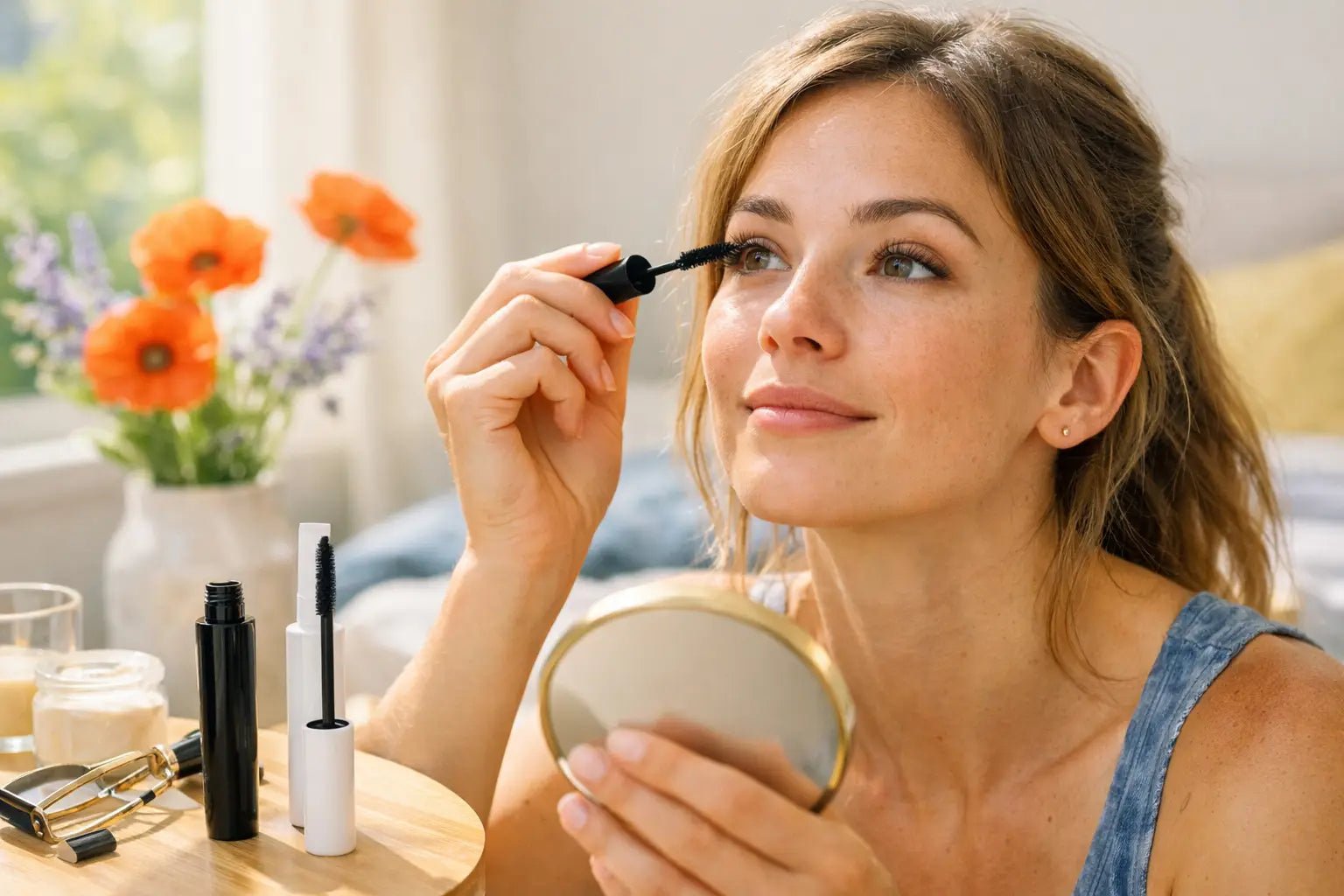
Non Toxic Mascara Review for Sensitive Eyes
Mascara is one of those small everyday products that can make a big difference. It sits close to the eyes, gets worn for hours, and has a habit of ending up on pillows, fingers, and sometimes contact lenses. That is why a non toxic mascara review should look beyond whether a tube says “clean” on the label. The best choice is one that balances thoughtfully selected ingredients with the lift, definition, and staying power you actually need.
For many people, mascara is also the hardest clean beauty swap to get right. A formula can be impeccably considered but flake by lunchtime. Another may give dramatic volume, then leave sensitive eyes feeling itchy or watery. Clean living for real life means choosing a formula that supports your standards without asking you to accept a disappointing makeup day.
What “Non-Toxic” Means in Mascara
“Non-toxic” is not a regulated claim, so it should never be the only reason a mascara earns your trust. A better approach is to consider the complete formula, the brand’s ingredient standards, and how the product performs on your own lashes and eye area.
At Free Living Co, we believe ingredient vetting should reduce decision fatigue, not send you into a late-night spiral over every label. In mascara, we look for brands that are transparent about their formulas and intentional about avoiding ingredients many ingredient-conscious shoppers prefer to leave out, such as parabens, phthalates, carbon black, synthetic fragrance, and certain PFAS-related long-wear treatments.
That does not mean every ingredient must sound botanical to be welcome. Safe, effective cosmetics often rely on carefully selected synthetic ingredients for consistency, preservation, texture, and wear. A mascara needs a stable formula to be a good everyday product. The goal is not fear. It is thoughtful formulation, clear standards, and fewer unnecessary compromises near a sensitive area.
Non Toxic Mascara Review: The Standards That Matter
A good review starts with performance because mascara is not decorative skincare. It has a job to do. The formula should build believable volume or length, hold a curl when possible, separate lashes without turning them brittle, and come off without aggressive rubbing.
The brush matters as much as the formula. A slim, tapered wand tends to reach small lower lashes and the inner corners with more control. A fuller, traditional bristle brush often creates softer volume and a more plush look. Flexible silicone wands can define and separate beautifully, though they may feel less forgiving if you prefer a thicker lash effect. None is universally better. Your lash shape and preferred finish should guide the choice.
Wear time also deserves a more honest conversation. A clean formula may not behave like a heavy-duty waterproof mascara designed to survive a pool day, a sweaty workout, and a tearful movie. That is not always a failure. Stronger water resistance can require film-forming ingredients that some shoppers avoid, and waterproof formulas usually need more effort to remove.
For a regular workday, the sweet spot is usually a mascara that resists smudging and flaking while still releasing with a gentle cleanser or eye makeup remover. If you have oily lids, deep-set eyes, or long lashes that touch your brow bone, you may need a tubing formula or a light setting powder around the eye area to prevent transfer. Your application technique can be as important as the tube itself.
Ingredients Worth Looking At
Ingredient labels can be intimidating, but you do not need a chemistry degree to make a more informed choice. Start by noticing what a brand chooses to exclude and whether it explains why. Then look at the building blocks that help mascara work.
Waxes such as carnauba wax, beeswax, rice bran wax, or candelilla wax can create structure, thickness, and hold. Plant oils and butters may help condition lashes, although they can make a formula feel softer and may not suit every eye area. Iron oxides are commonly used mineral pigments for black and brown shades. Polymers help mascara adhere to lashes and can reduce smudging.
Preservatives are another category that deserves context. Because mascara contains water and is used near the eyes, preventing microbial growth is essential. A preservative system is not automatically a red flag. In fact, an inadequately preserved mascara can be a bigger concern than one using a well-selected, transparent preservation approach.
If your eyes react easily, fragrance is usually an easy ingredient to avoid. It offers little benefit in mascara and can be an unnecessary irritant for some people. Also consider your personal sensitivities. Natural ingredients are not automatically gentle, and a formula with botanical extracts can still be irritating if you are allergy-prone.
The Right Formula for Your Lashes
The best non-toxic mascara depends on what you want it to do. For naturally long lashes, a defining formula with a smaller wand may be enough to add polish without clumps. For short or straight lashes, look for a buildable formula that adds lift without weighing lashes down. A lash curler can make a noticeable difference before application, especially if your mascara is not designed for a stiff, waterproof hold.
For sparse lashes, volume is often more flattering than extreme length. Apply one deliberate coat from root to tip, then concentrate a second coat at the outer corners. Letting mascara dry completely between layers can create a brittle finish, so build while the first coat is still slightly workable.
Sensitive eyes call for a simpler routine. Skip fragranced eye products, avoid pumping the wand repeatedly into the tube, and replace mascara every three months. If your eyes become persistently red, itchy, swollen, or watery, stop using the product rather than trying to make it work. Even a carefully formulated mascara may not be the right match for your skin, contacts, or seasonal allergies.
How to Test a Mascara Before You Commit
A first application can be misleading. The real test is how a mascara behaves after a full day of errands, screens, weather, and normal life. Wear it without other eye makeup once or twice so you can see clearly whether it transfers, flakes, or causes discomfort.
Pay attention to four things: the finish after application, the condition of your lashes at midday, any shadowing under the eyes, and how easily it removes at night. A formula that starts beautifully but flakes into your concealer by 2 p.m. is not a practical everyday choice. Likewise, a formula that requires scrubbing can leave the delicate eye area feeling more stressed than enhanced.
For waterproof needs, be specific about the occasion. A tubing mascara may be enough for a humid summer event or a long day at work. For swimming, heavy rain, or a wedding where tears are likely, a more water-resistant formula may be worth the trade-off, followed by patient removal with an oil-based cleanser. Thoughtful beauty is not about perfection. It is about knowing which trade-offs serve you in the moment.
A Better Way to Choose Clean Beauty
There is no single mascara that will give every person dramatic volume, zero smudging, easy removal, and a formula aligned with every individual preference. But there are plenty of excellent options when you begin with your non-negotiables: sensitive eyes, a clean ingredient standard, a natural finish, a dramatic look, or all-day wear.
Choose the mascara that fits your real routine, not the one that promises everything. A formula you enjoy applying, trust wearing close to your eyes, and can remove gently at the end of the day is often the one that earns a permanent place in your makeup bag.



Leave a comment
This site is protected by hCaptcha and the hCaptcha Privacy Policy and Terms of Service apply.